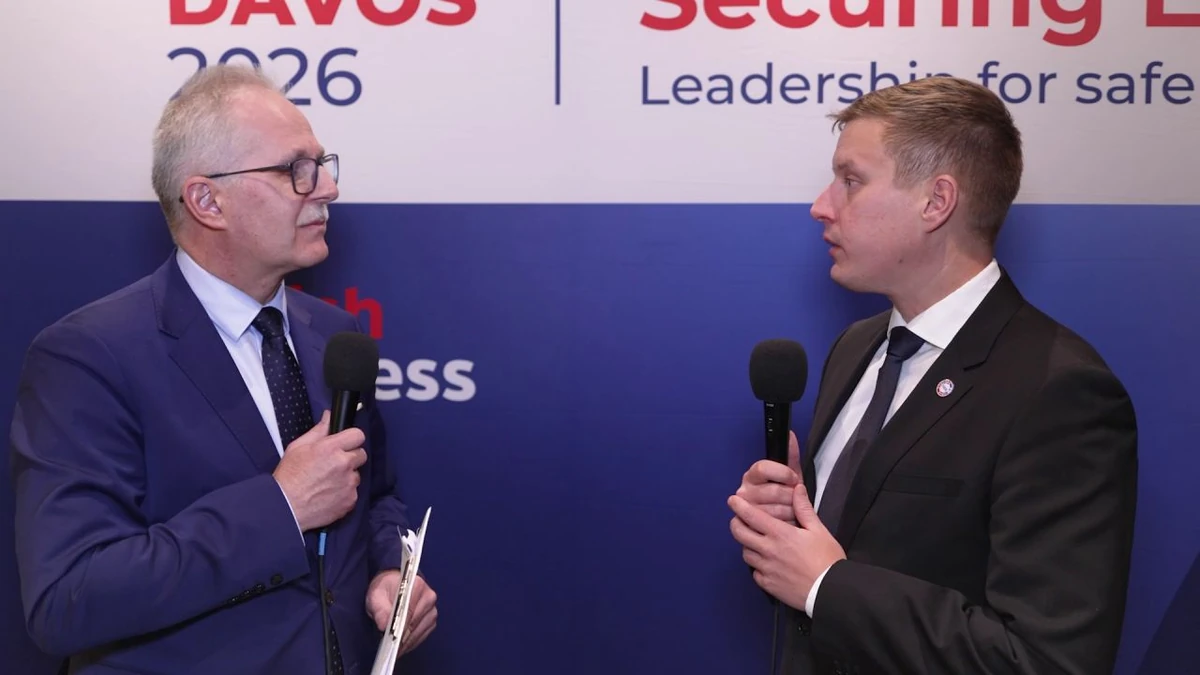
Estonian Economy Minister Erkki Keldo emphasizes that cooperation is key for Central and Eastern European countries to overcome their limitations as relatively small economies.
Regional Partnership and Competition
Estonian Economy Minister Erkki Keldo highlights that the greatest economic advantage of Central and Eastern European countries is skillfully combining cooperation and competition. He points out that on a global scale, countries in the region remain relatively small economies, which limits their potential when acting alone.
Keldo emphasizes that cooperation is crucial for both Estonians and Poles, stating that together they can accomplish much more than if they acted separately. He points to the integration of Baltic states’ electricity systems with the European network as an example of effective regional partnership.
Competition and Investment
Keldo acknowledges that countries in the region compete with each other, especially in attracting foreign investments. However, he views this competition positively, noting that every new investment in Central and Eastern Europe strengthens the credibility of the entire region.
“Any investment in our region is a good sign,” he remarks. “This means that business believes that investing their money here is safe.”
Defense Industry’s Role
The defense industry plays a special role in this context, according to Keldo. It strengthens security while generating high added value for the economy.
“The defense industry is one of the most innovative sectors of the economy,” Keldo states. “A lot of research takes place there, and wages are high.” He points to this sector as an example where cooperation and competition can effectively complement each other.
Areas Needing Independence
Keldo identifies several areas where Central and Eastern Europe should increase its independence, with energy being a key one. The region remains largely dependent on energy imports, requiring significant investments to change this situation.
He also stresses the need to develop critical infrastructure that will provide better connectivity, crucial for the development of technologies like artificial intelligence.
Digitalization and Public-Private Cooperation
Keldo emphasizes the importance of digitalization, pointing to Estonia as an example of effective transformation in this area. Estonia is proud to be one of the most digitalized countries in the world, with all public services and official matters now handled online.
“This model is simple and relatively inexpensive,” Keldo notes, adding that Estonia is happy to share its experience with partners. He believes the success of Estonia’s digitalization would not have been possible without close cooperation with the private sector.
“I believe that the best solutions arise from trust and cooperation between private companies and the government,” Keldo concludes, calling this model a universal recipe for the region’s economic development.