


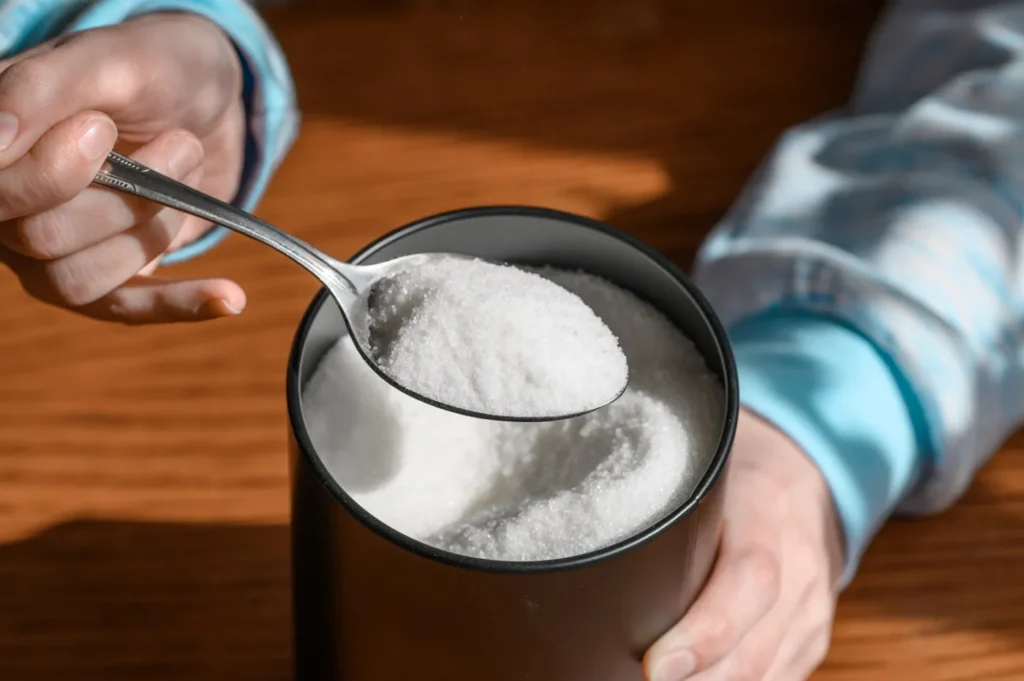
A new U.S. study suggests the popular sugar substitute erythritol may impact blood vessel function, raising concerns about “zero” sugar products.
Erythritol and the Promise of Sugar-Free Alternatives
Products marketed as “sugar-free” were intended as healthier options compared to sugary drinks and snacks. However, new research from U.S. scientists indicates that erythritol, a widely used sweetener, may affect the functioning of blood vessels in the brain.
Importantly, the observed effects relate to quantities comparable to a typical serving of a “zero” sugar beverage, prompting questions about the true safety of these “fit” choices.
Potential Link to Stroke Risk
While not yet definitive proof of harm in humans, the study identifies a mechanism that could explain earlier signals of increased stroke risk, sparking significant scientific interest.
Study Details: Erythritol’s Impact on the Brain and Blood Vessels (2025)
Published in 2025 in the *Journal of Applied Physiology* (“The non-nutritive sweetener erythritol adversely affects brain microvascularendothelial cell function”), the study focused on erythritol’s impact on brain blood vessel cells.
Researchers used an *in vitro* laboratory model, analyzing cell responses after exposure to the sweetener. The dose used corresponded to the amount of erythritol found in a single serving of a sugar-free drink (approximately 30g), representing a realistic dietary level.
Four Vascular Changes Linked to Stroke Risk
Instead of directly examining stroke risk, scientists investigated changes at the cellular level. The results indicate several alterations known in medicine as risk factors for stroke.
These observations suggest that blood vessels may experience impaired dilation, increased constriction, and difficulty managing blood clots – a combination of processes that, according to medical knowledge, elevates the risk of ischemic stroke.
How Erythritol May Affect Blood Vessel Function
Brain blood vessels operate as a precise system for regulating blood flow. Any disruption to this balance can have serious consequences. The study identified three key issues.
This connection is well-established in the context of cardiovascular diseases and strokes, suggesting that erythritol may influence these mechanisms.
Dosage and Regular Consumption
The study observed effects at a dose equivalent to one serving of a “sugar-free” product. This doesn’t automatically indicate a threat to everyone, but suggests that regular consumption (several servings daily) could potentially exacerbate the observed effects.
This is particularly relevant for individuals who regularly choose “zero” products as part of their diet, such as those following weight-loss plans or managing diabetes.
Previous Research Linking Erythritol to Cardiovascular Events
The new study aligns with a broader scientific trend. Previous research has indicated a correlation between higher blood erythritol levels and increased risk of heart attack and stroke.
Epidemiological studies (on large populations) have shown this correlation, but haven’t explained the underlying mechanism. This study provides one of the first insights into how this mechanism might operate.
Limitations and Current Understanding
It’s important to note that the study has several limitations. The *in vitro* nature of the research means that it cannot definitively prove that erythritol “causes stroke” or affects related mechanisms in the human body.
This distinction is crucial.
Where to Find Erythritol
Erythritol is one of the most commonly used sweeteners today, found in various “fit” and “zero” products, including:
It often appears under the following names:
Expert Recommendations and Future Outlook
The WHO (World Health Organization) in 2023 recommended against using non-sugar sweeteners as a tool for weight control, citing potential health risks and a lack of long-term benefits, but did not ban erythritol or set a specific consumption limit.
EFSA (European Food Safety Authority) considers erythritol a safe food additive (E968) and hasn’t established a strict daily intake limit (ADI), citing its low toxicity. The FDA (USA) classifies erythritol as GRAS (Generally Recognized As Safe) and permits its use in food.
Currently, the consensus is that erythritol is considered safe within existing norms, but a growing body of research suggests potential risks. A cautious approach – limiting excessive consumption, diversifying sweeteners, and reading labels – is increasingly recommended.