


The Court of Justice of the European Union (TSUE) issued a ruling on March 24th regarding the independence of Polish judges appointed via a controversial process, triggering reactions from Polish politicians.
Dispute Over “Neo-Judges” and Appointment Process
The case originated with a businessman challenging a judge’s impartiality, arguing her appointment by the National Council of the Judiciary (KRS) after 2018 compromised her status. He also questioned the legitimacy of decisions made by judges appointed through the reformed KRS.
The Regional Court in Poznań-Stare Miasto referred questions to the TSUE in 2021, seeking clarification on whether a single-judge panel including a potentially compromised appointee meets EU requirements for an “established court.” It also asked if a flawed appointment necessitates automatic disqualification or case-by-case assessment.
TSUE Ruling: Flawed Appointment Alone Doesn’t Guarantee Lack of Independence
The TSUE ruled on Tuesday that a flawed appointment process alone is insufficient to declare a judge non-independent, emphasizing the need for a comprehensive evaluation of all surrounding circumstances. This is the first time the TSUE has ruled on the status of judges in common courts, previously addressing only Supreme Court “neo-judges.”
Over 3,000 Polish judges—approximately 30%—were appointed based on recommendations from the KRS in its new composition, whose independence is contested.
Political Reactions: Justice Ministry and Opposition Views
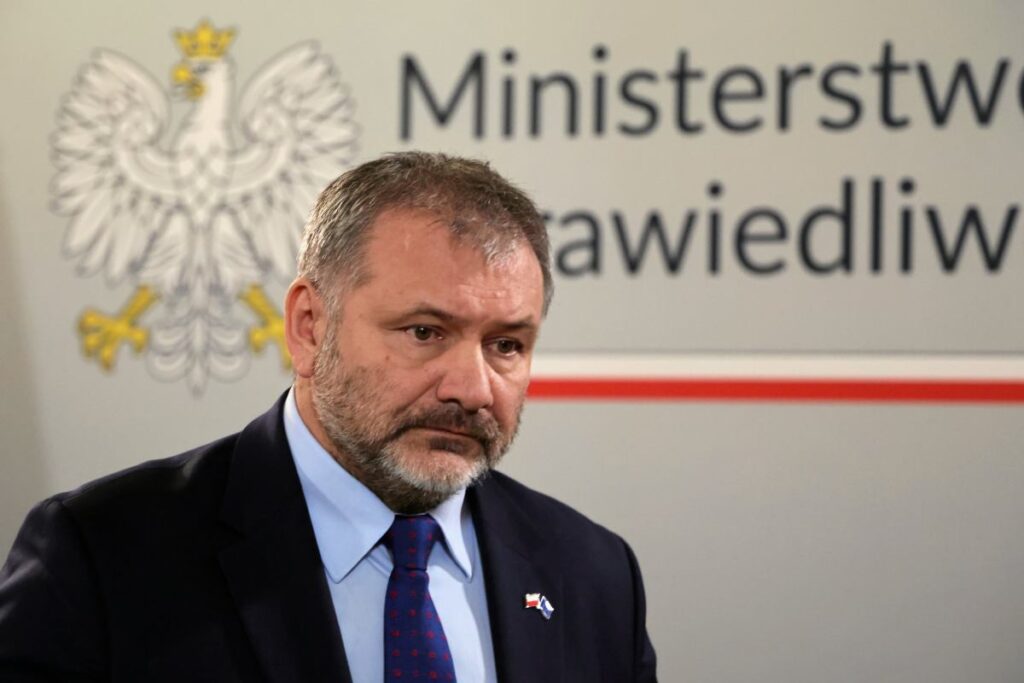
Deputy Minister of Justice Dariusz Mazur stated the ruling confirms a systemic problem of improperly appointed judges and a flawed KRS structure. He emphasized the TSUE’s focus on evaluating a judge’s independence based on the entire nomination and career path.
Mazur asserted the ruling also applies to the Extraordinary Control Chamber of the Supreme Court and reinforces the need for legislative solutions to address the issue, aligning with the provisions of the rule of law act. He believes the TSUE ruling does not undermine the delegation mechanism for judges in the “yellow group” under the act.
Mazur cautioned against spreading misinformation, stating the TSUE did not declare the absence of “neo-judges,” but rather the opposite.
PiS Response: A Blow to Waldemar Żurek
Paweł Jabłoński characterized the ruling as a “legal and political blow” to Waldemar Żurek, suggesting a turning point in the debate over “neo/paleo/archeo judges.” He noted the TSUE’s limited jurisdiction over national judicial systems but acknowledged the significance traditionally attributed to its rulings by proponents of the “rule of law.”
Criticism and Concerns Over Selective Justice
Marcin Romanowski, a former deputy justice minister, accused the TSUE of attempting to facilitate a political takeover of the KRS by the Tusk team, warning of potential legal repercussions. He argued the ruling creates a mechanism for selectively undermining the status of Polish judges.
Romanowski described the ruling as an illegal loophole allowing for discretionary challenges to judges’ status, potentially undermining the rule of law and enabling politically motivated eliminations.
Defense of Appointed Judges and Five-Year Delay
Bartosz Lewandowski, a lawyer representing key PiS politicians, argued the ruling is a blow to Waldemar Żurek and those seeking to remove judges from office. He emphasized the TSUE’s confirmation that judges appointed after 2017 remain judges, and their appointment date alone does not invalidate their independence.
Lewandowski highlighted the five-year delay in addressing the question posed by the Poznań court, underscoring the protracted nature of the dispute.
Call for Presidential Cooperation on Judicial Reform
Krzysztof Śmiszek, a European Parliament member, stated the ruling confirms the need for individual assessments of judges, considering potential political involvement. He emphasized the importance of upholding high standards of protection for participants in the justice system.
Śmiszek called on President Duda to cooperate with the government and parliamentary majority to reform the judiciary, including the KRS, and restore its constitutional significance, dismissing claims that the ruling indicates everything is well in Poland as manipulation.