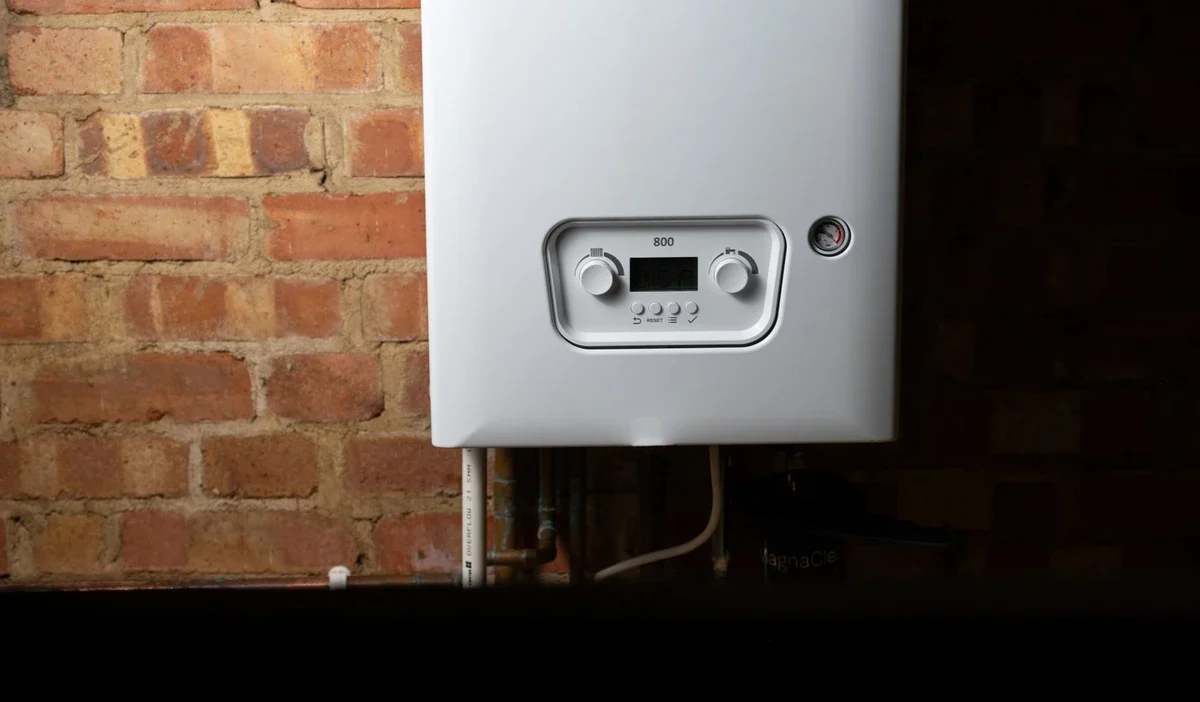
The European Union has announced key dates for phasing out gas boilers, ending subsidies in 2025 and banning new installations by 2030 as part of its climate neutrality strategy.
End of Gas Boiler Subsidies (2025)
The most important change for those planning to modernize their heating system became a reality on January 1, 2025. It was then that the era of subsidies for standalone gas boilers from programs like ‘Clean Air’ definitively ended.
If you are counting on financial support from public funds, your only choice is currently hybrid systems (e.g., gas combined with a heat pump) or a complete transition to renewable energy sources. Public money will now flow exclusively to where fossil fuels are being eliminated or minimized.
Gas Heating Costs to Rise in 2028
For those who already own a gas boiler, the most difficult test will be the year 2028 and the introduction of the ETS2 emissions trading system. This is a hidden cost that fuel suppliers will pass directly on to end consumers.
It is estimated that the new CO2 tax will increase the annual heating costs of an average household by approximately 1,200 PLN. This mechanism aims to make the combustion of natural gas economically unattractive, forcing owners of older buildings to carry out deep thermal modernization before the final deadline for the phase-out of fossil fuels in 2040.
Ban on New Gas Installations by 2030
The next breakthrough will occur in 2030, when traditional gas boilers will become a banned technology in new construction. From that moment on, every newly built building in the European Union will have to meet zero-emission standards.
This means that designers and investors will be forced to choose between heat pumps, photovoltaic-supported electric heating, and modern district heating. The time for traditional gas installations in new architecture is over, giving way to fully ecological solutions.
Long-Term Climate Strategy to 2050
The long-term strategy assumes that by 2050, all buildings in Europe will achieve full climate neutrality. In this vision, there is no room for natural gas, but there is space for “hydrogen-ready” technology and biogas.
This means that modern heating equipment can remain in our homes, as long as they are powered by green hydrogen or renewable gas produced from biomass, which represents the only loophole for fans of gas systems.