


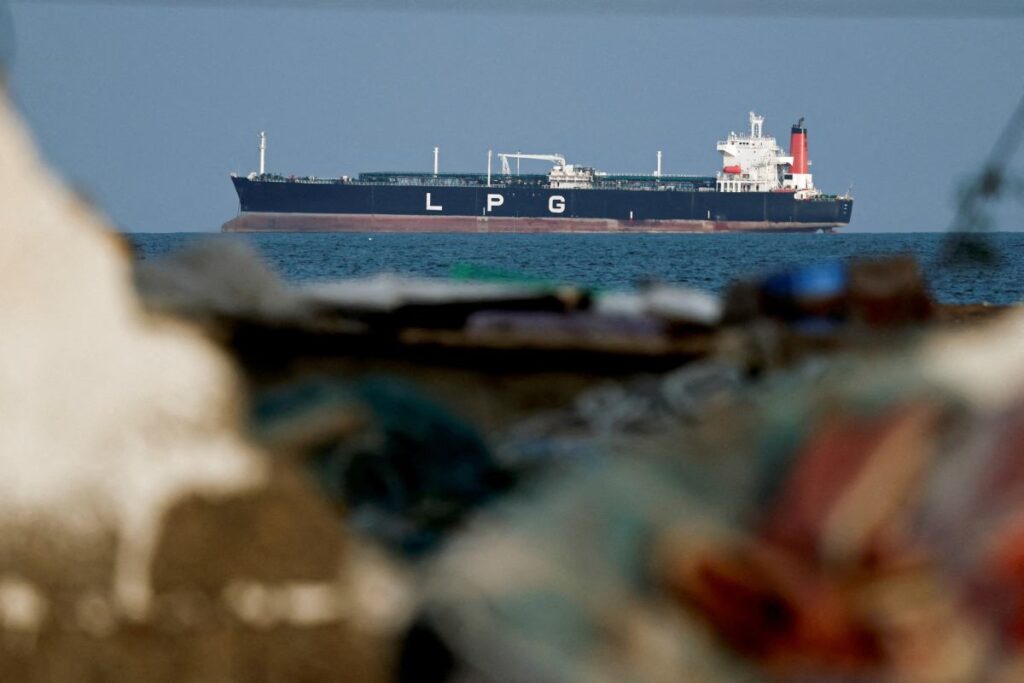
The EU is exploring options to safeguard the Strait of Hormuz after Iran blocked the vital waterway, while some member states reject former President Trump’s calls for military assistance.
EU Considers Options for Strait of Hormuz Security
EU foreign policy chief Kaja Kallas announced in Brussels that the EU is examining various options to secure the Strait of Hormuz. One scenario under consideration is modifying the mandates of the EU’s Aspides and Atalanta maritime operations to support maintaining navigation in the region.
“It is in our interest to maintain the open Strait of Hormuz,” Kallas told reporters, adding that Brussels is in talks with the US and analyzing what the Union can do. She also suggested potential cooperation with Antonio Guterres and the UN to establish an international mechanism for securing navigation.
US Presses Allies for Military Support
The administration of Donald Trump has been urging partner nations to send warships to the region and help unblock the Strait. Trump warned that a lack of response could have “very bad consequences for the future of NATO.”
Iran began blocking the Strait of Hormuz on February 28th, following joint US and Israeli military operations against Tehran. This has led many shipping companies to reduce traffic in the area, causing global oil prices to rise sharply.
Several EU Nations Reject Military Involvement
Not all European countries are willing to support a military operation in the Strait of Hormuz. Luxembourg’s Prime Minister Xavier Bettel stated in Brussels that his country would not succumb to “blackmail” from the United States.
“We can help with satellites or communication, but do not send us there with troops and equipment,” said the Luxembourgish Deputy Prime Minister. Similar positions are emerging in other EU states.
Germany and Greece Rule Out Participation
The German government has already ruled out participation in such an operation. Politicians from all major factions in the Bundestag oppose sending the German navy to the Strait of Hormuz.
Jurgen Hardt, CDU/CSU spokesperson for foreign policy, argued that the mere presence of ships is insufficient to ensure security on the narrow sea lane, and the situation can only be resolved after a change in the political situation in Iran.
Greece Focuses on Red Sea Mission
The Greek government also announced that it will not participate in military operations in the Strait of Hormuz. Government spokesperson Pavlos Marinakis emphasized that Athens will only participate in the EU’s Aspides mission, which protects ships in the Red Sea.
Norway and Poland Also Decline
Norway’s Prime Minister Jonas Gahr Stoere categorically rejected the possibility of sending troops or taking any other action to maintain navigation in the Strait in an interview with Norwegian media.
Polish Foreign Minister Radosław Sikorski informed journalists in Brussels that the EU could begin a dialogue with the US regarding the use of EU missions in the Middle East to restore the flow of ships through the Strait of Hormuz. He noted that several NATO countries have already responded negatively to Trump’s request, and clarified that Poland has no plans to participate in such a mission.
Strait of Hormuz: A Key Energy Route
The Strait of Hormuz is one of the world’s most important energy routes, transporting approximately 20 percent of global oil and liquefied natural gas supplies under normal conditions. As Kallas acknowledged, the EU is considering various scenarios, including the creation of a “coalition of the willing”—a group of states ready to act even without the full participation of all 27 EU countries.