


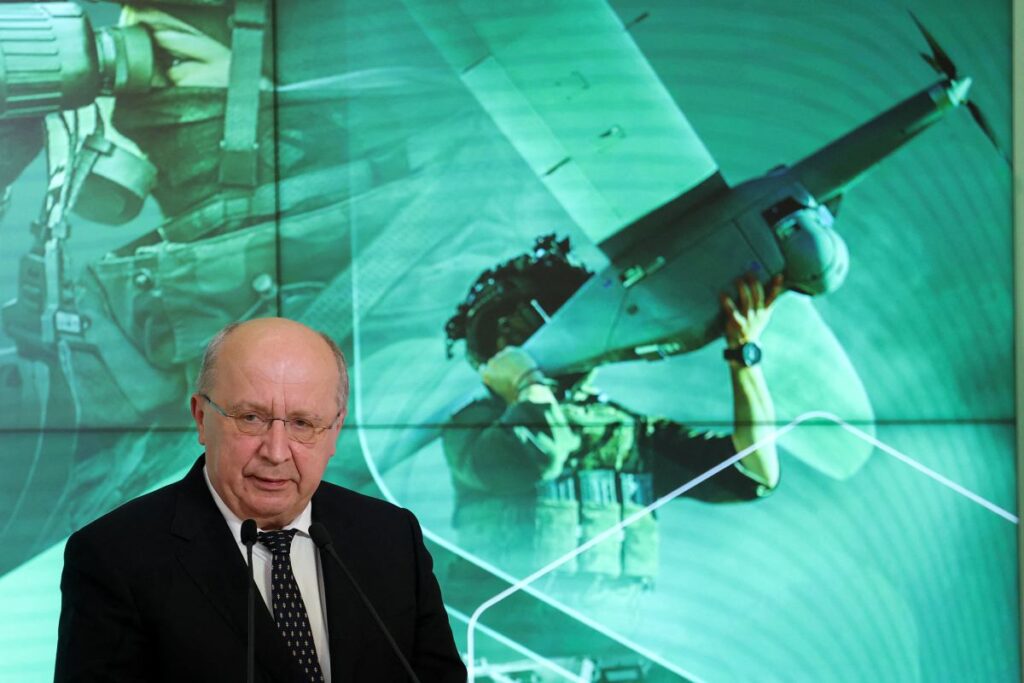
EU Commissioner Andrius Kubilius stated in Vilnius that Europe must develop its own military capabilities as uncertainty grows over the duration of the United States’ troop presence in Europe.
The Push for Strategic Independence
Speaking in Vilnius following the signing of the SAFE program agreement between Lithuania and the European Commission, Andrius Kubilius emphasized that while the EU desires a long-term US presence, it must simultaneously develop its own capabilities.
This urgency comes amid Pentagon reports indicating that approximately 5,000 American soldiers may be withdrawn from Germany within the next 6 to 12 months.
Geopolitical Tensions and US Withdrawals
The potential troop withdrawals follow disputes between US President Donald Trump and Friedrich Merz regarding the conflict with Iran. It was reported that the German Chancellor stated Iranian negotiators had “humiliated” Washington.
Additionally, Trump has reportedly threatened to withdraw forces from Italy and Spain due to those nations’ reluctance to engage in the Middle East conflict.
Managing Strategic Unpredictability
Kubilius noted that Europe has grown accustomed to Trump’s “unpredictable unpredictability.” He pointed out that Washington has long expected European allies to assume primary responsibility for the continent’s conventional defense.
The Commissioner urged Europe to consider how to replace US strategic support and quick reaction forces. As of December last year, approximately 68,000 US soldiers were stationed in Europe.
US Military Framework in Poland
Poland’s Deputy Defense Minister Paweł Zalewski explained that US forces operate under two formulas: permanent and rotational. Rotational forces constitute the majority, totaling 10,000 soldiers.
Permanent presence includes the anti-missile shield base in Redzikowo, the 5th Army Corps forward command in Poznań, and the base in Powidz, which maintains equipment for a US armored brigade.
Rotational Forces and Air Support
Rotational elements include an armored battle group under the Atlantic Resolve mission, with units in Żagań, Świętoszów, Bolesławiec, Skwierzyna, and Toruń, operating on nine-month rotations.
Air capabilities are concentrated in Powidz for transport and logistics, and in Łask, where US Air Force F-15 and F-16 fighters conduct joint patrols with Polish jets.
Further strategic assets include a divisional forward command in Bolesławiec and a NATO battle group in Bemowo Piskie, composed primarily of Americans, alongside British, Romanian, and Croatian forces.