


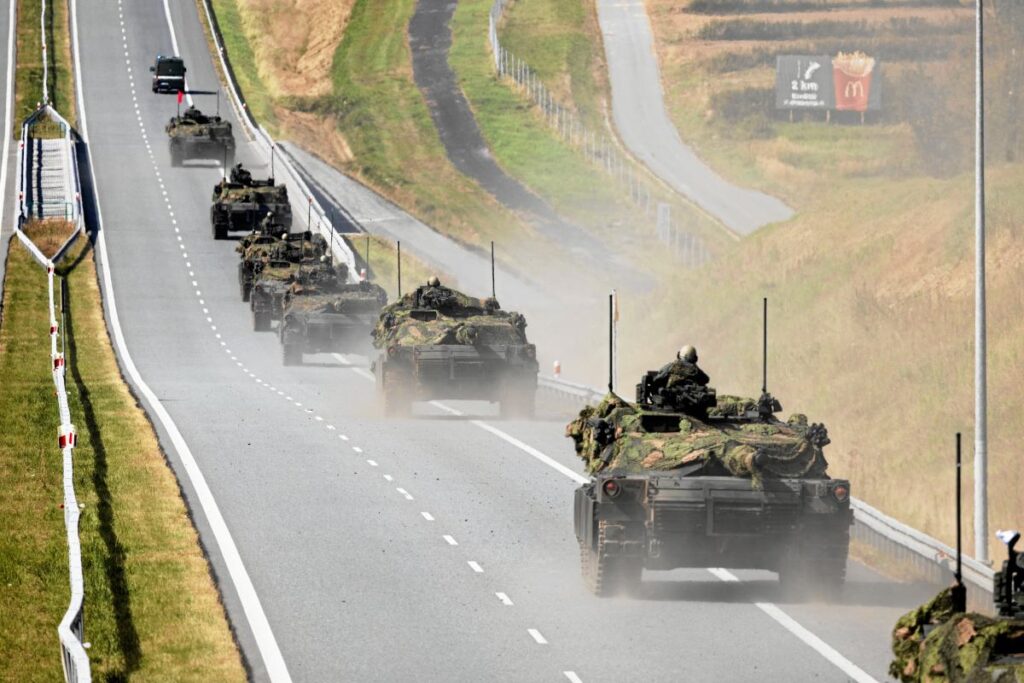
EU plans a ‘Military Schengen’ scheme, to be unveiled November 19, to expedite troop, weapon and ammunition movement across member states amid fears of a Russia conflict.
Europe Prepares for Crisis
According to RMF FM, the European Commission plans to introduce a so‑called “Military Schengen” – a free‑movement zone for military assets within the EU. The proposal, due for presentation on November 19, seeks uniform rules, procedures and transport corridors that would enable rapid deployment of troops, weapons and ammunition across member states. Brussels officials admit that current European bridges, roads and railways are not adapted to heavy military equipment; tanks and armoured trucks could get stuck in tunnels or at borders where differing permits and procedures apply.
Faster Transport and Less Bureaucracy
The plan targets the removal of bottlenecks in military logistics through infrastructure upgrades and the digitisation of crossing permissions. Presently, approval for moving forces across borders can take several days, a delay that could cripple defence efforts in a crisis. Brussels proposes “emergency frameworks” that would allow immediate transport of soldiers or equipment in urgent cases, together with a solidarity mechanism for sharing resources among member states.
Shared Train Fleet and NATO Cooperation
Under the initiative, the Commission also considers creating a common military train fleet of dual‑purpose wagons and locomotives that could be deployed by various countries as required. Polish authorities have urged that the EU plan aligns fully with NATO operations, and EU documents are being prepared in close partnership with the North Atlantic Alliance so that both defence systems reinforce each other.
Estonian Defence Minister Calls for Less Bureaucracy
Estonian Defence Minister Hanno Pevkur has proposed that the EU establish a “Military Schengen” zone to accelerate the transfer of weapons between member states. In an interview with the Spanish newspaper El País on 28 October, he emphasized that defence planning remains under NATO, but an improved EU system could speed the flow of military equipment across borders, citing a case of weapon transfer from Spain to Estonia without bureaucratic delays. He also suggested joint EU decisions on supporting member states through shared financing and procurement, mirroring the approach taken during the migrant crisis, arguing that bureaucracy and underfunding undermine EU military mobility.