A German press agency revealed chats showing the European People’s Party (EPP) negotiating with far-right groups to secure support for a new EU migration policy.
EPP Negotiates with Extremists
Evidence has emerged of the European People’s Party (EPP), the largest group in the European Parliament, dismantling the “cordon sanitaire” around the far-right. Previously, cooperation was limited to tactical votes, but now concrete proof exists of direct engagement.
The German press agency dpa obtained transcripts of conversations between EPP members and representatives from various right-wing factions, including the European Conservatives and Reformists (ECR), Patriots for Europe (PfE), and the European Sovereign Nations (ESN).
Migration Policy as Leverage
The EPP sought support from eurosceptic parties for a regulation establishing a common system for returning illegally residing third-country nationals. The European Commission (EC) proposed the regulation last year, aiming to improve the effectiveness of deportations, currently at only 20%.
“Return Hubs” and Loosened Restrictions
The new rules allow for the creation of “return hubs” outside the EU, based on agreements between member states and third countries, similar to the existing arrangement between Italy and Albania. Individuals denied the right to stay in the EU could be sent to these hubs.
Critically, a deported individual need not have any connection to the third country; merely transiting through its territory en route to the EU is sufficient.
Breaking with Tradition
EPP politicians approached the far-right after socialists and liberals—the EPP’s informal coalition partners—announced their opposition to the return hub concept. This alliance was previously intended to isolate extremist groups and avoid needing their support.
Direct Contact and Agreement
According to dpa, EPP politicians negotiated with figures like Mary Khan, an AfD member of the ESN, and even accepted one of her proposed amendments. A meeting took place on March 4th, involving François-Xavier Bellamy (EPP), Charlie Weimers (ECR), and Marieke Ehlers (PfE).
On March 9th, the LIBE committee approved the agreed-upon text with the support of the EPP, ECR, PfE, and ESN, with members thanking each other for “excellent cooperation.” The proposal will now go before the full European Parliament.
Calls for Accountability
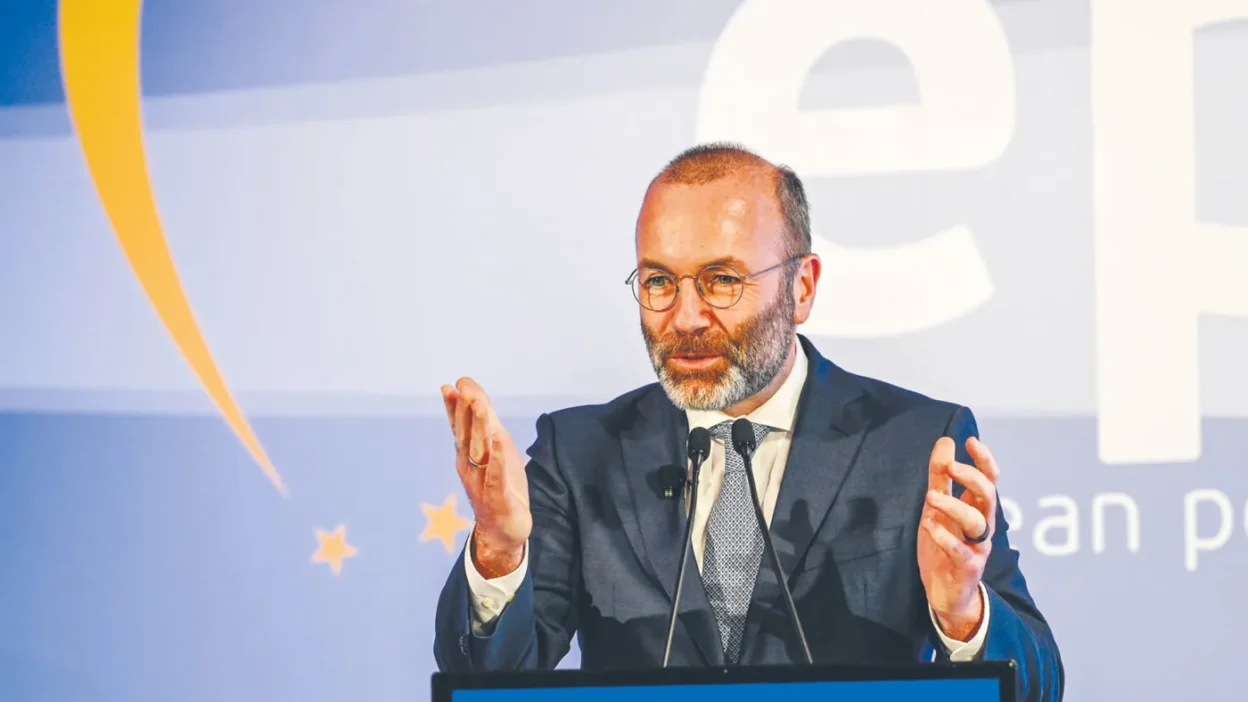
René Repasi, a German MEP from the Progressive Alliance of Socialists and Democrats (S&D), stated that EPP leader Manfred Weber must clarify whether cooperation with far-right groups is now part of the EPP’s political strategy.
German Concerns
Repasi also highlighted the domestic implications in Germany, where mainstream parties, including those in Chancellor Friedrich Merz’s government, maintain a “cordon sanitaire” excluding cooperation with the AfD.
Criticism from Renew Europe
Marie-Agnes Strack-Zimmermann of Renew and the German Free Democratic Party criticized the EPP, stating that building a majority in the European Parliament should not involve collaborating with forces seeking to weaken Europe. She accused the EPP of pressuring the democratic coalition of EPP, S&D, and Renew.
EPP Response and Past Precedents
Weber offered a limited response, claiming he was unaware of the inter-party chat. Merz asserted that there was no systemic cooperation between the EPP and eurosceptic populists, placing responsibility for clarification and consequences on Weber. This is not the first instance of the EPP relying on votes from PfE or ESN, including previous votes on the Omnibus I package and the definition of a “safe third country.”