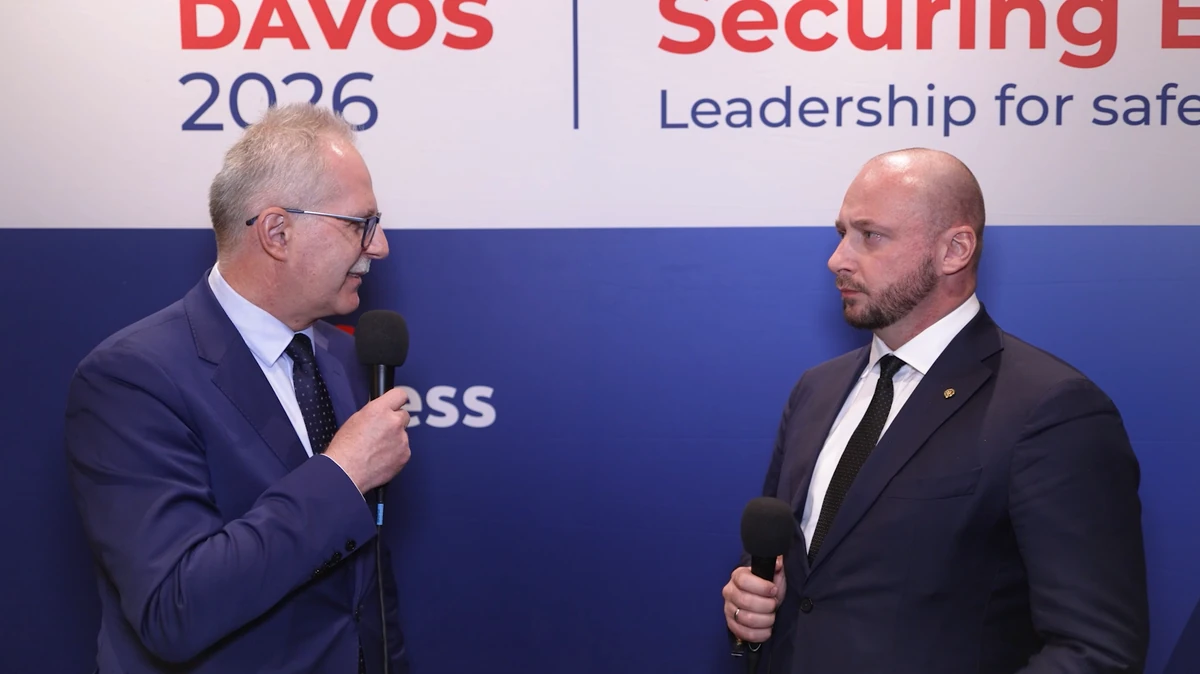
Jacek Siewiera discusses Europe’s security challenges, emphasizing resilience, economic cooperation, and European identity amid hybrid warfare threats.
Central and Eastern Europe’s Responsibility
According to Dr. Jacek Siewiera, Central and Eastern European countries today have a special responsibility for shaping the security debate in the European Union. He emphasizes that one of the key messages that should resonate in talks with Western partners is the need to build social resilience in all EU countries.
For our security, we should focus on building social resilience in all countries, stresses the former head of the National Security Bureau.
Hybrid Warfare as a Catalyst for Integration
Jacek Siewiera points out that the hybrid war conducted by the Russian Federation today serves as a catalyst for integrating processes in the European Union. In his view, as long as hybrid actions remain the dominant form of the opponent’s activity, one cannot speak of a division into “frontline” and “safe rear” countries.
Moreover, the consequences of the war are being increasingly felt by countries distant from Ukraine. Countries lying further from Ukraine, such as Denmark, often bear greater costs due to the hybrid war, notes Jacek Siewiera, pointing to disrupted flight operations at Copenhagen airport as an example of real economic losses. He adds that this experience is sobering for Western European societies, which had perceived the war in Ukraine as a distant problem.
Economic Cooperation Through Joint Ventures
The second security pillar indicated by the former head of the BBN is the development of joint economic ventures in the Central and Eastern European region. This primarily concerns creating so-called joint ventures that allow attracting capital, which is still lacking in the region.
Jacek Siewiera emphasizes that the era has ended where Poland and regional countries played only the role of assembly plants or subcontractors. Today, thanks to their own technology, competencies, and access to unique knowledge coming from proximity to Ukraine, it is possible to build partnership-based projects. Control over IP, intellectual property, and capital remains in the Polish domain, he notes, adding that such investments strengthen the security of Europe and NATO’s eastern flank.
Building a Strong European Identity
The third, equally important element, in Jacek Siewiera’s view, is building a strong European identity. He emphasizes that Europe should newly realize its Latin roots and common civilizational heritage, spanning over a thousand years of history.
He points out that few countries, like Poland or Finland, can speak of their legal system being based on Roman law without experiencing conquest. Awareness of what European identity is should unite all European nations, says the former head of the BBN.
Key Elements for European Strength
As Jacek Siewiera summarizes, it is precisely the common identity, social resilience, and cooperative economic partnership that can give Europe the strength to defend its own values. In his assessment, this is essential in a world of growing tensions and competition from the imperial ambitions of the United States, China, and Russia.