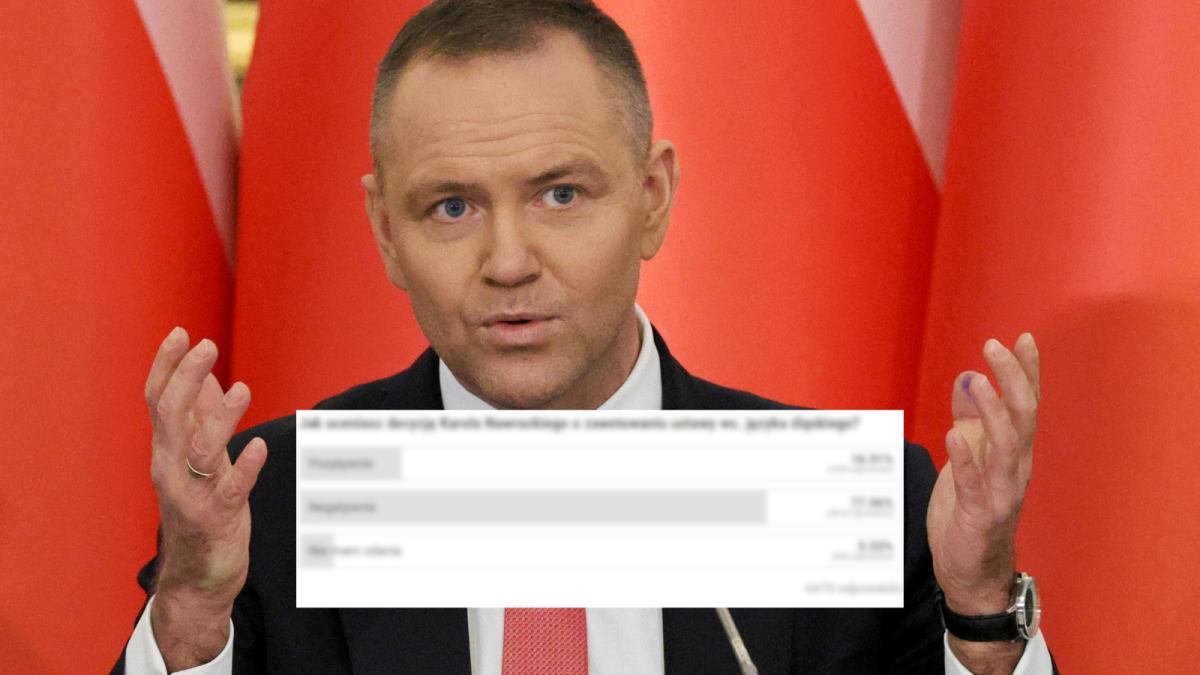
Following a match where Karol Nawrocki was booed, a poll gauged public opinion on the veto of the Silesian language act in Poland.
Fan Reaction and the Veto
Recent coverage detailed the reaction to Karol Nawrocki’s presence at a Górnik Zabrze versus Raków Częstochowa match. The incident sparked discussion, linking back to the veto of the Silesian language act.
Negative Sentiment Dominates Poll Results
The poll results show predominantly negative assessments. This represents the largest group of responses received.
Detailed Poll Breakdown (March 19, 2026)
A total of 77.56% (5018 votes) of respondents expressed a negative opinion. 16.91% (1094 votes) responded positively, while 5.53% (358 people) indicated they had no opinion – the least selected option.
The History and Structure of Silesian
The Silesian language has a long and complex history, and its status has been debated for years.
What is Silesian?
Silesian is a group of dialects spoken by residents of Upper Silesia, influenced by Polish, Czech, and German languages. Approximately 458,000 people declared using Silesian at home in a 2021 census. It primarily exhibits Slavic features, with loanwords from regional languages. While often described as a dialect of Polish by linguists, its status remains ambiguous. Efforts are underway to standardize its writing and increase its public presence, alongside initiatives promoting its use in education and culture.