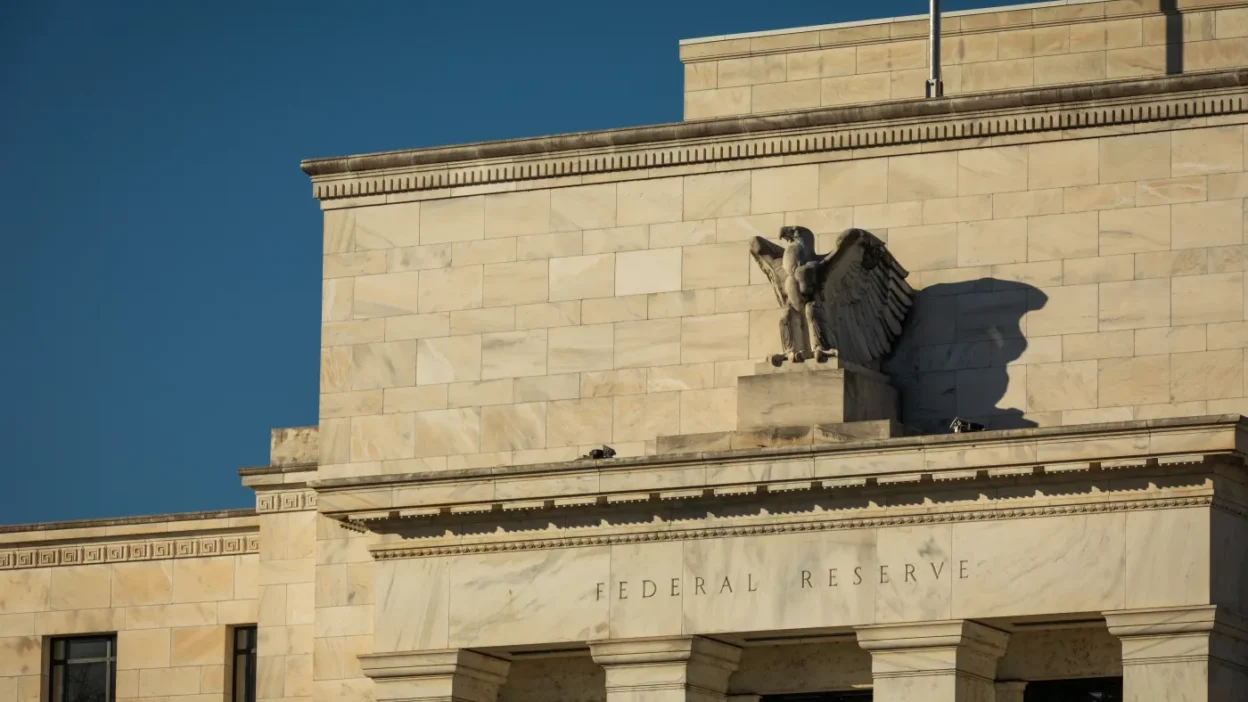
The Federal Reserve maintained interest rates Wednesday, citing growing economic uncertainty fueled by escalating tensions with Iran.
Fed Holds Steady on Interest Rates
The Federal Open Market Committee (FOMC) decided to hold the main interest rate in the 3.5–3.75% range on Wednesday. The Federal Reserve simultaneously emphasized increasing uncertainty related to the conflict with Iran.
US Economic Uncertainty Amid Iran War
The Committee stated in a release that the pace of US economic growth remains “solid,” job creation remains low, and inflation is at a “somewhat elevated” level. However, the FOMC suggested that future prospects for the US economy are uncertain, particularly in light of the war with Iran.
Potential Risks to Fed’s Dual Mandate
“The consequences of the situation in the Middle East for the US economy are uncertain. The Committee is aware of the risks to both sides of the dual mandate,” the statement read. This refers to the possibility of both rising prices and rising unemployment, as the Fed’s mandate focuses on pursuing lower inflation and lower unemployment.
Fed Forecasts and Potential Rate Changes
Wednesday’s decision – the second consecutive pause in rate cuts – aligns with market and commentator expectations. FOMC members suggested in their forecasts that they still plan at least one rate cut this year, although Fed Chairman Jerome Powell acknowledged that the possibility of raising rates was discussed during the meeting. The Committee did not reach a unanimous decision; former Donald Trump advisor Stephen Miran was the sole vote for a rate cut.
Impact of Oil Shock on Inflation
At a press conference following the meeting, the Fed Chairman noted that the “oil shock” currently being witnessed has impacted higher inflation forecasts. Powell said he expects it to influence higher inflation and lower consumer spending, but admitted that “no one knows” the scale or duration of its impact.
Political Tensions Surrounding the Fed and its Future Leader
The concluded committee meeting was the first since Donald Trump announced the nomination of Kevin Warsh to replace the currently criticized Jerome Powell as head of the Fed, whose term as chairman (but not as a member of the Board of Governors) expires in May. Powell said he has not yet decided whether to remain at the Fed after his term as chairman expires, but announced that he will temporarily remain in his current position if the Senate does not approve his successor by May 15.
Investigation into Powell and Republican Opposition
Much in this regard may depend on the outcome of the investigation against Powell conducted by federal prosecutors in connection with higher-than-planned costs for renovating Federal Reserve buildings. Republican Senator Thom Tillis announced that he will block any nominations to the Fed submitted by the president until the matter is clarified. On Friday, a federal court effectively blocked the investigation against Powell, ruling that it was politically motivated and not based on evidence. However, the prosecution announced it would appeal the decision.