


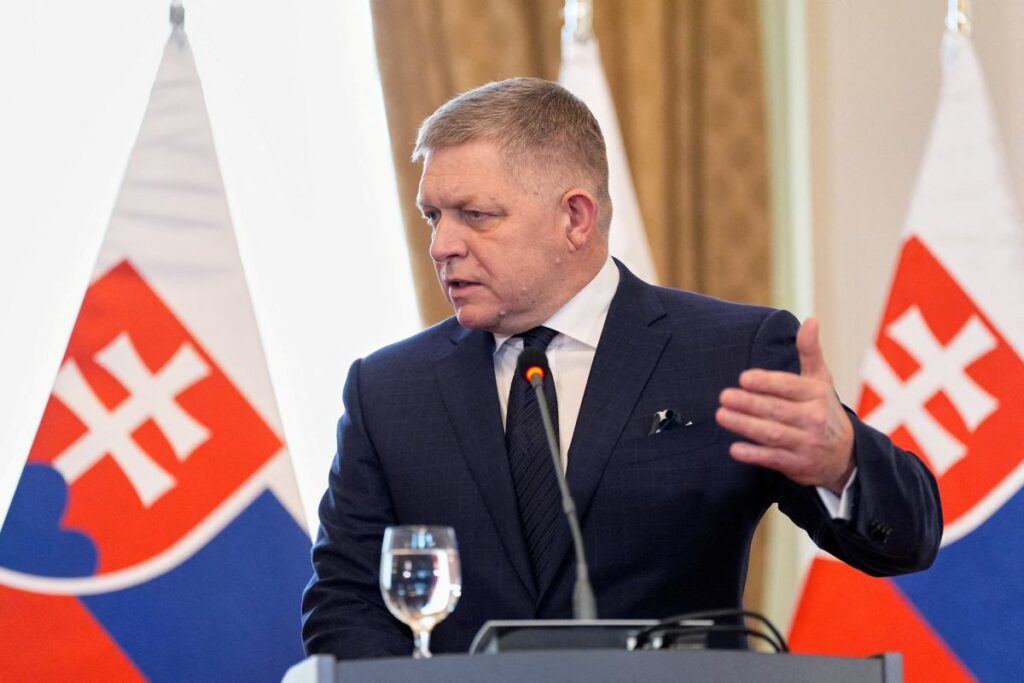
Slovak Prime Minister Robert Fico intends to visit Moscow, but Baltic nations have refused permission for his flight to traverse their airspace.
Poland Grants Airspace Clearance for Fico’s Moscow Trip
Poland’s Foreign Minister stated on Monday that the issue of granting airspace access for Slovak Prime Minister Robert Fico’s flight to Moscow has been resolved. This implies Fico may travel to Moscow via an alternate route, avoiding Polish airspace.
Poland received a request from Slovakia for permission to fly over its territory, which was subsequently analyzed.
Baltic States Block Fico’s Airspace Access
Estonia, Lithuania, and Latvia have all denied Fico permission to fly through their airspace to Moscow, particularly for the May 9th parade commemorating the end of World War II.
Estonia’s Foreign Minister emphasized that no country should use their airspace to strengthen ties with Russia while it continues to violate international norms and engage in aggression against Ukraine.
Previous Restrictions and Alternative Routes
Last year, the Baltic states similarly denied airspace access to foreign officials traveling to Moscow for the May 9th celebrations. Fico was then forced to take a longer route, flying over Hungary, Romania, and the Black Sea. Serbian President Aleksandar Vucic also utilized an alternative route.
Fico’s European Engagement Continues
Despite the airspace restrictions, Fico is not entirely isolated. German Chancellor Friedrich Merz is scheduled to visit Slovakia at the end of May.
Fico and Merz share similar views on several issues, including opposition to the European Union’s proposed ban on the production of gasoline-powered cars from 2035.
Seeking a New Role in Europe
According to the Slovak portal “Dennik N”, Fico views Merz’s visit as evidence that he can function as a significant leader on the European stage, even after the electoral defeat of his ally, Hungarian Prime Minister Viktor Orbán.
“Dennik N” suggests Merz’s visit could signal a softening of Fico’s anti-EU rhetoric and an attempt to build new, neutral relationships with European leaders.