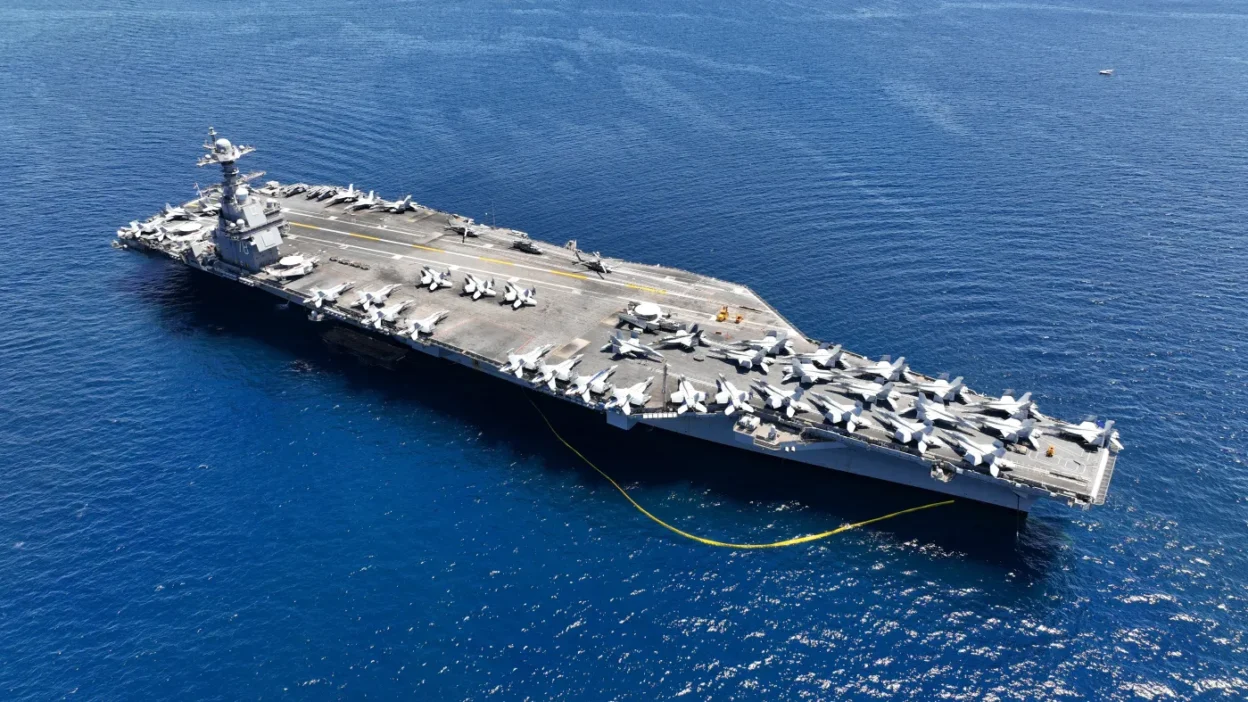
A fire broke out on the world’s largest aircraft carrier, the USS Gerald R. Ford, while it was returning from the Middle East, impacting nearly 200 crew members.
Incident on the World’s Largest Aircraft Carrier
A serious incident occurred aboard the world’s largest aircraft carrier, revealing issues stemming from prolonged service at sea. The fire, which erupted in a technical section of the ship, triggered a large-scale rescue operation and raised questions about the vessel’s condition after months of intensive operations.
Fire on USS Gerald R. Ford: Smoke and Numerous Casualties
The incident occurred last week aboard the USS Gerald R. Ford – the world’s largest ship of its type. The fire started in the ship’s laundry, a technical support area not directly involved in combat operations. The U.S. Navy quickly stated the incident was not military in nature or the result of an external attack.
Extent of Injuries and Medical Response
Official reports indicate two sailors sustained injuries and received medical attention, with their conditions described as stable and non-life-threatening. However, Reuters reports that nearly 200 crew members required medical intervention due to smoke inhalation.
Firefighting Efforts and Evacuation
The firefighting operation lasted several hours and involved numerous rescue teams on board. In one instance, a wounded soldier was evacuated by helicopter, demonstrating the severity of the smoke and the difficult conditions inside the ship.
USS Gerald R. Ford: 5,000 Sailors and Technical Issues
Approximately 5,000 people are on board the aircraft carrier, making it not only the largest but also one of the most technologically complex ships in the world. This large crew places a significant burden on the ship’s infrastructure, including ventilation, sanitation, and social facilities.
Prior Sanitation System Problems
Weeks before the fire, reports surfaced of problems with the ship’s sanitation system. The sewage system failure was widely discussed in U.S. military media and indicated growing operational difficulties. The laundry fire further confirms that even modern systems can fail with prolonged use.
Nuclear Propulsion Unaffected, Ship Remains Operational
Command assured that the ship’s nuclear propulsion was not damaged and that the vessel remains fully operational. This is a key piece of information, as any problems with the reactor could necessitate immediate withdrawal from the mission.
Prolonged Deployment and Increased Risk
The USS Gerald R. Ford has been at sea for over nine months, significantly exceeding the standard operational time for this type of unit. Originally operating in the Mediterranean Sea, the Pentagon decided in October to change its route.
Mission Shifts to Caribbean and Middle East
The ship was redirected to the Caribbean Sea to support operations related to tanker seizures and actions against Venezuelan authorities. In subsequent months, the mission was modified again – the ship was sent to the Middle East due to rising tensions around Iran and preparations for potential military operations.
Extended Mission and Logistical Challenges
Earlier this year, the crew was informed that their mission would be extended. Such decisions have serious logistical and technical consequences. Prolonged presence at sea limits opportunities for comprehensive inspections and upgrades.
Long-Term Equipment Exploitation and Cumulative Failures
Experts quoted by the “Wall Street Journal” point out that after many months of uninterrupted service at sea, even the most advanced equipment begins to fail. This applies to both technical systems and crew living infrastructure. Postponing planned maintenance work can lead to a buildup of failures that eventually affect safety and service comfort.
USS Gerald R. Ford: A New Ship Facing Challenges
It is worth emphasizing that the USS Gerald R. Ford is a relatively new unit that was supposed to be a symbol of the technological superiority of the U.S. Navy. However, successive incidents show that even the most modern solutions do not eliminate the risk associated with intensive exploitation.
Middle East Tensions and U.S. Operations
The presence of the aircraft carrier in the Middle East is not accidental. In recent months, the United States has increased its military activity in the region, responding to tensions related to Iran and the situation in the Persian Gulf.
Operations in the Strait of Hormuz
Media reports also mentioned operations in the Strait of Hormuz, targeting military and logistical infrastructure. In this context, the presence of a large unit like the USS Gerald R. Ford is strategically important and serves as a deterrent.
Increased Pressure on Crew and Systems
At the same time, maintaining the ship in a state of combat readiness for a long time increases pressure on the crew and technical systems. The fire, although formally not threatening operational capabilities, shows how easily serious disruptions can occur in the functioning of such a complex unit.