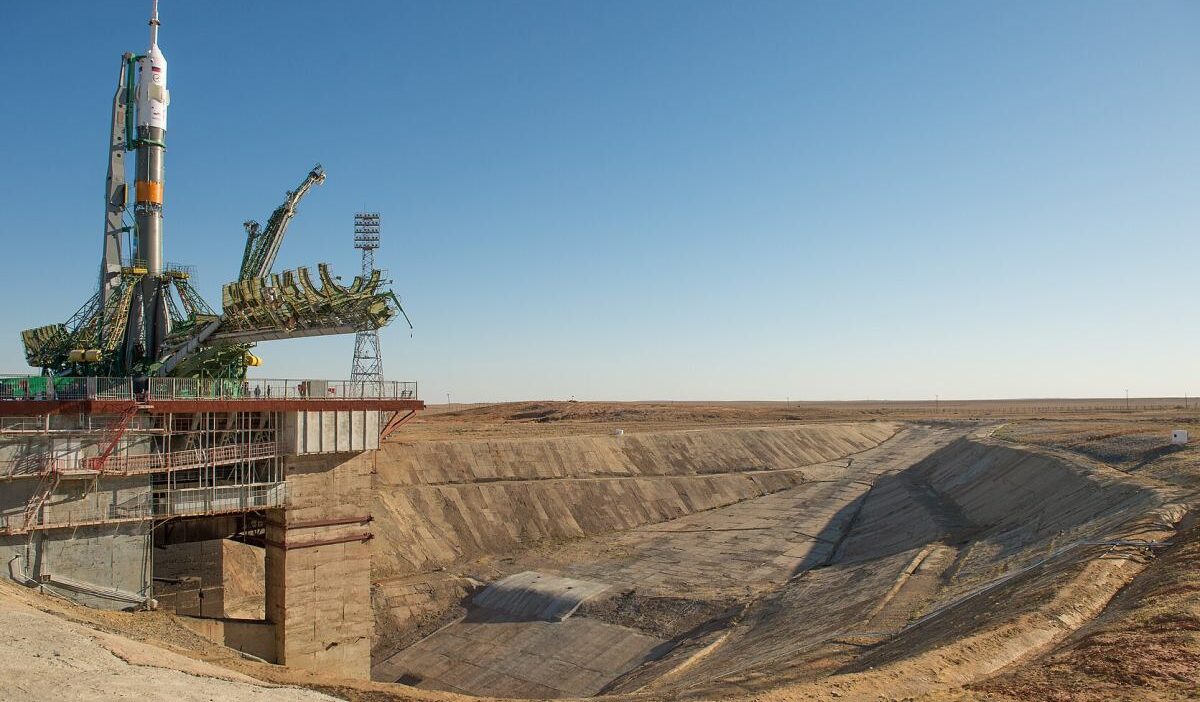
During a Thursday launch of Soyuz MS‑28 from Baikonur, the rocket cracked the historic launch‑pad, ending Russia’s continuous human spaceflight streak since Gagarin’s 1961 flight.
Launch Failure Details
On Thursday, the crewed Soyuz MS‑28 was launched successfully, carrying two Russians and an American to the ISS. The launch itself was nominal, but the rocket damaged the historic Baikonur launch platform on which the vehicle rides.
The old 1950s concrete pad sits on pillars above a large crater designed to disperse the massive plume of gases produced by the boosters. A metallic service bridge is lowered during preparation to allow technicians to connect fuel lines and perform final checks.
Just before ignition, the bridge is withdrawn and stored behind fire‑resistant shielding. It was this bridge that fell inadvertently onto the launch‑pad’s support shaft during the recent launch.
Critical Flight‑Pad Damage
Recorded footage from the MS‑28 mission shows the entire metallic bridge tumbling onto the crater floor beneath the pad. The bridge had to be moved aside for the rocket to ignite, otherwise routine operations would not have proceeded.
While the videos do not reveal what happened under the platform itself, vibrations from the lift‑off may have loosened the bridge’s safety locks, causing it to slide, roll under the launch table and fall on the opposite side of the crater.
The Baikonur launch complex contains many cameras overlooking the pad, offering ample evidence of the incident.
Root Causes and Speculation
Discussions on Russian technical forums and in coverage by space journalists point to inadequate funding and poor oversight as the main culprits. Technicians may have failed to correctly lock the service platform.
Gas thrust from the boosters could have pulled the bridge from its housing, after which the platform slid along its tracks and fell into the crater.
The inconsistency of the tooling and the perception of a failing work environment have increased the probability that the platform was not secured correctly.
Impact on Russian Space Program
Pad number 31 at Baikonur is now unusable. It is the sole pad capable of launching crewed Soyuz missions.
Other pads at Plesetsk and Vostochny lack the required infrastructure and certification for crewed flights, limiting the complex to uncrewed missions.
The blockage of Pad 31 means all future flights to the ISS, including uncrewed Progress resupply vehicles, are suspended until the fault is remedied, potentially for months or years.
Broader Context of Funding and Management Issues
Roscosmos has struggled with financial deficits for years. Annual budgets have hovered around three billion dollars—far below what specialists say are required.
Corruption, as illustrated by the Vostochny launch‑pad construction scandal, and inefficiency—Roscosmos employs roughly 170 000 staff compared with SpaceX’s 10 000—contribute to systemic decline.
In September 2023, Roscosmos‑affiliated Energia sent a letter from its new director, Igor Maltsev, detailing “millions of dollars of debt, loan interest, ongoing lawsuits, and a demotivated workforce.”
Russia’s Future in Space
New rockets such as the light Angara 1.2 and the heavy Angara A5 are progressing slowly; only twelve Angara flights have occurred since 2014.
Development of the so‑called Soyuz‑5 (a misnamed non‑Soyuz vehicle) is ongoing, while the modified Soyuz‑2 remains Russia’s primary launch vehicle.
With the ISS set to decommission at decade’s end, Russia may either partner with China for its more ambitious programme or continue as a secondary contributor, while its domestic space program may face prolonged paralysis.