


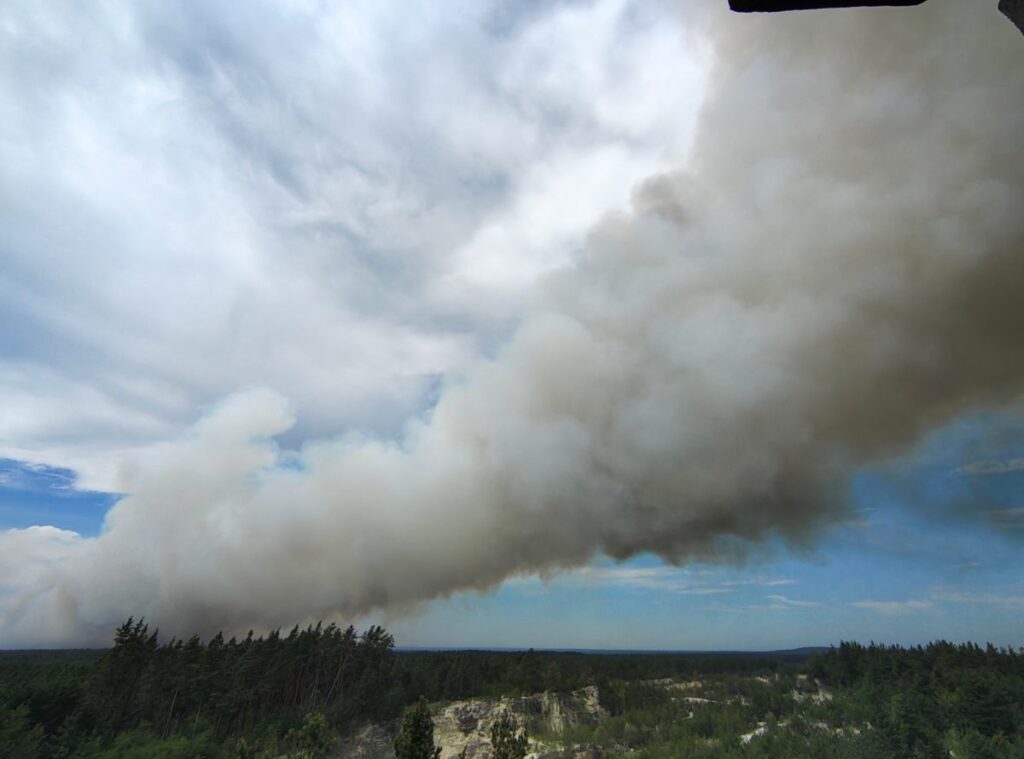
Massive forest fires in Poland’s Roztocze region have expanded to approximately 300 hectares, prompting an intensive emergency response following a fatal firefighting aircraft crash during the operation.
Current Fire Status and Response
Over 100 firefighting units are currently deployed to combat the blaze in the Puszcza Solska forest area. The fire, which began Tuesday afternoon on private land, rapidly expanded to 150 hectares and is now estimated to cover 300 hectares.
Minister Kierwiński stated that current resources and means are sufficient to manage the situation. However, weather conditions remain a significant challenge for the crews on the ground.
Fatal Aviation Accident and Political Response
During firefighting operations in Biłgoraj county on Tuesday evening, a Dromader aircraft from the Regional Directorate of State Forests in Warsaw crashed, resulting in the death of the pilot. Prime Minister Donald Tusk attended the crisis management meeting to oversee the situation and offered condolences to the pilot’s family.
Addressing the emergency services, Tusk emphasized the difficulty of the situation, noting that the weather is not an ally and will not resolve the crisis on its own.
Public Health and Safety Measures
Two firefighters were hospitalized due to smoke inhalation, though their condition is reported as stable and non-threatening. While no towns are currently under threat of evacuation, the Government Security Center (RCB) has issued warnings for Biłgoraj county.
Residents are advised to turn off ventilation, limit outdoor activities, and prepare essential documents and medications. Authorities also urge the public to stay away from the fire zone to avoid hindering emergency operations.
Environmental Impact and Restrictions
The Lubelskie Voivodeship is currently under the highest fire danger level. High temperatures and low humidity have created a high risk for further outbreaks, leading the Roztocze National Park to ban entry into forest areas within Puszcza Solska until conditions improve.
The affected area contains numerous protected nature sites, including nature reserves, landscape parks, and Natura 2000 zones, highlighting the severity of the environmental threat.