


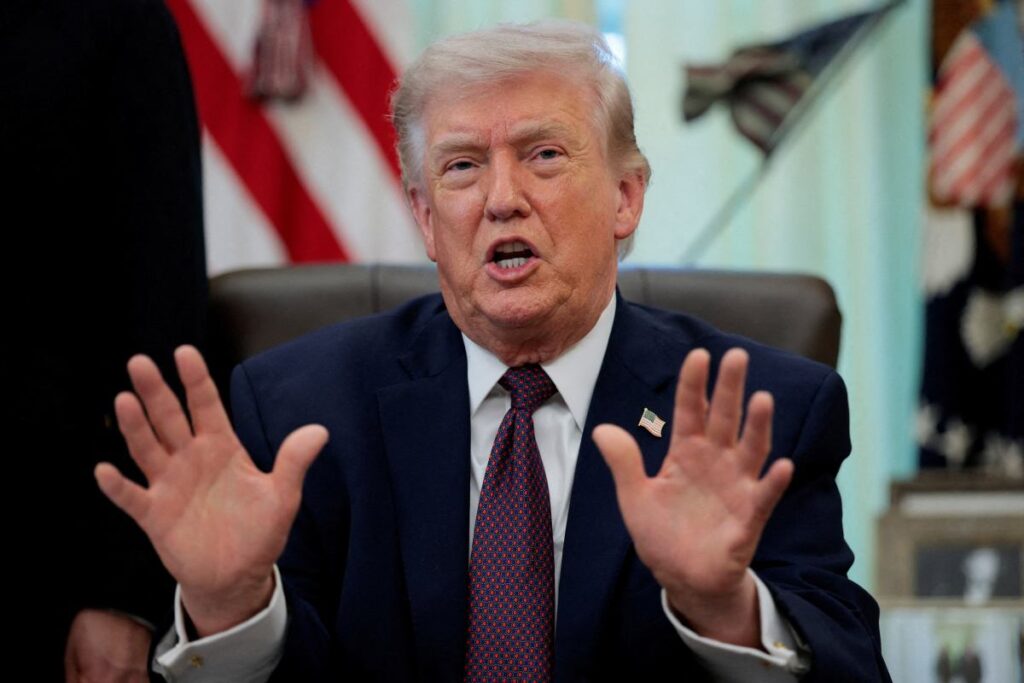
Following Donald Trump’s announcement of 5,000 additional troops for Poland, a former Pentagon official warns that the move stems from chaotic decision-making rather than coherent military strategy.
Trump’s Pledge and the Pentagon’s Confusion
President Donald Trump announced on Thursday, May 21, via Truth Social, that the United States will send an additional 5,000 troops to Poland, linking the decision to his support for presidential candidate Karol Nawrocki. This declaration followed a sudden, unexplained Pentagon decision to halt the rotation of the 2nd Armored Brigade Combat Team from Fort Cavazos, Texas.
It remains unclear how Trump’s announcement will materialize. It is uncertain whether a unit will be redirected from Germany, if the previously stalled rotation will proceed, or if a different strategy is being implemented. The Pentagon has yet to offer an official clarification.
Logistical Hurdles and Strategic Chaos
Jim Townsend, a former Pentagon official for European and NATO policy under Barack Obama, noted that redeploying a brigade is a complex logistical task. He warned that even if the decision is official, the physical relocation and “bed down” process required in Poland could take six months or longer.
Townsend labeled the administration’s internal process as a source of “complete confusion.” He argued that the initial decision to halt the rotation lacked military justification and appeared to be an attempt by subordinates to appease the President by cutting troop levels without proper consultation.
Personnel Shortages and Administrative Failure
According to Townsend, the lack of transparency from military leaders during Congressional testimony regarding the halted rotation suggests they were merely following orders without being briefed on the underlying rationale. He described this as a classic case of the “right hand not knowing what the left is doing.”
The expert attributed these failures to severe staffing cuts within the civilian administration. When administrative personnel are reduced to the bone, there is no one left to work through the necessary details, leading to impulsive announcements and subsequent operational errors.
Shifts in NATO Force Commitments
Townsend also highlighted concerns regarding an upcoming meeting in Brussels, where the U.S. is expected to announce a reduction in its contribution to the NATO Force Model. This system of high-readiness forces is critical for the Alliance’s ability to respond to regional crises.
The U.S. will be represented by Alex Velez-Green, a key advisor to Under Secretary of Defense for Policy Elbridge Colby. Adjusting these force commitments has become a priority for the team ahead of the NATO leaders’ summit in Turkey this July.