


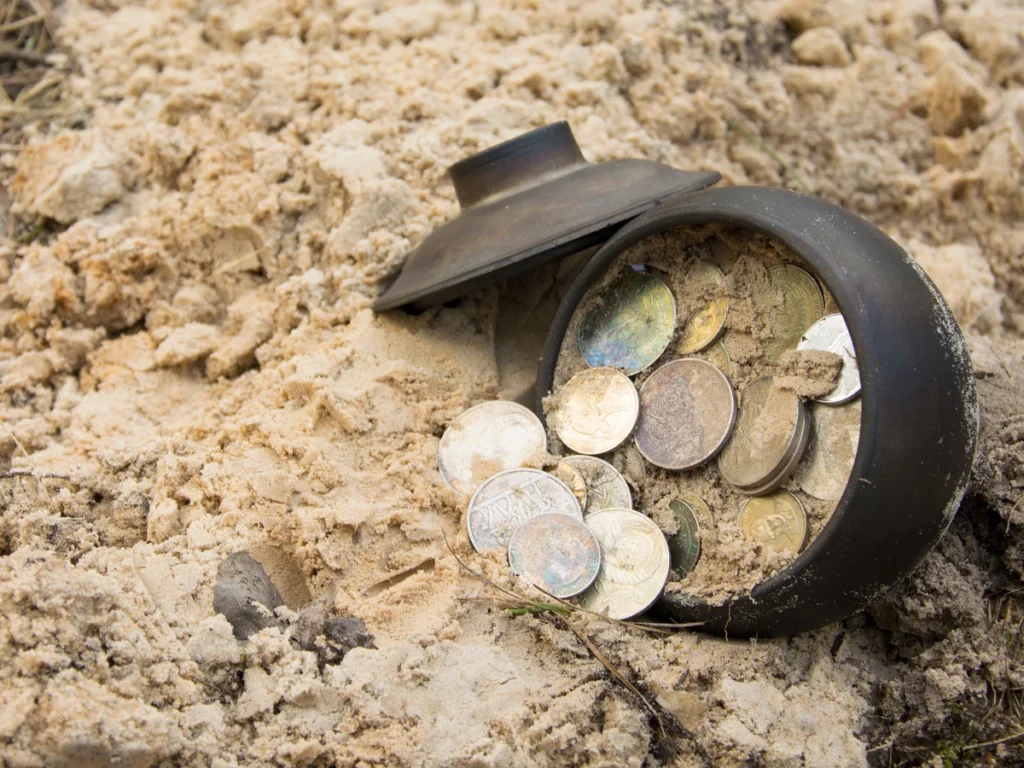
Polish history has created a mass phenomenon of hidden treasures, but legal ownership often remains unclear and creates complex court cases.
Cultural Fascination with Treasure
Media frequently reports on discovered historical treasures, a topic that remains vibrant in popular culture. Generations have grown up on stories of clever discoverers, from treasures in Napoleonic wars in “Szatan z siódmej klasy” to castle treasures saved from demolition in “Wakacje z duchami” and treasures from Templars to WWII in the multi-volume “Pan Samochodzik.”
Less Rational Treasure Hunters
The genre also includes stories about less rational treasure seekers, such as in “Sposób na Alcybiadesa” featuring the tooth of Władysław Herman or a false misiurka. The mythical treasure of the “mad baron” Roman von Ungern, hidden somewhere in the Far East, was the target of search missions including German and American ones, kept alive in Poland by Ferdynand Ossendowski and Kamil Giżycki.
Treasure Deposition in Polish History
Due to Poland’s complex history, one can speak of a veritable “mass phenomenon” of hiding treasures, commonly referred to as “deposits.” The contents of these deposits vary, including personal items such as photos, letters, porcelain, tableware, and personal jewelry. These need not be the Amber Room or a golden train.
Legal Complexities
The depositor could be either the legitimate owner of the property or, conversely, a war criminal attempting to hide stolen goods. Numerous myths have developed around “treasures,” particularly in the realm of civil law rights. In many cases, the legal status may be unclear and create genuine court puzzles.