


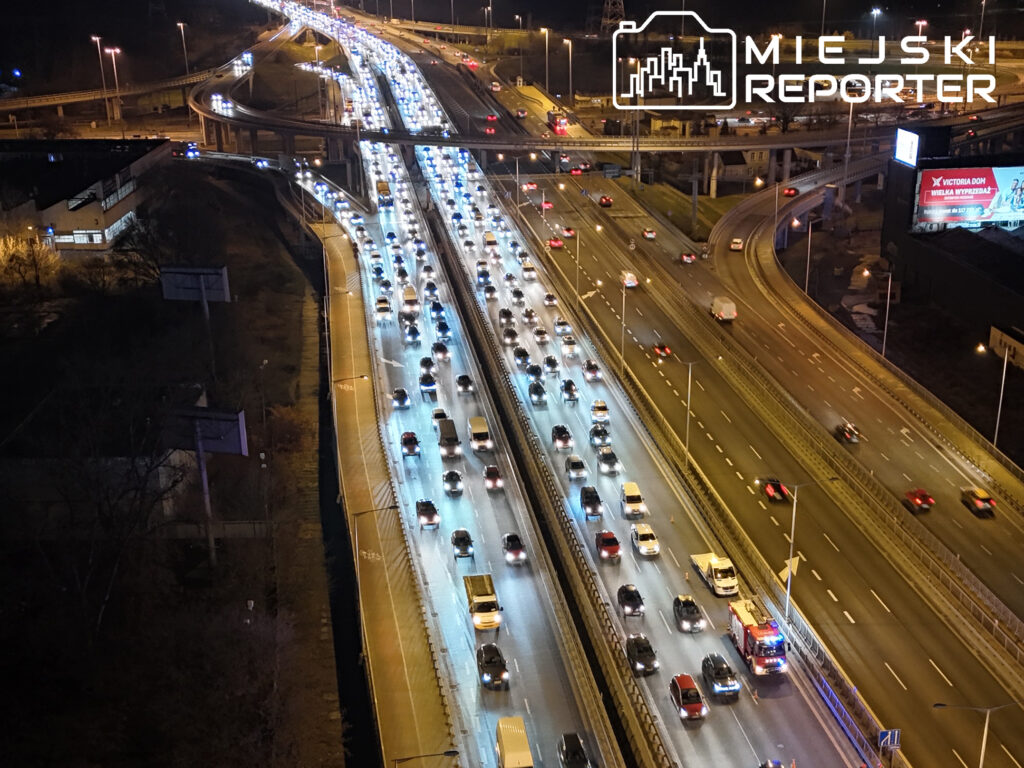
Poland’s General Directorate of National Roads and Motorways has approved a new permanent traffic scheme for the Warsaw section of the S8 expressway, with implementation scheduled for 2026, eliminating the bus lane and adding a standard lane to each direction.
Approval and Implementation Schedule
The permanent traffic arrangement for the S8 section from Konotopa to Marka was officially approved on 12 November 2025. The General Directorate of National Roads and Motorways (GDDKiA) indicated that the project, titled “Update of the Permanent Traffic Organization on Expressway S8 arising from SOR signage verification,” will be executed in stages. The first phase is set for the second and third quarters of 2026, with subsequent adjustments dependent on weather conditions and available funding.
Major Route Changes
Key alterations include the elimination of the bus lane and emergency lane on the stretch between Wisłostrad and Marymont, converting the space into general traffic lanes and providing drivers with four lanes in each direction. At the Modlińska junction, an additional lane will be added for traffic heading toward the bridge, while the inbound lane count will be reduced from two to one. The Łabiszyńska junction will see the outer right lane re‑designated for straight movement to increase throughput, and at Powązkowska, the emergency lane under the viaduct will be removed and replaced with a lane for exit onto Broniewski Street.
These modifications aim to reduce lane interleaving, shorten turning lanes, and simplify signage, thereby improving both flow and safety on one of Poland’s busiest corridors.
Impact on Daily Traffic
According to road authority data cited by Białołęka Councilor Sebastian Gut, the Warsaw stretch of the S8 accommodates over 200 000 vehicles per day, with the most heavily used bridge—General Stefan Grota‑Różewski Bridge—handling about 180 000 daily crossings. The proposed changes are expected to decrease congestion, shorten travel times, and mitigate frequent collision points caused by dense signage and complex lane arrangements.
Stakeholder Input and Future Monitoring
The project underwent consultations that included the Warsaw Police Service to ensure traffic safety considerations were met. Councilor Gut has announced ongoing monitoring of the implementation process, emphasizing that while the reforms will not resolve all issues, they represent a significant step toward better daily driving conditions for the hundreds of thousands of commuters using the corridor.