


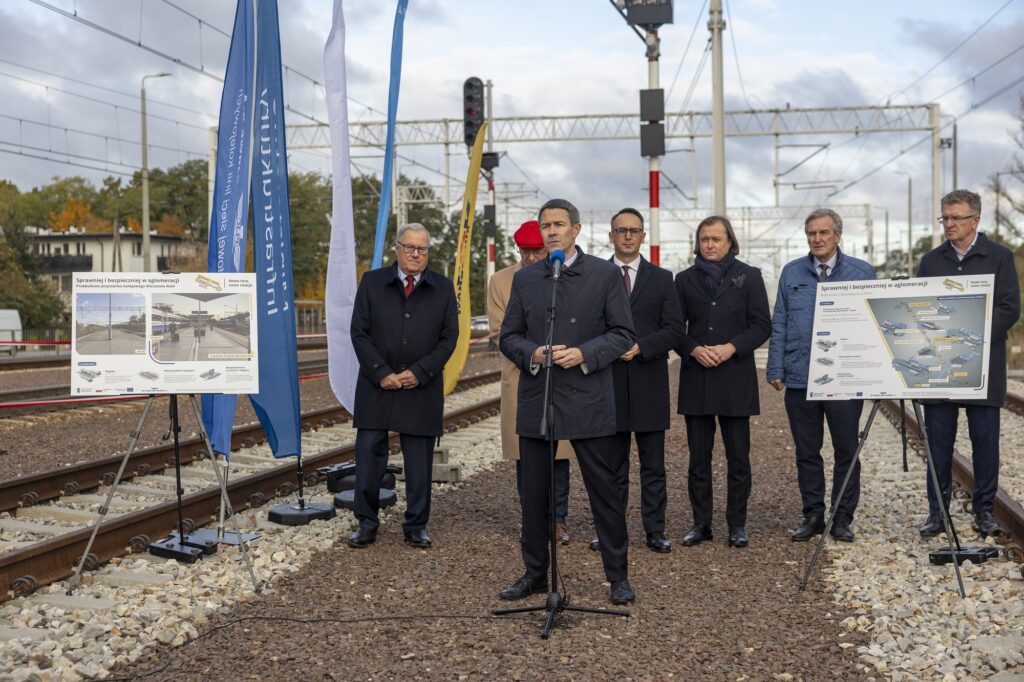
Poland’s state rail operator has launched a major upgrade on the Warsaw–Lublin line, adding two extra tracks to Otwock and cutting travel time to Lublin to about 90 minutes, slated for completion in 2028.
Project Overview
Poland’s state rail operator has launched a major upgrade on the Warsaw–Lublin rail corridor, adding two extra tracks between Warsaw Wawer and Otwock, modernising eight stops, and inserting 20 pedestrian tunnels to reduce travel time to Lublin to about 90 minutes. The final phase is scheduled for 2028.
Track Expansion and Station Modernisations
The upgrade will add two dedicated tracks to segregate commuter and long‑distance traffic on the Wawer–Otwock segment. Modernisation will cover eight stops: Warszawa Anin, Warszawa Międzylesie, Warszawa Radość, Warszawa Miedzeszyn, Michalin, Józefów, Otwock Świder, and Warszawa Falenica.
Construction Phases and Contract Details
A contract was signed in 2023 with Trakcja S.A., a consortium valued at roughly 1.58 billion złoty gross, for the final Warsaw East–Lublin section. Work is slated to start this year, beginning with temporary platforms, detours and sidings to maintain train movements during later stages.
Safety and Accessibility Improvements
Four new non‑intersecting level crossings will replace existing ones, and new road and pedestrian tunnels will enhance safety. All upgraded stops will be fully accessible and equipped with modern passenger information systems.
Crossing Replacement Details
A road tunnel will replace the current level crossing at Radość (Panna Wodnej – Izbicka), another tunnel will service Falenica (Walcownicza – Bystrzycka), a third tunnel will open under Józefów (near Cichej – Matejki), and a new road viaduct will be built on Werbeny – Brucknera, where the Warsaw and Józefów limits meet.
Future Timeline and Speed Gains
Once the works are finished and necessary administrative approvals are secured, the route from Warsaw to Lublin is projected to take about 90 minutes. Currently the fastest trains cover the distance in approximately 1 hour 46 minutes. Earlier phases, such as the second track between Otwock and Pilawa and the Pilawa–Lublin extension, have already improved service.
Technical Enhancements and Funding
The project will raise operating speed to 160 km/h for long‑distance trains and overhaul supporting infrastructure, including traffic control systems. It receives co‑financing from the European Funds for Infrastructure, Climate, Environment 2021–2027 programme.