Ahead of President Macron’s speech on France’s nuclear doctrine, Paris and Berlin are redefining Europe’s nuclear deterrence strategy.
France Aims to Defend Europe Atomically
A day before President Macron’s speech on the future of France’s nuclear doctrine, the French Ministry of Defense prepared a document indicating a shift in Europe’s approach to nuclear deterrence.
Discussion on Europe’s nuclear umbrella follows recent actions by President Trump’s administration. Repeated announcements to reduce U.S. troops in Europe and calls for the continent to take responsibility for its security have prompted nations to arm themselves. They also question if Washington might tie its nuclear umbrella to political interests. Britain and France, the only European nations with nuclear forces, have joined the nuclear game.
The French document states, “French nuclear deterrence, in itself, is a decisive factor for Europe’s security.” It adds that France’s vital interests extend beyond its territory, forming a network beyond its borders.
France’s nuclear doctrine relies on the “ambiguity” of its interests to complicate an aggressor’s calculations.
Germans Eager to Work on European Nuclear Weapons
Six years ago, France invited European nations to participate in joint deterrence exercises and talks on a European nuclear doctrine. Paris received no response until 2025, when Trump took office in Washington. Britain then expressed openness to nuclear cooperation.
In July 2025, Macron and Starmer signed the Northwood Declaration to better coordinate deterrence efforts. By late 2025, British officers joined Operation Poker, a simulation of French nuclear forces. In February 2026, Germany entered the game. Chancellor Merz confirmed “preliminary nuclear talks with France and Britain” but ruled out Germany seeking its own nuclear weapons.
A survey by the German Council on Foreign Relations shows 75% of Germans support French-German nuclear talks, up from 54% in March 2025. In France, 64% agree to share nuclear deterrence with Germany.
Polish Nuclear Weapon in Politicians’ Announcements
Poland has also debated nuclear deterrence. In 2022, President Duda expressed interest in the U.S. Nuclear Sharing program. President Nawrocki supports joining the nuclear program, not ruling out building sovereign nuclear capabilities.
BBN head Cenckiewicz confirmed, “Russia must be treated as an existential threat to Poland… The consequence is participation in nuclear sharing or building sovereign nuclear capabilities.”
French Nukes in Poland? It’s No Fiction
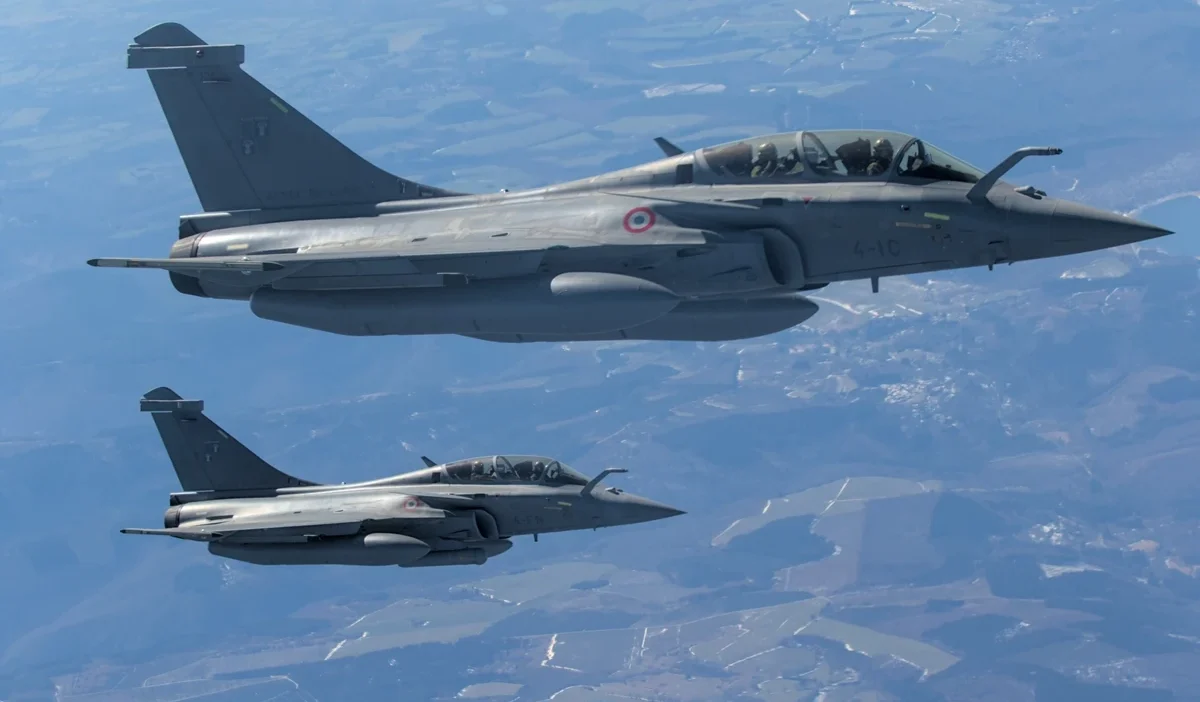
Macron’s upcoming speech could change Europe’s nuclear landscape. Experts suggest expanding the French nuclear umbrella to European nations, possibly using bases in Poland and Germany for exercises with Rafale aircraft. In September 2025, Rafales appeared in Poland, signaling political intent after a Russian drone attack.
French nuclear deterrence includes four submarines with M51 missiles (10,000 km range). Macron announced plans to expand air forces from two to three squadrons.