


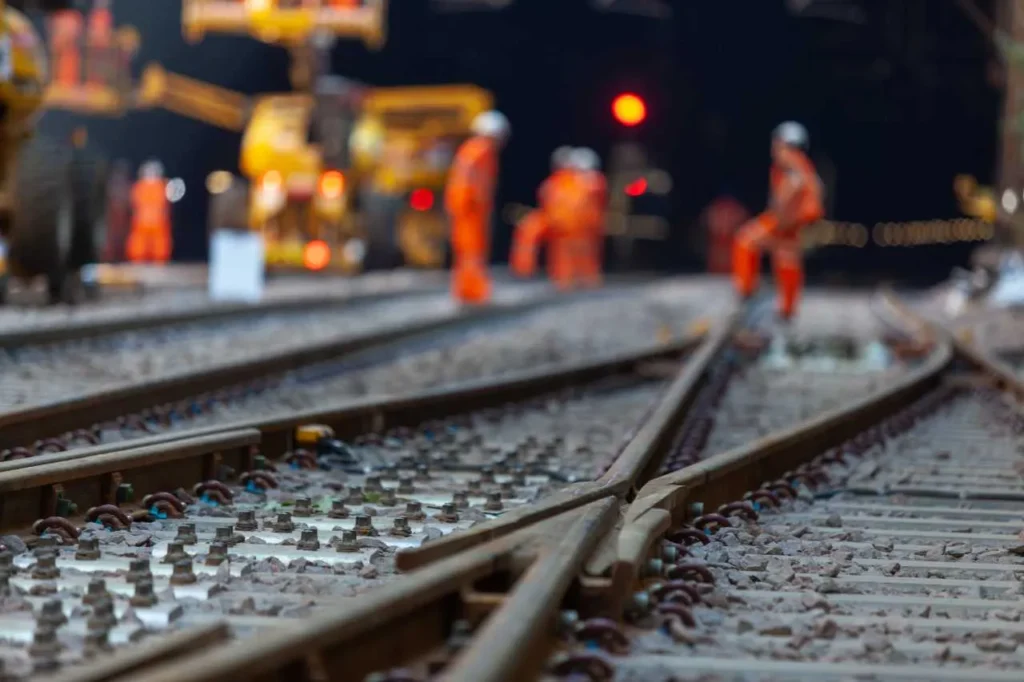
A planned overhaul of Poland’s Railway Fund, diverting fuel tax revenue to rail infrastructure, has sparked opposition from road construction companies.
Fuel Tax Allocation Dispute Emerges
Proposed changes to the Railway Fund, aimed at securing stable investment funding for rail projects, have divided the construction industry. Road construction firms are protesting the planned allocation of 50% of fuel tax revenue to railway investments.
These firms argue that significantly more funds are needed for road maintenance and development, claiming the shift will negatively impact ongoing and future road projects.
Years of Advocacy for Rail Funding
Contractors involved in the rail sector, along with suppliers of rail components, have long advocated for reform of the Railway Fund. Unlike roads, rail investments have historically lacked consistent funding, relying heavily on fluctuating EU funds.
During the second term of the PiS government (2019-2023), securing EU funding became problematic, leading to a substantial decrease in announced tenders. A recent proposal aims to increase annual rail investment funding from 2 billion to 10 billion złoty.
Proposed Funding Breakdown
Under the proposed legislation, the Railway Fund would receive 50% of fuel tax revenue, with 47.75% allocated to the National Road Fund and 2.25% to the Bus Transport Development Fund. Currently, the distribution is 19.45%, 76.90%, and 3.65% respectively.
The government assures that road funding will not be reduced, citing an anticipated increase in fuel tax revenue coupled with a reduction in fuel excise duty.
Road Builders Cite Original Intent of Fuel Tax
During consultations on the proposed changes, the Polish Union of Construction Employers and the All-Poland Road Construction Chamber protested the new allocation. They maintain that fuel tax revenue should be exclusively dedicated to roads, as originally intended when the tax was introduced over 20 years ago.
They argue that railway investments should have their own independent funding sources, avoiding a negative impact on road infrastructure funding. They point out that in 2004, 76% of fuel tax revenue went to the Road Fund, with smaller portions allocated to regional bus transport and railways (primarily for diesel locomotives).
Concerns Over Road Maintenance Backlog
Road construction firms express concern that the increased fuel tax revenue will not fully compensate for the shift in funding, as roads require increasingly substantial maintenance and repair investments.
They highlight significant funding shortfalls for both national and local roads, estimating a 2-2.5 billion złoty shortfall for national road maintenance in 2024. The General Directorate for National Roads and Highways anticipates growing repair and reconstruction needs as existing highways age.
Industry Divisions and Counterarguments
The construction industry is reportedly divided on the issue. Organizations aligned with the rail sector criticize the road construction groups for opposing the plan, which they see as crucial for ensuring stable rail investment funding.
They point to the fact that road projects have already received three rounds of contract value adjustments, while rail projects have yet to receive a second. One representative questioned the logic of opposing the funding shift, drawing a parallel to refusing to pay health insurance if one doesn’t use public hospitals.
Future Funding Plans and Legislation
Infrastructure Minister Dariusz Klimczak stated during the European Economic Congress that the ministry aims to implement changes to the Railway Fund to ensure stable funding for rail investments. The new legislation is expected to take effect in 2027.
Deputy Minister Maciej Lasek indicated that the railway sector could expect even greater funding in the coming years, with the Railway Fund potentially gaining borrowing capabilities similar to the Road Fund from 2030 onwards.