


A journalistic investigation reveals thousands worldwide are profiting from the war in Ukraine by betting on its outcome on the Polymarket platform, with millions of dollars at stake.
Speculation on the Ukraine War
A journalistic investigation by “The Guardian” has uncovered a disturbing mechanism where thousands of people worldwide are earning money from the war in Ukraine by betting on its course on the Polymarket platform. Millions of dollars are at play, and specific events on the front lines are becoming elements of financial speculation.
How Polymarket Works
Polymarket is a so-called prediction market. Users bet on whether a given event will occur, buying either a “yes” or “no” option. If they are correct, they earn money; if not, they lose. The platform operates on cryptocurrencies and does not have a traditional bookmaker – the odds are set by the players themselves.
Rapid Growth in Trading Volume
In 2024, the annual turnover was around $400 million. Today, that amount can appear in a single day, demonstrating the scale of the phenomenon.
Bets on Specific Events
In the case of the war in Ukraine, specific bets are being placed, such as a bet of over $500,000 on whether Russia will capture Kostiantynivka. The outcome depends on whether the American Institute for the Study of War shows on the map that Russians control a specific point in the city – in this case, the railway station.
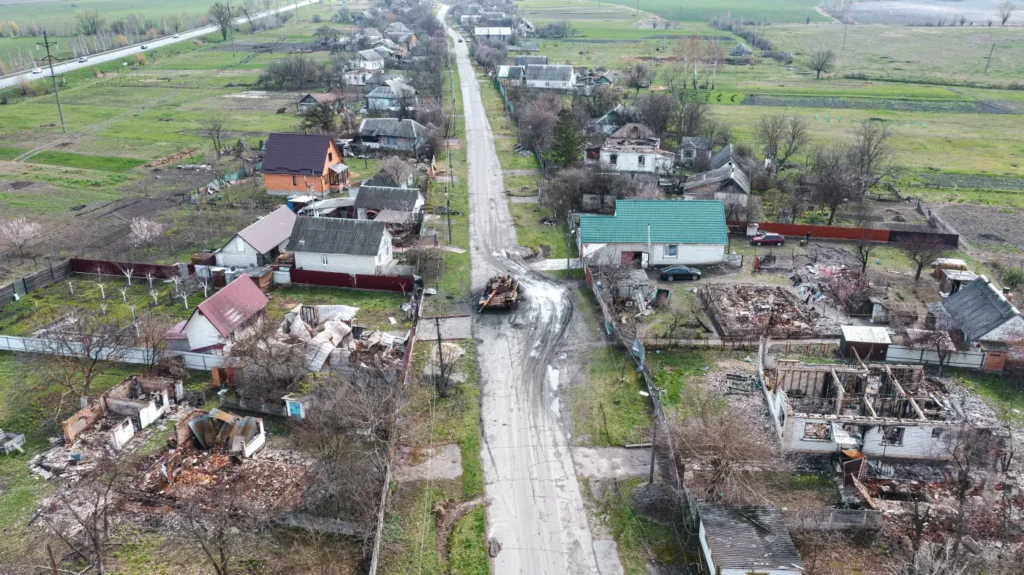
The city has been under shelling for months, and civilians still live there. However, for players, it is just a scenario to play out.
Pressure and Attempts at Manipulation
Players are not limited to betting. They are also trying to influence how events are described. There have been instances of criticism of maps published by analysts, deeming them too imprecise to resolve bets. There have also been attempts to contact the authors of the analyses to change the way the situation on the front lines is presented. The Institute firmly rejected this and emphasized that it does not agree to the use of its materials for gambling related to the war.
If the outcome of a bet depends on the interpretation of data, there is a temptation to influence that data.
Wider Range of Controversial Bets
The war in Ukraine is only a fragment of the market. Bets concerning global political and military tensions appear on Polymarket.
Speculation on US-Iran Relations
One of the largest markets involved speculation about the relationship between the United States and Iran. Approximately $280 million was wagered on a potential ceasefire. Additionally, over $7.5 million concerned the scenario in which the US would launch a military attack on Iran.
Analyzing Global Risks
In communities focused around the platform, users analyze detailed scenarios. One player directly wrote about the risk of a third world war, basing his predictions on a possible strike on the Iranian oil terminal on Kharg Island. Others considered whether taking control of the Iranian nuclear program could lead to the end of the conflict.
There have also been attempts to influence media coverage. In one case, users allegedly threatened an Israeli journalist, demanding a change to an article to meet the conditions of a bet regarding an Iranian attack on Israel on a specific day.
The Professionalization of Gambling
One of the most striking figures is Joseph Francia – a thirty-something economics graduate from the University of California, Berkeley. Francia has been analyzing bets and arbitrage strategies for years.
While still a student, he exploited differences in odds between bookmakers, simultaneously betting on opposite outcomes and guaranteeing himself a profit. In 2025, after losing his job, he returned to this activity and founded the Prediction Hunt community on Discord.
The group has thousands of users who share strategies. They monitor so-called “smart money,” which is the movement of the most effective players. They also analyze potential information leaks, such as regarding decisions by central banks or political events.
Francia admits that betting on war is problematic. He points out that for some people, Polymarket becomes a source of information in a world full of conflicting messages, but it remains a tool for profiting from tragedy.
Nate Silver, UMA, and the Dispute over “Truth”
In 2024, well-known analyst Nate Silver joined the Polymarket advisory board, considering prediction markets a useful tool for predicting the future. The platform gained prominence, among other things, due to its accurate prediction of Donald Trump’s victory in the 2024 presidential election, contrary to some traditional polls.
The Role of UMA Cryptocurrency
However, a key problem concerns the way bets are settled. The outcome is decided by holders of the UMA cryptocurrency. They vote on whether a given event is considered fulfilled.
As analyst Ben Yorke points out, the system assumes that participants will be guided by truth, but in practice, errors occur. It is also unknown who the largest token holders are and whether they themselves participate in the bets.
This means that the outcome – and therefore the money – can be decided by anonymous people with a direct interest in the resolution.
Growing Risks and Pressure for Regulation
The scale of the phenomenon is beginning to worry politicians and experts. There are warnings that prediction markets may affect not only information but also real investment decisions.
Data from Polymarket is analyzed by some investors as an indicator of sentiment. If the platform continues to grow, it may affect financial markets and even pension funds.
At the same time, calls for regulation are emerging. American senators point to the risk of manipulation, insider trading, and the use of armed conflicts as a tool for speculation.