


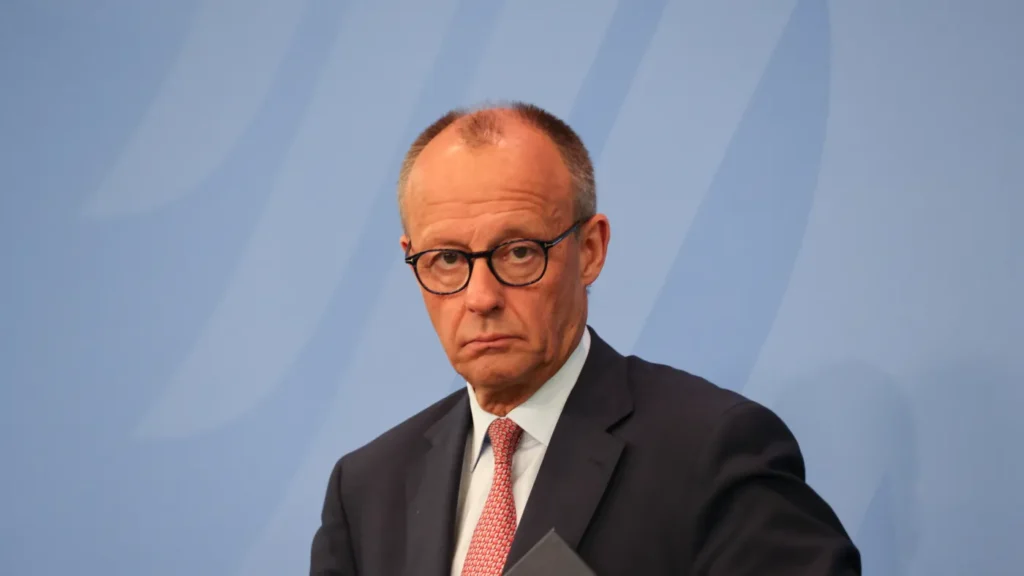
Berlin criticized the U.S.-Iran talks in Islamabad as poorly prepared, anticipating long-term repercussions from Middle East conflict.
Germany Expresses Disappointment with U.S.-Iran Talks
Germany has voiced its disappointment with the recently concluded negotiations between the U.S. and Iran in Islamabad, deeming them inadequately prepared. Friedrich Merz, a leading German politician, stated the effects of the Middle East conflict will be felt for a long time.
Merz indicated he wasn’t surprised by the breakdown of talks, adding he never felt they were genuinely well-prepared. He did not specify the target of his criticism.
Stalled Negotiations and Future Prospects
The lack of agreement between Washington and Tehran signals a “longer process” ahead, with the consequences of the conflict extending far beyond its conclusion, according to Merz.
Details of the Failed Islamabad Talks
Peace negotiations between Iran and the U.S., held in Islamabad, Pakistan, on Saturday, ended without success, as acknowledged by both Iranian state media and U.S. Vice President J.D. Vance.
Points of Contention
Washington is demanding Iran abandon its nuclear development program, a condition Teheran rejects. Disagreements also exist regarding freedom of navigation through the Strait of Hormuz. A U.S. naval blockade of the Strait of Hormuz, announced by President Donald Trump, is scheduled to begin at 4:00 PM Polish time on Monday.
Germany Re-establishes Contact with Iran
Germany has re-established direct contact with Iranian authorities. Foreign Minister Johann Wadephul urged his Iranian counterpart, Abbas Aragchi, in a phone call to ensure free and safe passage through the Strait of Hormuz.
Potential German Involvement in Strait of Hormuz Mission
The German government has signaled potential willingness for the Bundeswehr (German armed forces) to participate in a broader mission in the Strait of Hormuz. However, this requires a UN mandate, a ceasefire, and approval from the Bundestag.