


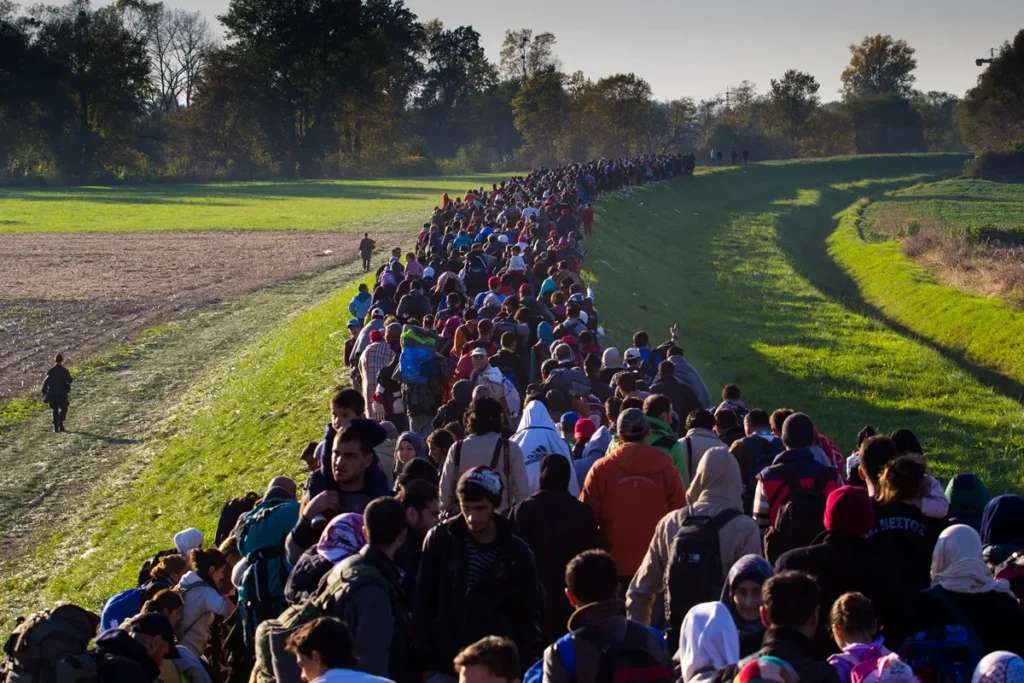
A new IOM report shows the global migrant population has tripled to 304 million, identifying the Poland-Germany border as one of the world’s top 20 migration corridors.
Global Migration Trends and Drivers
The number of international migrants has surged from 84 million in 1970 to 304 million in 2024, according to a report published by the International Organization for Migration (IOM).
While technological progress and digital connectivity have made mobility more accessible, economic inequality, demographic shifts, conflict, and environmental changes continue to shape migration patterns driven by work, family, or survival.
Regional Demographics and Gender Distribution
Migrants represent 3.7% of the global population, though they make up 74% of the population in the United Arab Emirates. Over 40% of migrants originate from Asia, with India being the primary country of origin.
In terms of gender, men account for 52% of migrants compared to 48% for women. This gender gap has widened over the last 20 years, increasing from a 51.1% to 48.9% split in 2005.
Major Global Migration Corridors
The world’s largest migration corridor runs from Mexico to the United States, with approximately 11 million people traveling this route in 2024. Other major routes include the Afghanistan-Iran corridor and the Syria-Turkey route.
The border between Germany and Poland ranks as the 17th largest migration corridor globally. Notably, Germany and Poland are the first and second largest refugee-receiving countries in Europe, respectively.
Economic Impact and Internal Displacement
In 2024, India, Mexico, and the Philippines were the top recipients of global remittances, totaling over $245 billion. The United States remains the largest sender, with remittances valued at approximately $100 billion two years ago.
Additionally, Poland recorded Europe’s second-largest wave of internal displacement due to natural disasters in 2024, as over 44,000 people relocated following floods in Lower Silesia and the Opole region.