


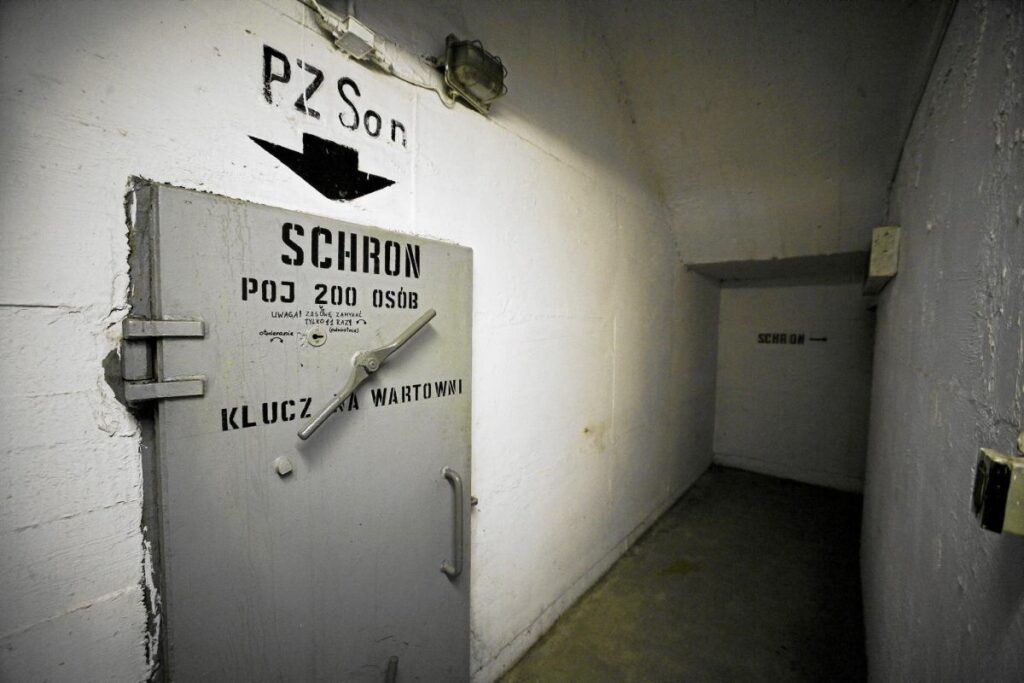
Warsaw city officials announced that an inspection of the city’s shelters found no facility meeting legal standards, prompting concerns over residents’ protection.
Insufficient preparedness for civil defence
City councillors were informed about the state of shelters and temporary protection sites throughout Warsaw. The law requires that some basements in blocks and townhouses be adapted for civil defence, including signage, torches, whistles and further resources. However, on Tuesday officials learned that the town hall had yet to contact any housing association and did not set a deadline for preparing these basements. As one council member told GW, “We do not know when they will be needed.” He added that housing associations have to inventory these locations, but they are currently “cluttered,” meaning all items would have to be removed. He also expressed doubt that a few dozen staff at the Capital Safety Centre could personally clear old furniture and jars from basements during a conflict.
Only half of shelters inspected, none meet new criteria
GW reports that roughly half of Warsaw’s shelters were inspected. The inspection found that, according to the December‑2024 legislation, none of the facilities meet the definition of a shelter. The Ministry of National Defence states that such shelters must provide isolation against chemical attacks. Underground metro stations, even those located several metres below ground, do not satisfy the definition. While some sections along the second line exist, they are leaky. “On Bem there is not even one object that minimally fulfills the criteria,” the council member said.
City office claims more than 200 shelters exist
The municipal office clarified that over 200 shelters are present in Warsaw. The investigations were ordered by the municipal commander of the State Fire Service and the county building inspector. The progress of the process is about 40 %. Current assessments indicate that additional technical expertises are required, so no building has yet been officially recognised as a protection structure. The next step will be to adapt protective buildings and emergency shelters to statutory requirements. Key elements identified include exits, ventilation, heating, energy supply, and provision of seating, rest or sleeping areas. According to an application developed by the State Fire Service called “Schrony,” Warsaw has more than 200 shelters, approximately 1 300 hideouts and over 16 000 emergency shelter spaces.