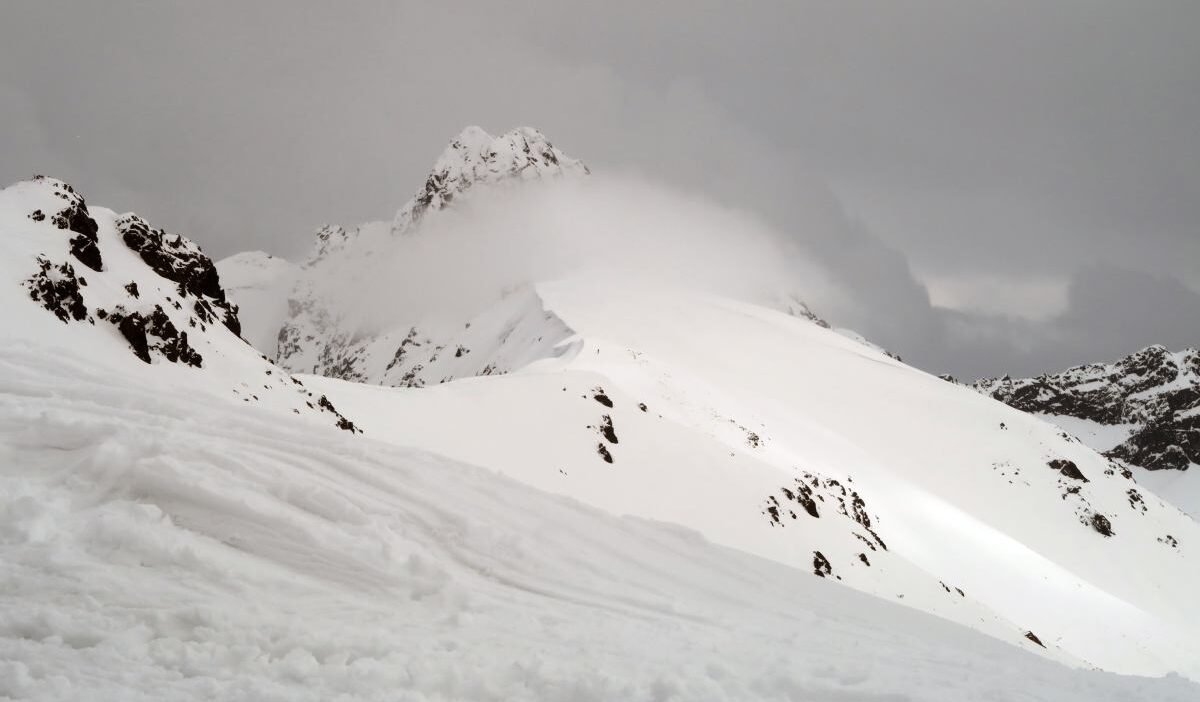
Intense snowfall and strong winds have created dangerous conditions in the Tatra, Beskid, and Karkonosze mountains, prompting avalanche warnings.
Tatra Mountains: Third-Level Avalanche Threat
A third-level avalanche warning is in effect for the Tatra Mountains since March 28th. Many trails are uncleared, increasing travel time. Heavy snow accumulation on trees poses a risk of falling branches to hikers.
Rescuers report significant wind-blown snow, especially in higher elevations, with moderate to weak snowpack cohesion on many slopes. Avalanches are possible even with minimal additional weight, and larger, spontaneous slides are possible in certain conditions.
Snow depths reach 130 cm on Kasprowy Wierch, 88 cm on Hala Gąsienicowa, and 35 cm in Zakopane. Trails are covered in fresh snow, obscuring their path, and deep drifts further complicate navigation. Low cloud ceilings and limited visibility increase the risk of getting lost.
Beskid Mountains: Reduced Visibility, Significant Snowfall
Visibility in the Beskid Mountains is severely limited, sometimes to just a few kilometers. A very large snowpack already exists from 800 meters above sea level.
The Babia Góra mountain is under a second-level, moderate avalanche warning, primarily in areas where new snow accumulates due to strong winds. This fresh snow sits on a hard, older layer, with weak bonding in certain locations, particularly in gullies and above the treeline. The most difficult trail on Babia Góra – the yellow “Perć Akademików” – is closed.
Karkonosze Mountains: Icy Trails, Sub-Zero Temperatures
Snow depth in the upper reaches of the Karkonosze Mountains ranges from 20-60 cm. Surface layers are frozen, while deeper layers are wet. Many trail sections are partially icy.
The air temperature is currently -4°C, dropping to -6°C in higher elevations overnight. Variable winds will gust up to 10 km/h, with possible temporary snowfall in the afternoon and overnight.