


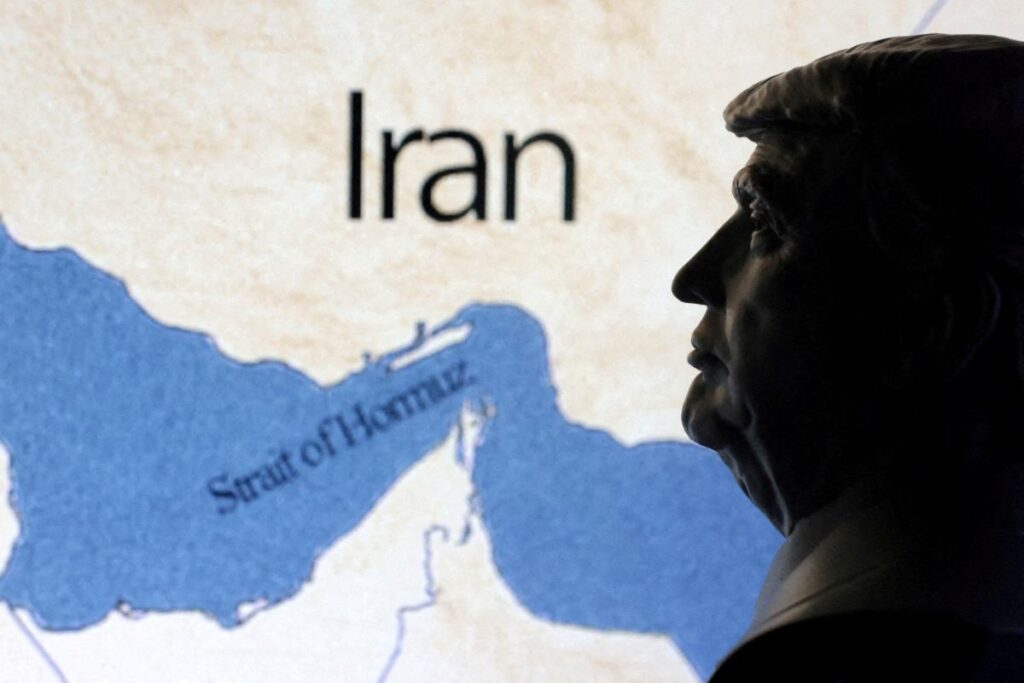
Traffic through the Strait of Hormuz has nearly halted as the Trump administration scrambles to respond, with experts warning of an impending global economic crisis.
Strait of Hormuz Traffic Nears Standstill
Traffic through the Strait of Hormuz has nearly halted. If not restored swiftly, the situation could deteriorate rapidly. This is critical as the strait normally handles 20% of global oil and LNG supplies, which are now absent.
The Future of Oil and Gas Supplies
If oil and gas producers cannot ship their goods, they must either stockpile or halt extraction. In nine days, 20% of global oil supplies and 12% of global production have vanished. Also, 20% of global LNG production has disappeared because Qatar Energy suspended operations due to lack of storage. Even if traffic resumes, returning to full capacity will take weeks for oil from the UAE, Kuwait, and Saudi Arabia, and months for LNG from Qatar and oil from Iraq.
Oil prices just recorded the largest single-day jump in history, and analysts warn this is only the beginning if the strait remains closed. $150 per barrel is a cautious forecast under continued blockades.
Global Food Security at Risk
Global food production is a ticking time bomb. Persian Gulf countries are leading world exporters of nitrogen fertilizers, and March and April are the peak demand season for fertilizers in the Northern Hemisphere. The market shock is twofold: fertilizers from the Gulf are disappearing, and fertilizers produced elsewhere are rising in price due to increased demand and production costs (due to gas prices).
Additionally, food prices will be impacted by rising energy and packaging costs, as Gulf countries are also major producers of packaging materials. The Persian Gulf is not only a production hub but also a transit hub. Jebel Ali port in Dubai is the ninth largest container port in the world. Even if its direct role in transit from China and India to Europe is minor, removing one pillar immediately affects the entire system. The simplest example is containers: goods cannot be shipped from Shanghai to Rotterdam if containers are stuck in Jebel Ali. Adapting the entire network to the strait’s closure will increase maritime transport costs, which are already rising due to energy prices.
How the Strait is Effectively Closed
All signals from Washington clearly indicate the Trump administration was unprepared for the strait’s closure. This is shocking because every previous U.S. administration viewed the risk of Iran closing the strait as a key factor against military escalation. Trump and his team are now improvising.
Trump announced that a U.S. agency will offer tanker operators preferential insurance policies covering risks related to military attacks on ships. Why? Because their existing insurers have either multiplied policy costs or, in most cases, simply canceled them. This is crucial: Iran is not ‘closing’ the strait; it is being closed by insurers and ship owners. The White House claims insurers are ‘exaggerating,’ and state-backed policies will have low risk because the U.S. military will establish order in the strait. The U.S. will reduce Iran’s fleet to zero and neutralize its ballistic threats. However, this is not feasible.
Path Forward for the Strait of Hormuz
The U.S. can reduce the frequency of Iranian attacks but cannot eliminate them. Iran, even very weakened, can paralyze traffic through the Strait of Hormuz. This is especially because ‘protecting the strait’ would require securing the entire Persian Gulf—what if ships are safe at the strait but risk sinking at ports?
This is not hypothetical. Recently, Iran attacked a tanker just outside Kuwaiti territorial waters using a remotely controlled unmanned boat. Iran’s coastline in the Persian Gulf is 1,400 km, 2,300 km including the Gulf of Oman. Maritime traffic in the Persian Gulf cannot be fully secured against attacks from Iranian territory. For context: how many attacks did the Houthis conduct on the Red Sea in two years, disrupting shipping? 180. How many ships passed through the Suez Canal monthly before the attacks began? About 2,200-2,500. On average, 7 attacks per month reduced traffic by over half. Despite U.S. and EU military involvement, safe shipping was not restored until the Houthis halted attacks following the Gaza ceasefire. Even after, traffic through the Suez Canal remains significantly below pre-attack levels. We are talking about the Houthis, whose military capabilities are incomparably weaker than Iran’s and fully dependent on Iran. Iran’s capabilities are infinite in comparison.
The only way to restore safe shipping in the Persian Gulf is through an agreement with Tehran. Any other scenario is a highway to a global economic crisis. But as shown by the ongoing tariff saga, Trump and his team have no qualms about relentlessly setting the world economy on fire. This should worry us most.