


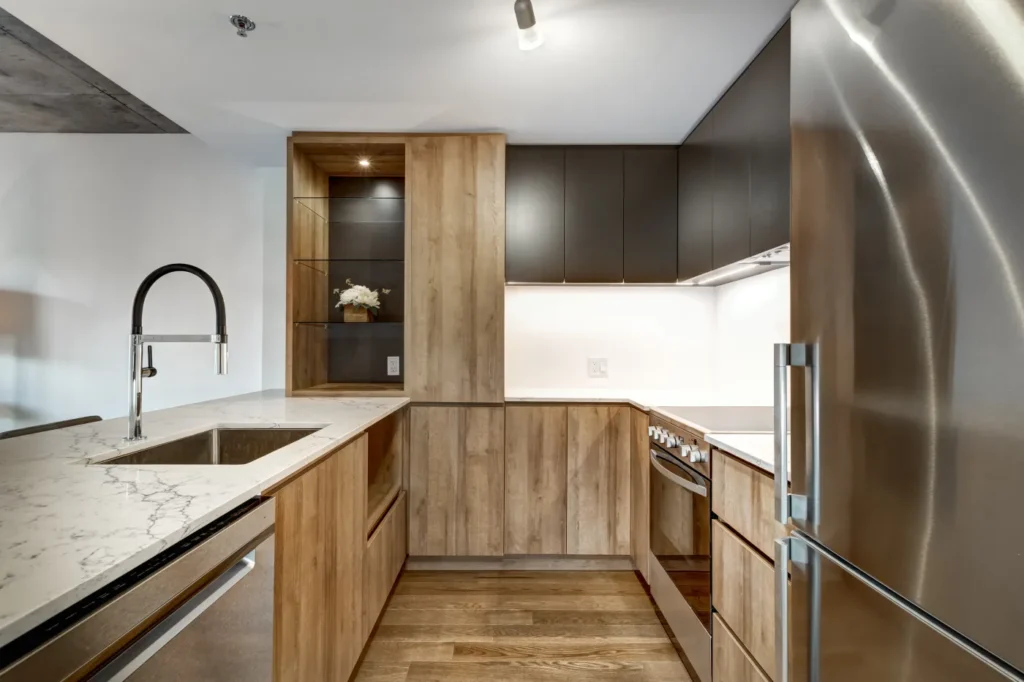
Polish tax authorities clarify whether furniture costs can be included in housing tax relief, particularly for custom-made pieces.
Housing Tax Relief and Furniture Costs
Generally, expenses for furnishing an apartment cannot be deducted under the housing tax relief within the Personal Income Tax (PIT) framework. However, custom-made furniture may be eligible in certain cases, as confirmed by tax interpretations.
Housing Tax Relief: Conditions and Eligible Expenses
As a rule, selling a property within five years of acquisition or construction triggers a 19% PIT obligation on the profit. Sellers can avoid this tax if they reinvest the proceeds within three years into their own housing, such as purchasing a new apartment, renovating, or repaying a mortgage. This is the basis of the housing tax relief outlined in Art. 21 sec. 1 pt. 131 of the PIT Act. A complete list of qualifying expenses can be found in Art. 21 sec. 25 of the PIT Act.
Furnishing an Apartment: Generally No Deduction for Fixtures
Many taxpayers wonder if the costs of furnishing an apartment can be deducted under housing tax relief, especially given that expenses for housing purposes are also defined in Art. 21 sec. 25 pt. 1 lit. d of the PIT Act. These relate to the construction, extension, superstructure, reconstruction, or renovation of one’s own residential building, its part, or one’s own residential premises. Generally, expenses for apartment furnishings are not deductible under housing tax relief.
Minister of Finance Interpretation on Furnishing
The Minister of Finance, Funds, and Regional Policy addressed this issue in a general interpretation dated October 13, 2021 (No. DD2.8202.4.2020). The interpretation states that when designing the tax exemption, the legislator did not intend to limit the catalog of housing expenses to those related to preparing the building (premises) for a “shell condition.” The own housing purpose should enable living and functioning in the building (premises), or normal human existence.
“In practice, satisfying one’s own housing goals (needs) also involves carrying out renovation/finishing works including the purchase of basic household appliances (AGD equipment), as the realization of housing needs is inextricably linked to other existential needs, including the ability to prepare meals,” reads the general interpretation.
Custom-Made Furniture: When is Deduction Possible?
The Minister also addressed the issue of custom-made furniture in the general interpretation. It states that expenses for furniture permanently connected to the building (premises), made to individual order “to size,” can be deducted under the relief. These are characterized by functionality adapted exclusively to the building (premises) in which they were originally installed. “In the event of a paid sale of a property equipped with such furniture, it usually remains in the building (premises) and constitutes a component of the income achieved, as well as – subject to having appropriate documentation – may constitute costs of obtaining income as expenses increasing the value of the property. In terms of functionality, they should therefore be treated as structural elements of the building (premises),” reads the interpretation.
Permanently Attached Furniture May Qualify as Renovation Costs
Costs of purchasing custom-made, freestanding furniture “permanently attached to the walls” may be recognized as renovation expenses under housing tax relief. This was confirmed by the Director of KIS in an interpretation dated April 24, 2026 (0115-KDIT3.4011.71.2026.3.PSW). The director explained that in such cases, they constitute a component of the property, not its furnishings. “Since they are permanently connected to the walls, they should therefore be treated as structural elements of the building (premises),” the authority stated.
No Permanent Connection: Disqualifying for PIT Relief?
Conversely, if a taxpayer incurs expenses for furniture that is not permanently connected to the apartment, it should be considered an expense for furnishing the residential building, which is not included in the catalog of expenses qualifying for the exemption under Art. 21 sec. 1 pt. 131 of the Personal Income Tax Act, confirmed by the Director of KIS.
Material protected by copyright – all rights reserved. Further distribution of the article with the publisher’s consent INFOR PL S.A. Buy a license. Enter the email address of the selected person, and we will send them free access to this article. Related. Copyright © INFOR PL S.A.