


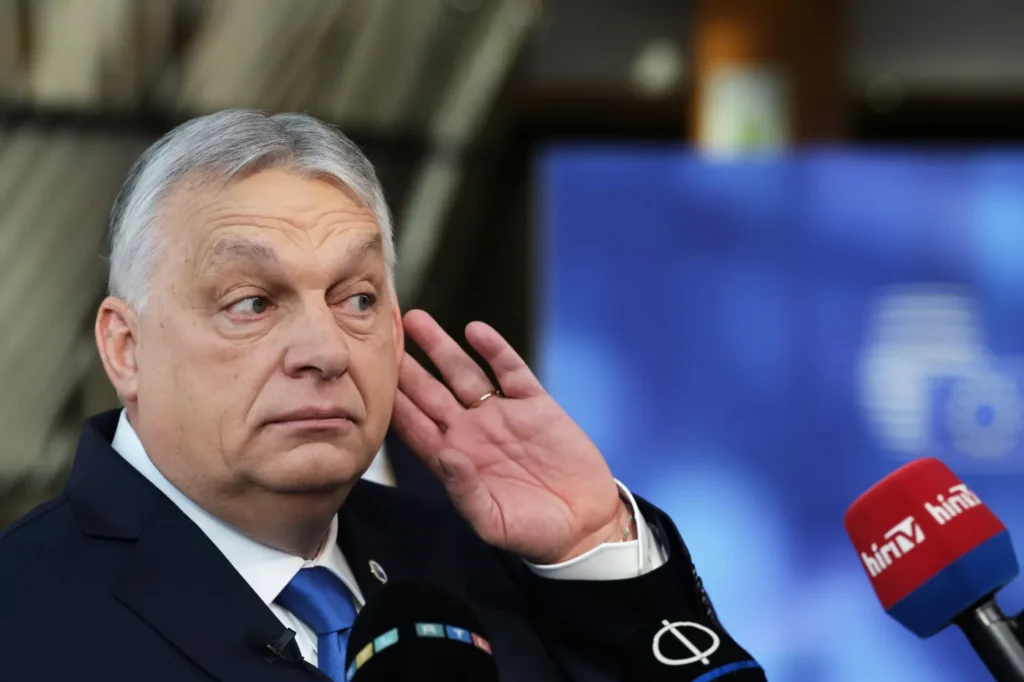
Reports allege the Orbán administration passed confidential information from EU summits to Moscow, prompting concern from Warsaw and a response from Polish Prime Minister Donald Tusk.
Budapest-Moscow Collaboration Unveiled
Allegations have surfaced regarding the potential transmission of sensitive information from EU summits to Moscow, triggering a strong reaction in Warsaw. Prime Minister Donald Tusk confirmed that suspicions regarding Budapest have long existed within European circles, and recent reports from Western media have reinforced these concerns.
Tusk referenced a publication by “The Washington Post,” which detailed the cooperation between Hungarian authorities and Russia. According to the report, Budapest allegedly provided Moscow with details of closed-door discussions among EU leaders for years.
Tusk’s Response and Systemic Concerns
Donald Tusk stated that the reports were not surprising, noting that suspicions of leaks had previously circulated among European politicians. He explained that this is why he limits public statements regarding confidential information, believing the issue to be systemic rather than isolated.
Methods of Information Transfer
According to American journalists, Hungarian state structures allegedly provided Russia access to sensitive information through two primary methods: direct political connections and successful infiltration of the Hungarian Foreign Ministry’s IT systems by Russian hackers.
Szijjártó’s Alleged Role
Hungarian Foreign Minister Péter Szijjártó allegedly played a key role, reportedly contacting Russian Foreign Minister Sergey Lavrov during breaks in EU meetings to relay current negotiation information and potential decision directions.
Diplomatic Conflict and EU Tensions
The reports immediately sparked a reaction in Poland, with Foreign Minister Radosław Sikorski suggesting the revelations could explain Hungary’s past positions in EU disputes. Szijjártó sharply responded, accusing critics of spreading “false news” and interfering in Hungary’s internal affairs.
Broader Crisis of Trust in the EU
The dispute between Warsaw and Budapest reflects a wider crisis of trust within the European Union. Hungary has repeatedly blocked or delayed decisions regarding sanctions against Russia, support for Ukraine, and common security policy.
Long-Standing Suspicions of Russian Access
Sources within European security structures reportedly long believed that Moscow had access to some information discussed at the EU level, with one official stating that EU meetings “de facto” took place with Russia’s indirect participation.
Russian Influence and Operation “Gamechanger”
Additional reports from American and European intelligence agencies indicate increasing activity by Russian intelligence services in Central Europe, with Hungary identified as a potential weak point in the EU’s security system due to its close economic and political ties with Moscow.
Media reports, citing information from VSquare, also indicate the presence of individuals linked to Russian military intelligence in Hungary, allegedly working to secure Kremlin interests ahead of parliamentary elections.
Western intelligence analyses also mention “Operation Gamechanger,” suggesting Russia considered scenarios to destabilize the political situation in Hungary, including provocative actions to influence public opinion and the election campaign. One report indicated that a highly emotional incident could shift the public debate from economic issues to security threats, potentially favoring the current ruling power.
Orbán as a Key Russian Partner
Western experts have consistently portrayed Viktor Orbán as one of Russia’s most important political partners within the EU, citing close energy relations, including gas supplies and the expansion of the Paks nuclear power plant by Russian Rosatom.
The Hungarian government consistently emphasizes its sovereignty in foreign policy and rejects accusations of acting on behalf of the Kremlin, arguing it pursues a “pragmatic policy” aimed at protecting national interests.