Hungarians are voting in parliamentary elections, with long lines forming in Budapest as citizens express a desire for change or support for the incumbent government.
Budapest Maintains Normalcy Amidst Crucial Vote
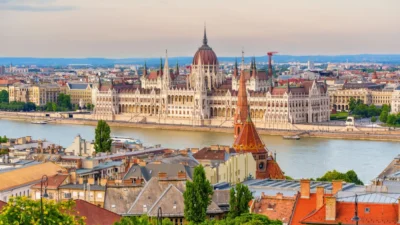
Budapest appears to be continuing its daily routine, with people walking streets, sitting in cafes, and riding trams. However, a key national election is underway, with rivals framing it as decisive for the country’s future.
Budapest’s mayor, Gergely Karacsony, compared the election’s importance to Hungary’s decision to join the European Union.
Queues Form at Polling Stations
Long lines have formed outside polling stations in Budapest, many located in schools and public buildings on side streets.
Campaign Presence and Election Rules
The city is filled with election posters, including those of Ukrainian President Volodymyr Zelenskyy, who has played a central role in Prime Minister Viktor Orbán’s campaign. Volunteers are urging voters to support their parties in squares and parks.
While Hungary does not have an election silence period, campaigning is prohibited within 150 meters of polling stations.
Voters Express Desire for Change
“We want change, that’s why we voted against Orbán rather than for Tisza,” said a group of thirty-somethings leaving a polling station, adding that they believe most Hungarians feel the same way.
They stated that Tisza and Péter Magyar had not discouraged them from voting for them, and they simply no longer want to live under Orbán’s rule.
Opposition Supporters Anticipate Results
The voters plan to await the results with friends and, if the opposition wins, celebrate before Parliament.
Fidesz Supporter Defends Incumbent Government
A 40-year-old voter, Csongor, stated, “A winning team shouldn’t be changed,” and planned to vote for Orbán’s Fidesz party.
He believes Hungary has improved significantly in the last decade and doesn’t see a reason to vote against the current leadership. He also expressed skepticism about warnings of Hungary being drawn into war if Orbán loses.
The voter plans to split his vote between Fidesz and the right-wing MiHazánk party.
Voting Process and Parliamentary Structure
Voters cast one vote for a candidate in a single-member district and another for a party list or national minority list.
Hungary’s National Assembly has 199 deputies, with 106 elected in single-member districts and 93 from national party lists. The candidate with the most votes wins each district, even without a majority.
Results Expected After 8 PM
Vote counting begins immediately after polls close at 7 PM, with preliminary results expected around 8 PM. Both main rivals will await the results in Budapest.
Orbán and Fidesz will hold their election night event at the Balna complex on the Danube, while Magyar and Tisza members will gather at Batthyány Square, opposite the Hungarian Parliament.
Political Analyst Predicts Opposition Victory
Hungarian political analyst András Biro-Nagym, director of the Policy Solutions institute, predicts an opposition victory, stating that Orbán’s campaign team has lost touch with reality. [https://wyborcza.pl/7,75399,32721055,wegierski-politolog-opozycja-wygra-wybory-sztab-orbana-stracil.html]