Leaked transcripts reveal Hungarian Foreign Minister Péter Szijjártó requested Russian assistance to favor a specific candidate in the 2020 Slovak election.
Hungarian Minister’s Request to Russia
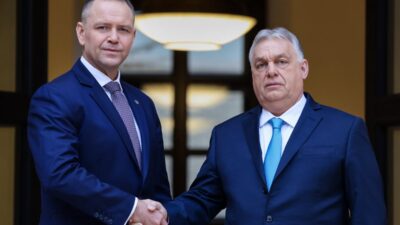
Hungarian investigative journalist Szabolcs Panyi revealed that Foreign Minister Péter Szijjártó asked Russian Foreign Minister Sergey Lavrov in 2020 to support the then-incumbent Slovak Prime Minister and current President Peter Pellegrini’s re-election bid.
Panyi published a transcript of the conversation between Szijjártó and Lavrov, reportedly recorded by the security services of an EU member state, sixty years prior.
Details of the Conversation
Szijjártó initiated the conversation at the request of Prime Minister Viktor Orbán, emphasizing the importance of the current Slovak coalition remaining in power. He described the coalition as the only rational force in Slovak politics, operating without foreign influence, while claiming the rest were largely financed by George Soros.
Szijjártó stated Pellegrini had indicated that a visit from the Russian Prime Minister would be more valuable than a trip to Washington for the Slovak public. Lavrov agreed to relay the request to the Prime Minister, noting Pellegrini had requested Russian assistance due to their strong relationship.
Pellegrini’s Moscow Visit and Election Outcome
Pellegrini met with then-Russian Prime Minister Mikhail Mishustin in Moscow on February 26, three days before the Slovak parliamentary elections. However, Pellegrini’s party ultimately lost the election, and Igor Matovicz formed a four-party coalition government.
Allegations of Intelligence Operation and Government Response
Zoltán Kovács, a spokesperson for Prime Minister Orbán, accused Panyi of sharing Foreign Minister Szijjártó’s phone number with a foreign intelligence service, enabling the surveillance of the Hungarian Foreign Minister. He characterized the situation as a coordinated intelligence operation targeting Szijjártó with political connections.
Orbán stated that the surveillance of a government member constitutes a serious attack on Hungary and has instructed the Minister of Justice to investigate the reports of Szijjártó’s wiretapping.
Journalist’s Explanation and EU Reaction
Szabolcs Panyi clarified that he has been working on an investigative book since 2022, conducting over one hundred interviews related to Russian-Hungarian relations, and that the information was obtained with the help of intelligence services.
The Washington Post reported that Szijjártó regularly provided Lavrov with live updates from EU meetings. European Commission spokesperson Anitta Hipper expressed concern, stating that discussions at the ministerial level within the EU Council rely on trust between member states and institutions, and that Brussels expects an explanation from the Hungarian government.
Reactions from Polish and Slovak Leaders
Polish Prime Minister Donald Tusk stated that the reports of Orbán’s associates passing detailed information about EU Council meetings to Moscow were not surprising, and that this was a reason for his limited public statements. Polish Foreign Minister Radosław Sikorski also commented on the matter.
The Hungarian government dismissed the Washington Post’s reports as false, and Szijjártó accused Tusk and Sikorski of spreading lies.
Report of Russian Proposal for Election Interference
The Washington Post also reported that Russian intelligence officials proposed a plan to fundamentally change the campaign dynamics in Hungary, including a potential assassination attempt on Prime Minister Viktor Orbán, drawing parallels to the attempted assassination of Donald Trump.
“Budapest Appeal of Patriots” Gathering
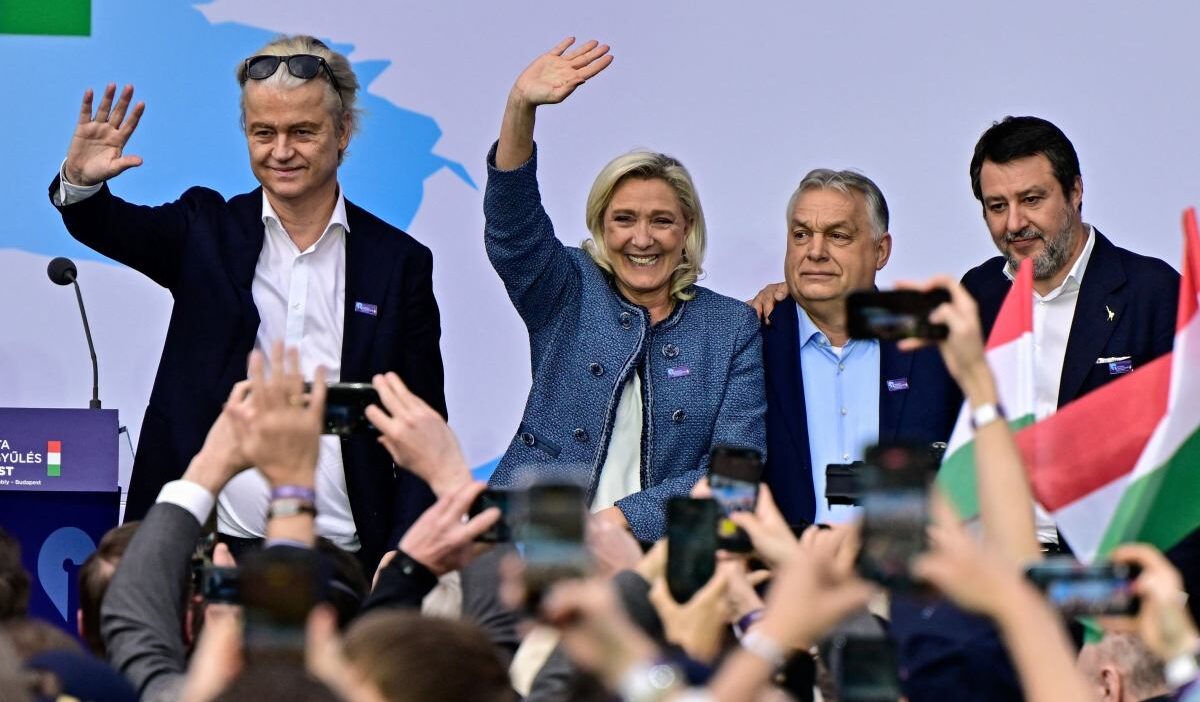
The Eurosceptic group Patriots for Europe published the “Appeal to the Nations of Europe: Budapest Appeal of Patriots” during its large gathering in Budapest, outlining its goals and vision for Europe.
The appeal rejected the creation of a European superstate, the transfer of powers to EU institutions, and the abandonment of unanimous decision-making within the EU. It also opposed mass immigration and advocated for the protection of national sovereignty.
The event was attended by representatives from Eurosceptic parties, including Polish MP Krzysztof Bosak, Czech Prime Minister Andrej Babiš (online), Marine Le Pen, Matteo Salvini, Santiago Abascal, Herbert Kickl, and Geert Wilders.
Hungarian Elections and Polling Data
Parliamentary elections in Hungary are scheduled for April 12. Voters will elect 199 deputies to the National Assembly, with 106 elected in single-member districts and 93 from national party lists. The term of office is four years.
The opposition party TISZA is currently leading in most independent polls, with 51.3% support in a March Minerva poll, compared to 40.1% for Fidesz.