The European Commission is demanding explanations after reports alleged Hungary’s Foreign Minister relayed confidential EU discussions to his Russian counterpart.
Allegations of Information Disclosure
The European Commission has expressed serious concern over reports that Hungarian Foreign Minister Péter Szijjártó allegedly shared details of EU ministerial discussions with his Russian counterpart, Sergey Lavrov.
A Commission spokesperson emphasized that discussions at the ministerial level within the EU rely on trust between member states and between them and EU institutions, a trust fundamental to the EU’s functioning.
Brussels Demands Clarification
Brussels expects the Hungarian government to provide clarification on the matter. Officials have not disclosed whether the EU institutions plan an internal investigation or increased security measures during Council meetings, stating they are currently awaiting explanations.
“Live” Updates to Moscow
The American newspaper “Washington Post” reported that Szijjártó regularly phoned Russia during breaks in EU meetings to provide Lavrov with “live” updates on the conversations taking place.
Reactions from Polish and EU Leaders
Polish Prime Minister Donald Tusk stated that the alleged information sharing with Moscow was not surprising, noting long-held suspicions. He indicated he only speaks on the matter when absolutely necessary, limiting his comments to essential points.
Polish Foreign Minister Radosław Sikorski shared the “Washington Post” article on X, addressing Szijjártó with the comment, “That would explain a lot.”
Hungary Denies Claims
The Hungarian government has dismissed the “Washington Post” report as false, with Szijjártó accusing Tusk and Sikorski of spreading lies. The EU Council has not yet commented on the allegations.
Close Ties Between Budapest and Moscow
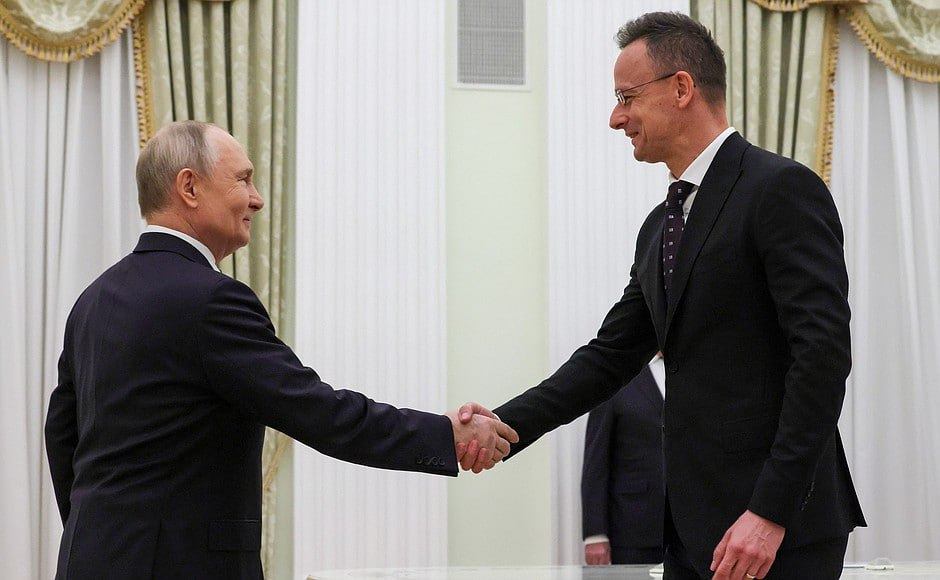
Szijjártó frequently visits Russia. He met with Vladimir Putin and Sergey Lavrov in Moscow on March 4th. In late 2021, prior to the invasion of Ukraine, the Kremlin awarded Szijjártó the Order of Friendship, which he said he was “proud” to receive, citing cooperation based on common interests and trust.