


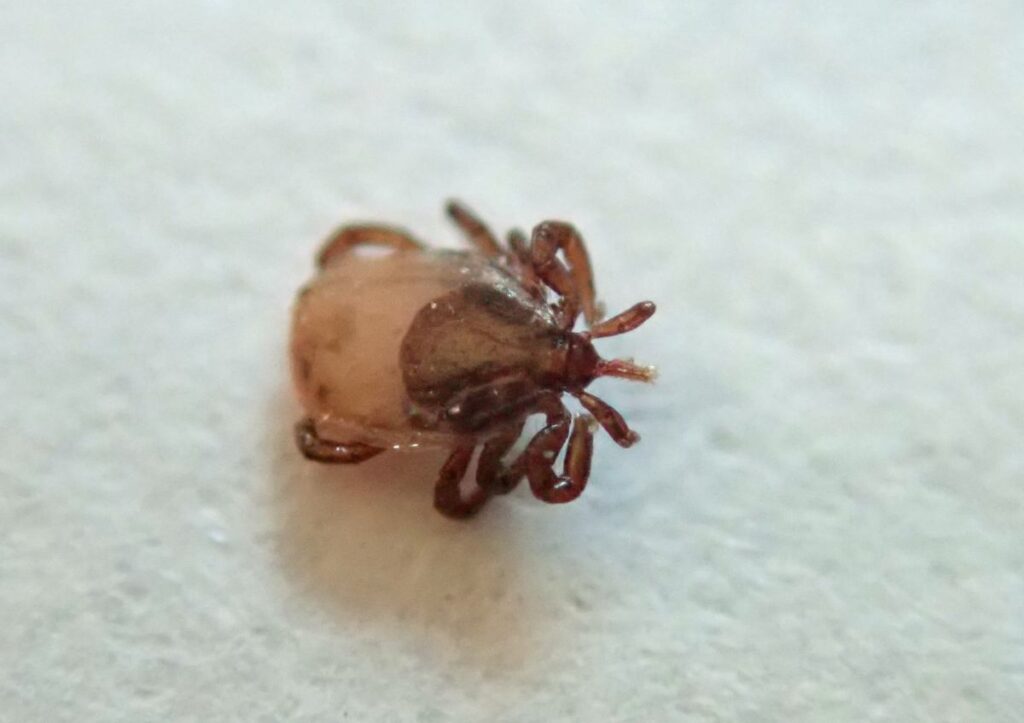
Researchers in Poland have identified Hyalomma ticks, a species known for actively seeking hosts—unlike native ticks that wait—raising public health concerns.
New Tick Species Detected in Poland
The newly detected Hyalomma ticks are significantly different from those commonly found in Polish forests and meadows, according to Professor Anna Bajer of the University of Warsaw. These ticks are highly mobile and actively search for hosts in their environment.
Active Hunting Behavior
Unlike native ticks like *Ixodes ricinus*, which typically wait on vegetation for a host, Hyalomma ticks actively pursue potential prey. Professor Bajer explained that these ticks will “run towards” humans or animals.
Sensory Capabilities and Speed
Hyalomma ticks detect vibrations in the ground and possess well-developed eyesight, allowing them to quickly identify and approach potential hosts. They can cover several meters in seconds, exhibiting a speed more akin to ants or spiders than typical ticks.
Geographic Distribution and Monitoring
Researchers are currently working to map the distribution of Hyalomma ticks in Poland. It remains unclear whether the species has established itself or if the observed individuals are recent arrivals brought by migrating birds.
Challenges in Tracking the Species
Confirming establishment requires finding larvae or nymphs that haven’t fed, a difficult task due to their small size and inconspicuous nature. Sightings have been reported in Silesia, Wielkopolska, and Mazury, suggesting a wider distribution.
Ticks Found on Animals and in Homes
Hyalomma ticks have been found on livestock, particularly horses and cows, and even inside homes, likely brought in by dogs. They are more prone to falling off hosts and moving around their surroundings than native species.
Physical Characteristics of Hyalomma Ticks
Unfed Hyalomma ticks reach about one centimeter in length, while engorged females can grow up to two centimeters. They are characterized by long, striped legs with light-colored rings and a uniformly brown body.
Potential Health Risks: Crimean-Congo Hemorrhagic Fever
The presence of Hyalomma ticks raises concerns about the potential for introducing new diseases, particularly Crimean-Congo hemorrhagic fever, a severe and often fatal viral illness. While the virus hasn’t been detected in Polish ticks yet, all specimens tested positive for rickettsia, causing spotted fever.
Symptoms and Diagnosis of Crimean-Congo Hemorrhagic Fever
The initial symptoms of Crimean-Congo hemorrhagic fever can resemble a common viral infection, including fever, weakness, muscle and headache. Later symptoms include coagulation disorders, petechiae, and bleeding. Diagnosis requires specialized tests not readily available in all hospitals.
Reporting Sightings of Unusual Ticks
Individuals who find an unusual tick should not discard or crush it. Instead, they should place it in a sealed container, freeze it, take a photo, and submit it to researchers through the National Tick Observatory.