


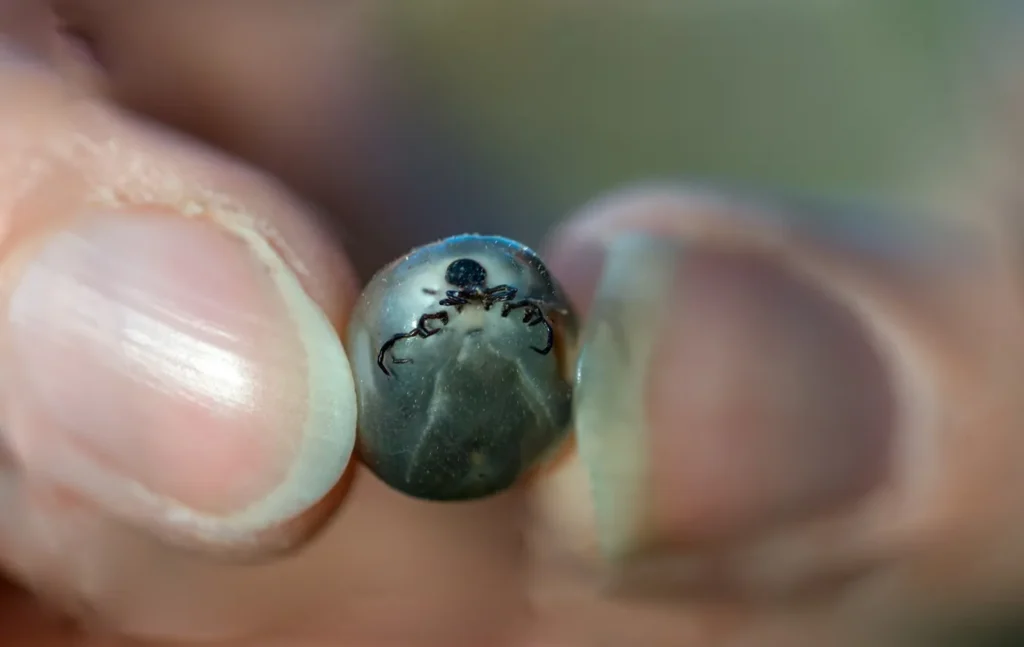
Scientists in Poland are tracking the spread of Hyalomma ticks, dubbed “monster ticks,” and mapping their presence following reports from residents.
Hyalomma Ticks Detected in Poland
Hyalomma ticks, distinct from native Polish species, are faster-moving and raising concerns among scientists. Their appearances are being monitored and mapped based on citizen reports.
Researchers at the University of Warsaw are studying and mapping Hyalomma tick occurrences in Poland, with data collected through the National Tick Collection service ([https://narodowekleszczobranie.pl/pl](https://narodowekleszczobranie.pl/pl)).
A Growing Phenomenon, Not Isolated Cases
These large, exotic ticks are no longer isolated finds from Southern Europe but a growing phenomenon observed in Poland. The question is whether the species is simply appearing or adapting to the changing climate.
April 2026 Findings Reveal Exotic Pathogens
The University of Warsaw reported on April 8, 2026, that after two seasons of the Hyalomma project, the ticks were observed in regions including Silesia and Greater Poland. Importantly, all submitted Hyalomma ticks tested positive for exotic pathogenic bacteria.
Not an Epidemic, But a Significant Development
While not indicating an immediate epidemic of exotic disease, the presence of Hyalomma ticks has moved beyond theoretical concern. It’s now a topic for biologists, doctors, veterinarians, and pet owners.
Are Hyalomma Ticks Reproducing in Poland?
Scientists are still investigating whether Hyalomma ticks are reproducing in Poland. Professor Anna Bajer of the University of Warsaw suggests the adults found in summer may have arrived as younger stages on migrating birds and matured in Europe, or developed locally.
Finding larval or nymph stages is crucial to determine if reproduction is occurring locally, but locating these tiny forms is described as “searching for a needle in a haystack.”
Hyalomma Tick Behavior: Active Hunters
A key difference between native ticks and Hyalomma is their behavior. Unlike the passive waiting of common ticks, Hyalomma actively seeks hosts, even running towards them.
Hyalomma ticks thrive in hot, dry environments where waiting passively could be fatal. They react to vibrations and have good eyesight, allowing them to quickly move towards potential hosts, covering several meters in seconds.
Identifying Hyalomma Ticks: Appearance and Characteristics
Hyalomma ticks are larger than common Polish ticks, reaching about a centimeter in length when unfed, and larger when engorged. They are distinguished by their long, striped legs with light rings.
Their bodies are typically brown to dark in color, and their movement resembles that of a small spider. Key identifiers include their unusual appearance, size, and striped legs.
Hyalomma Ticks Found in Homes and on Animals
Reports indicate Hyalomma ticks have been found not only on animals like horses, cows, and dogs, but also inside homes, with one tick observed “simply walking on the carpet.”
Hyalomma ticks are more likely than native species to detach from animals and move around, potentially entering homes on pets and continuing to move once indoors.
Geographic Distribution and Areas of Risk
Current reports don’t allow for a definitive map of Hyalomma’s permanent presence in Poland. However, Silesia, Greater Poland, and isolated reports from Masuria are areas of particular concern.
Those with contact with animals should be especially vigilant, as Hyalomma ticks favor large mammals, potentially transferring the parasite closer to humans. Areas with warmth, dryness, and hosts—pastures, farms, stables, dirt roads, and sunny edges of green spaces—pose higher risks.
Diseases Transmitted by Hyalomma Ticks: CCHF and More
Hyalomma ticks are primarily concerning due to the potential transmission of the Crimean-Congo hemorrhagic fever virus (CCHF). Infection can occur through tick bites or contact with infected animal or human blood/tissue.
While CCHF is a serious illness, Professor Bajer notes that the virus has not yet been detected in Hyalomma ticks found in Poland. However, they have found *Rickettsia* bacteria, which cause spotted fevers.
Boreliosis Risk: A Different Profile
Hyalomma ticks are not considered typical vectors of Lyme disease (boreliosis). The bacteria causing boreliosis are primarily found in *Ixodes* ticks.
This means the risk profile associated with Hyalomma ticks differs from that of common ticks. While Lyme disease and tick-borne encephalitis are primary concerns with native species, CCHF and *Rickettsia* are the main concerns with Hyalomma.
Hyalomma vs. Common Tick: Key Differences
| Feature | Common Tick | Hyalomma Tick |
What to Do After a Hyalomma Tick Bite
If a tick is embedded in the skin, it should be removed as quickly as possible using narrow tweezers, grasping as close to the skin as possible and pulling straight out with steady force. Avoid twisting or crushing the tick.
After outdoor activities, check the entire body, especially the abdomen, chest, groin, and knees, and shake out clothing. Seek medical attention if a rash, fever, weakness, muscle pain, or bleeding symptoms develop.
Reporting Hyalomma Ticks and Assisting Research
If a tick appears unusual, is large, has striped legs, or moves quickly, it should be secured in a sealed container or bag and frozen. A photo should be submitted to the National Tick Collection project ([https://narodowekleszczobranie.pl/pl/zglos-kleszcza](https://narodowekleszczobranie.pl/pl/zglos-kleszcza)) for identification and to contribute to mapping efforts.