


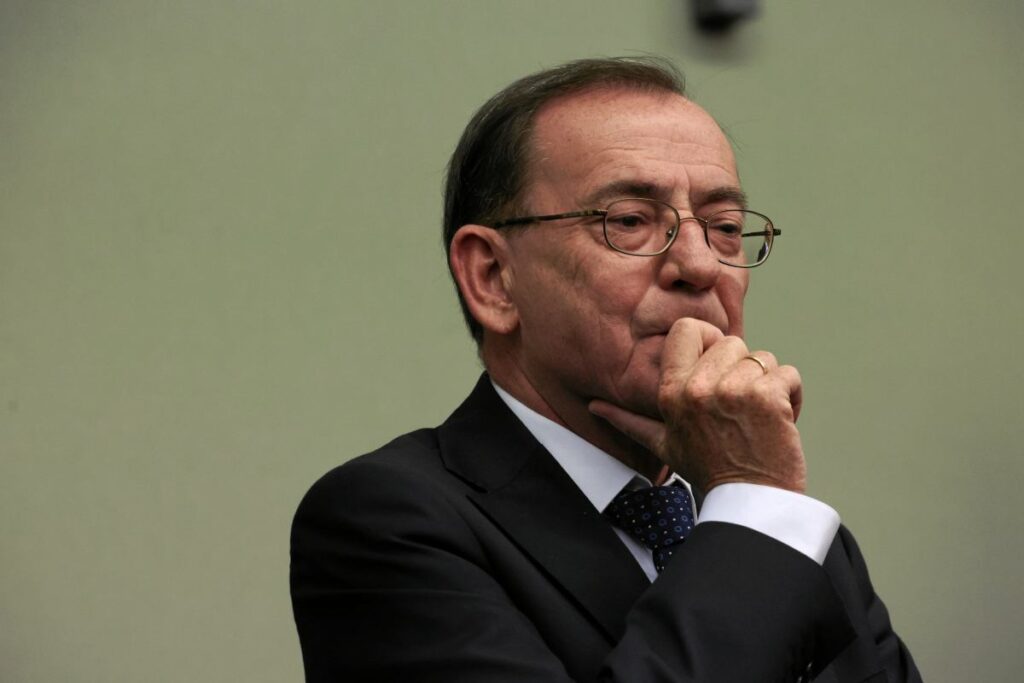
Polish prosecutors have requested the waiver of immunity for MEP Mariusz Kamiński over alleged abuses of power during his tenure as head of the Central Anti-Corruption Bureau.
Investigation into Actions from 2007-2009
The Lublin Regional Prosecutor’s Office is investigating actions taken between 2007 and 2009 by the former head of the Central Anti-Corruption Bureau. Investigators suspect that powers may have been exceeded during operational and reconnaissance activities.
Request to Lift Kamiński’s Immunity: Two Alleged Crimes
Prosecutors state that the collected evidence “sufficiently justifies” the suspicion of two crimes committed by former CBA chief, now MEP Mariusz Kamiński. Consequently, Waldemar Żurek submitted a request to the President of the European Parliament to lift his immunity.
Initiating and Approving Operations Without Legal Basis
The first charge concerns initiating and approving operational activities – including operational surveillance – despite a lack of factual and legal grounds. These actions included Operation “Krystyna” and involved repeated requests for surveillance, despite prior refusals and a lack of results.
Operation “Krystyna” Details
The investigation indicates that these activities focused on individuals associated with Jolanta and Aleksander Kwaśniewski. Prosecutors found that these actions did not lead to evidence justifying criminal proceedings. The charge encompasses 32 requests or orders for operational surveillance, with surveillance conducted in 20 cases, denied by the Attorney General in 11, and not ultimately ordered in one case due to formal reasons.
Focus on Individuals Connected to the Kwaśniewskis
Investigators focused primarily on Maria J. and her family. Maria J. held no public office but was a friend of Jolanta Kwaśniewska and, until September 2007, owned a house in Kazimierz Dolny frequented by the Kwaśniewskis. The CBA, under Kamiński, theorized that the Kwaśniewskis were the actual owners, a claim never substantiated.
Property Acquisition in Kazimierz Dolny
The second charge relates to a 2009 operation involving the covert acquisition of a property in Kazimierz Dolny. In September 2007, Maria J. sold a house in Kazimierz Dolny to individuals identified as M. To confirm the CBA’s theory that the Kwaśniewskis were the true owners, Kamiński approved a covert operation involving an operative establishing a relationship with Jan J. and Maria J. to facilitate the sale of the property to Marek M.
False Information Submitted to the Attorney General
Less than two years later, in July 2009, Kamiński requested the Attorney General’s consent to secretly acquire the house in Kazimierz Dolny, owned by Marek M., for two months. The request contained false information, alleging reasonable suspicion of crimes, including tax offenses.
Covert Acquisition of Property for 1.6 Million Zloty
That same month, a CBA operative acting undercover acquired the property for 1.6 million zloty. Prosecutors state that the actual purpose of the operation – to obtain evidence that the Kwaśniewskis owned the house – was not achieved. The decision to launch the operation was made despite a lack of legal grounds, with the aim of confirming the pre-existing hypothesis about ownership.
Lack of Legal Basis for Operation
Prosecutors emphasize that such actions can only be undertaken to detect crime and gather evidence based on credible information. In this case, they state, such prerequisites were lacking.
No Credible Information Regarding Criminal Activity
“In this case, none of these prerequisites were met: there was no credible information about a crime, and the activities were undertaken solely on the basis of conjecture and rumors. Furthermore, the property was not ‘proceeds of crime’,” prosecutors stated.
Potential Prison Sentence
The alleged offenses are classified as abuse of power and actions aimed at directing investigations against specific individuals through the creation of false evidence or other deceptive means, punishable by up to five years in prison.
Charges Dependent on Immunity Waiver
Any potential charges against the MEP will only be possible after the European Parliament’s decision regarding the waiver of his immunity.