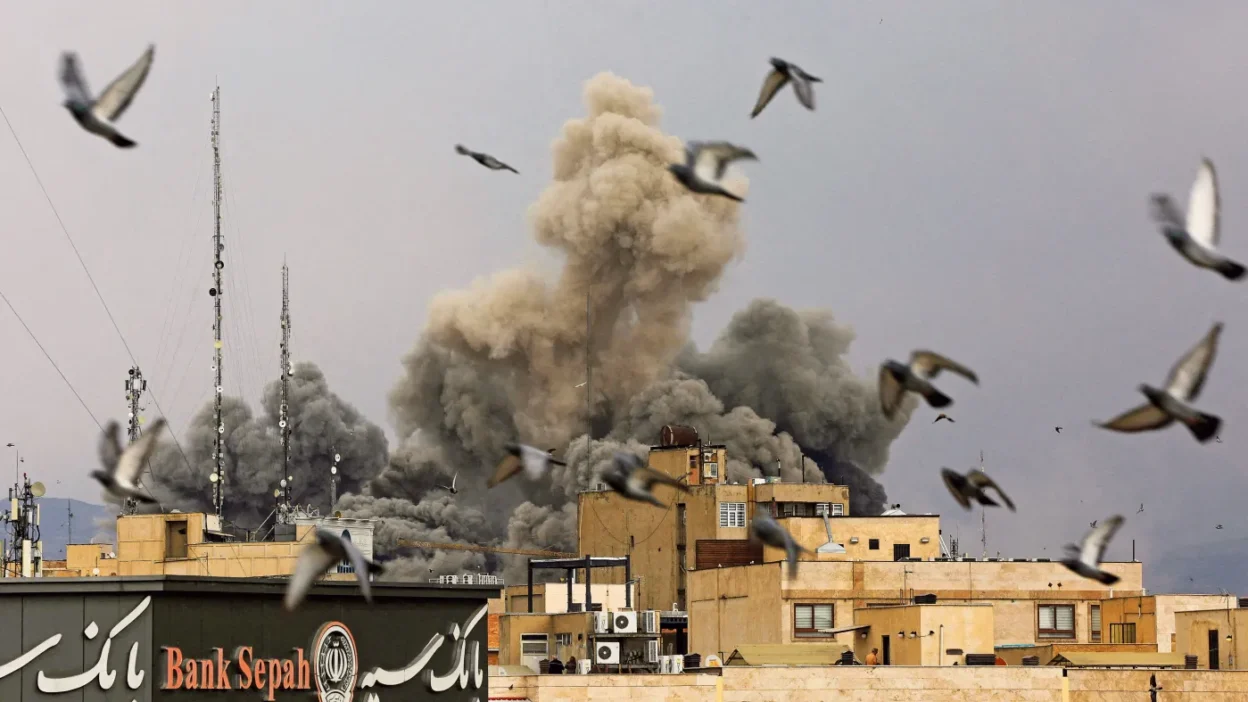
Iran conducted nighttime attacks across the Middle East on Tuesday, with a missile landing near a base housing Australian troops in the UAE.
Iranian Attack on the Middle East
An Iranian missile landed near Al Minhad base in the United Arab Emirates (UAE) on the night of Tuesday to Wednesday, where Australian soldiers are stationed, according to Australian Prime Minister Anthony Albanese. Drone and missile attacks were also reported in Saudi Arabia, Bahrain, Qatar, and Kuwait.
Albanese stated that no Australian personnel were injured, but the strike caused a fire and minor damage to a residential building and a medical facility.
Regional Responses to the Attacks
The UAE’s defense ministry reported on Wednesday morning that it was “currently responding to threats associated with missile and drone attacks from Iran.”
Saudi Arabia confirmed it neutralized 13 drones and a ballistic missile, with debris falling “near Prince Sultan Air Base without causing damage.” The ministry assured that any audible explosions were the result of air defense systems intercepting the attacks.
Diplomatic Efforts and Security Meetings
Saudi Arabia’s Foreign Ministry announced an emergency meeting of foreign ministers from Arab and Islamic countries in Riyadh on Wednesday evening to discuss “ways to support regional security and stability.”
Further Attacks and Regional Alerts
Qatar’s defense ministry stated its armed forces intercepted a missile attack targeting Qatar, with AFP reporting an explosion in the capital, Doha. Air defense systems were also activated in Kuwait, and Bahraini authorities ordered residents to shelters. The U.S. embassy in Baghdad was also targeted by a drone attack.
Context of the Iran-U.S.-Israel Conflict
Tehran is conducting strikes against regional countries in response to the war initiated by Israel and the U.S. against Iran on February 28th. These attacks target military bases linked to the U.S. army and its allies.
U.S. Appeal Regarding the Strait of Hormuz
U.S. President Donald Trump appealed last week to allied governments for assistance in opening the Strait of Hormuz after Iran blocked this crucial waterway for oil and gas transport. However, Australia, Japan, and most NATO countries declined to participate in the operation.