


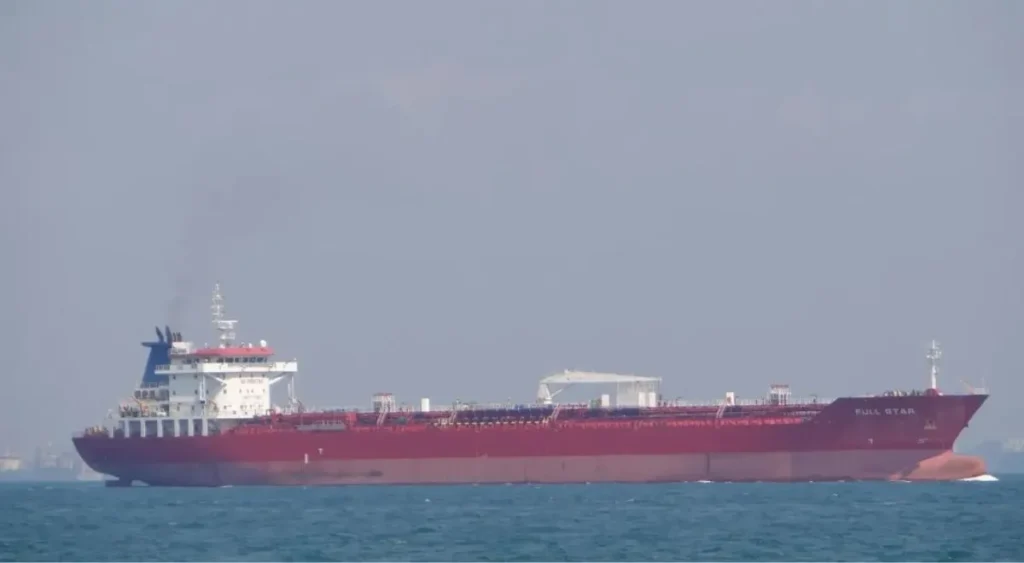
A third tanker linked to Iran has entered the Persian Gulf, raising questions about the effectiveness of the U.S. blockade announced Monday.
U.S. Blockade Challenged by Tanker Traffic
A third tanker associated with Iran entered the Persian Gulf on Tuesday via the Strait of Hormuz, according to Reuters, citing ship-tracking data. The U.S. announced a blockade of vessels calling at Iranian ports on Monday afternoon.
U.S. President Donald Trump announced the blockade on Sunday after peace talks in Islamabad between the U.S. and Iran failed to reach an agreement.
Blockade Doesn’t Halt All Tanker Movement
The American blockade has not stopped tankers from transiting the region. While three ships passing through the Strait of Hormuz are linked to Tehran, they were not destined for Iranian ports and are therefore not subject to the blockade, Reuters noted.
Tanker Destinations and Cargoes
The Panama-flagged tanker Peace Gulf is heading to the port of Hamriya in the United Arab Emirates. Data from analytics firm Kpler indicates it typically carries Iranian crude oil to non-Iranian ports in the Middle East.
Sankcioned Vessels Continue Operations
Previously, two tankers subject to U.S. sanctions passed through the strait. The Murlikishan, en route to Iraq for fuel oil, previously transported Russian and Iranian oil under a different name. The Rich Starry, also sanctioned, was the first vessel to transit the Strait of Hormuz and leave the Persian Gulf since the blockade began, according to LSEG and Kpler data. It is sanctioned for cooperation with Iran and currently carries methanol from the port of Hamriya.
Iran’s Earlier Threat to Strait of Hormuz
In the early days of the conflict that began on February 28 with a U.S.-Israeli attack on Iran, Tehran announced it would block the Strait of Hormuz—a key route for oil and gas exports from the Persian Gulf. This led to a sharp rise in fuel prices. Iran also stated its intention to charge fees of up to $2 million per tanker transiting the strait.