


Following U.S. actions to block vessels entering or exiting the Strait of Hormuz, Iran issued threats against American ships and suggested a potential land invasion.
U.S. Naval Blockade and Iranian Response
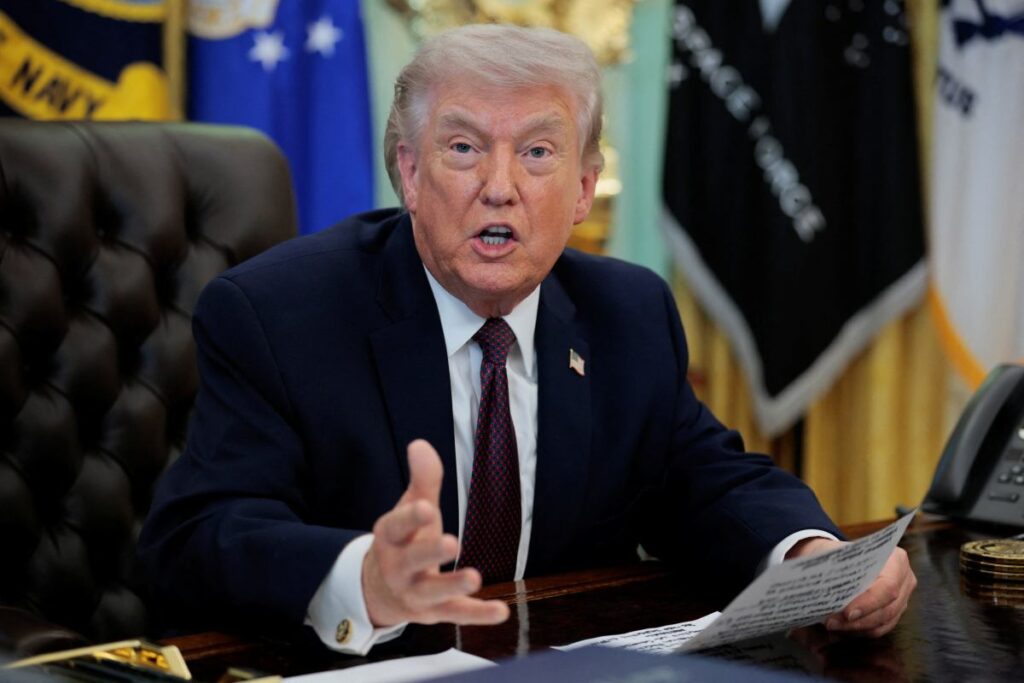
Donald Trump announced on April 12th that the U.S. military would begin a process of blocking all ships attempting to enter or leave the Strait of Hormuz. The U.S. Central Command (CENTCOM) later stated that thousands of American soldiers, including 5,000 sailors and marines, were involved in intercepting vessels heading to or from Iranian ports.
CENTCOM reported that as of Monday, no Iranian vessels had breached the blockade, and nine ships had altered course on orders from U.S. forces.
Threats from Iranian Military Advisor
A former commander of the Islamic Revolutionary Guard Corps (IRGC), recently appointed as a military advisor to Ayatollah Khamenei, warned that U.S. ships would be sunk by Iranian missiles. He questioned whether controlling the Strait of Hormuz was a suitable task for the U.S. military.
Mohsen Rezai also suggested that a U.S. land invasion would be “beneficial,” proposing the taking of thousands of hostages for a ransom of $1 billion per hostage.
Rezaei’s Stance on Conflict with the U.S.
The former IRGC chief added that he personally does not support extending the ceasefire with the U.S., characterizing this as a private opinion. He stated Iran is fully prepared for a prolonged conflict, unlike the U.S., which he believes fears an endless war.
Background on Mohsen Rezai
Reports indicate that Rezaei is considered a very conservative figure even within the IRGC, which he led from 1981 to 1997, including during the Iran-Iraq War (1980-1988).
Venezuela Situation and U.S. Policy
Reports from Venezuela indicate the democratic opposition is demanding reforms to restore democracy, but the U.S. government treats the country as a protectorate and largely ignores the opposition.
U.S.-Iran Negotiations
The U.S. announced a two-week pause in the war it has been waging with Israel against Iran since February 28th. Reports suggest that representatives from Tehran and Washington have agreed to another round of talks to end the conflict, though the date and location remain undecided.
A White House spokesperson, Karoline Leavitt, stated that if talks proceed, they are likely to be held in Pakistan, similar to previous discussions which did not yield progress.
Impact of the Strait of Hormuz Blockade
In response to Israeli and U.S. bombing, Iran is blocking the Strait of Hormuz, a critical waterway for global oil supplies, through which approximately 20% of the world’s oil passes. This blockade has caused a sharp increase in fuel prices worldwide, particularly in Asian countries reliant on Persian Gulf oil.
Tanker traffic in the Strait of Hormuz has reportedly decreased by 70 to 80 percent.