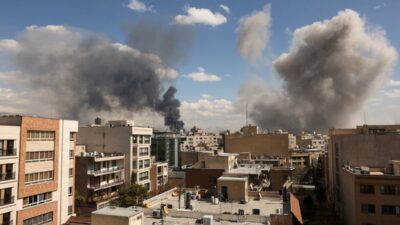
Following U.S. threats against Iranian facilities, Tehran warned critical infrastructure across the region—including desalination plants—could become targets, risking water access for millions.
Millions Face Potential Water Shortages
U.S. President Donald Trump threatened to destroy Iranian power plants if Tehran did not reopen the Strait of Hormuz within 48 hours. In response, Iranian Parliament Speaker Mohammad Bagher Ghalibaf stated that critical infrastructure throughout the region, including energy facilities and desalination plants, would become a “legitimate target” for retaliation.
Desalination: A Vital Resource
The threat to desalination plants is significant, as Gulf states have some of the world’s lowest water resources. Without this technology, approximately 100 million residents in the region could lose regular access to drinking water.
Gulf State Dependence on Desalination
Gulf Cooperation Council (GCC) nations are highly reliant on desalination: Qatar at around 99% of its drinking water needs, Kuwait and Bahrain around 90%, Oman 86%, and Saudi Arabia approximately 70%. The United Arab Emirates (UAE) relies on desalination for about 42% of its water supply.
Attacks on Water Infrastructure Reported
Following the commencement of U.S. and Israeli strikes against Iran, and subsequent Iranian retaliatory attacks, initial attacks on water infrastructure were reported. Iran accused the U.S. of striking a facility on Keshm Island on March 7th, disrupting water supplies to 30 villages. Bahrain reported damage to a desalination plant following a drone attack the following day, with minor damage also reported by Kuwait and the UAE.
Concentrated Vulnerability
The region operates over 400 desalination facilities, most located along the Persian Gulf. However, over 90% of desalinated water production comes from just 56 plants. This concentration, coupled with their proximity to Iran, makes desalination infrastructure particularly vulnerable to escalating rocket and drone attacks.
Potential for Large-Scale Crisis
The Atlantic Council has warned that systematic strikes on desalination plants could lead to a large-scale humanitarian and economic crisis. Damage to these facilities could also cause widespread power outages due to their connection to energy networks.
Long-Term Risks Highlighted
A 2010 CIA report indicated that destroying key infrastructure could deprive GCC countries of most of their drinking water within days, with the crisis potentially lasting for months, impacting food production, the hospitality sector, and industry.
Investment in Infrastructure Protection
Since 2006, Gulf states have invested over $53 billion in developing desalination infrastructure, and have prepared protection plans including pipeline networks, large storage tanks, and water source security. Saudi Arabia and the UAE have the best infrastructure protection, while Bahrain, Qatar, and Kuwait have minimal reserves; the UAE’s water reserves are sufficient for approximately 45 days.
Desalination as Foundation for Growth
Desalination has become fundamental to the development of Gulf states, enabling the construction of modern cities and economies despite extreme freshwater scarcity. Experts currently emphasize the need for investment in anti-drone systems and decentralization of water production through the development of smaller, renewable energy-powered facilities.
Strategic Importance of Khark Island
The small coral island of Khark in the northern Persian Gulf could become a key battleground in a conflict with Iran, as it is the departure point for Iranian oil tankers, a major source of funding for the Iranian government.