


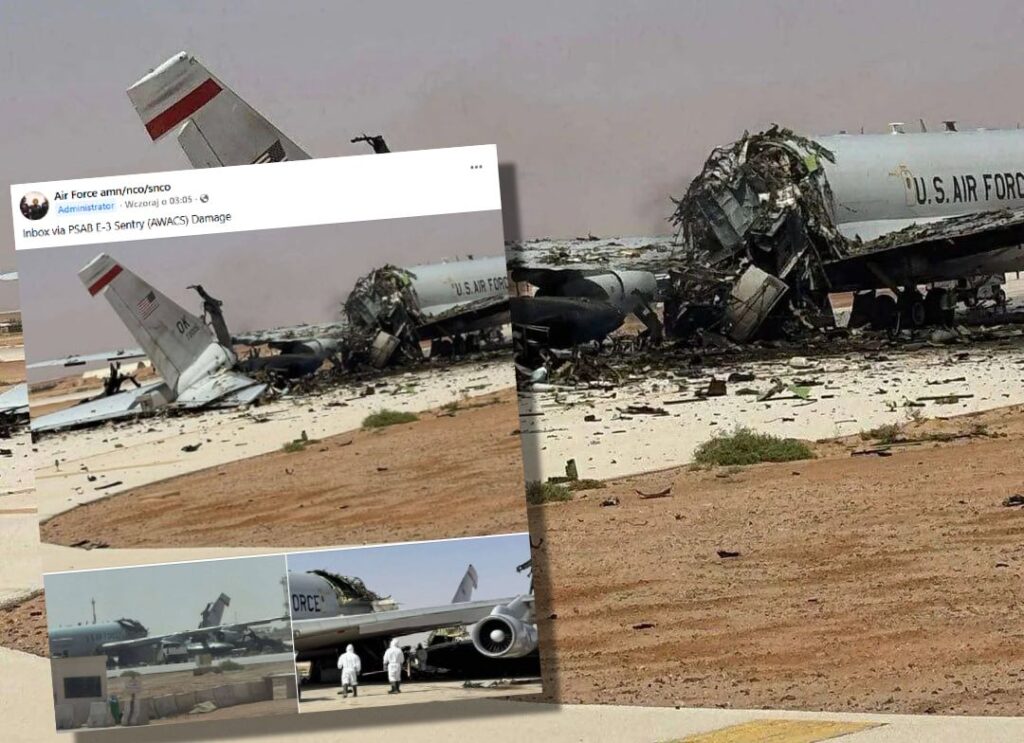
A series of increasingly effective Iranian attacks on U.S. bases in the region, including a recent strike near Riyadh, have left American forces frustrated and exposed vulnerabilities.
Precision Iranian Strike Hits Major U.S. Assets
A recent Iranian attack, likely conducted early Friday morning, appears to be one of the most successful against a U.S. base in the current conflict. The attack utilized a combination of rockets and drones, targeting Prince Sultan Air Base, located approximately 600 kilometers from the Iranian coast.
Prince Sultan Air Base is a significant facility housing large U.S. strategic air assets, including aerial tankers, radar systems, command posts, electronic warfare aircraft, and communication nodes. The base had previously been attacked by Iran in mid-March, reportedly with a rocket strike that damaged five KC-135 aerial refueling tankers, all of which were repairable.
Attack Significantly More Effective, Reports Indicate
The latest strike was reportedly more effective and larger in scale. According to sources including the Associated Press, the attack involved six ballistic missiles and 29 drones, resulting in at least 15 U.S. soldiers injured, five critically. Initial reports indicated damage to several additional aerial tankers.
Satellite imagery and leaked photos from a USAF Facebook group reveal more substantial losses, including the complete destruction of an E-3 Sentry airborne radar and command post. Extensive fire damage on the aircraft parking apron suggests the potential destruction of at least one or two aerial tankers.
Limited Impact on Military Capabilities, Psychological Blow
The loss of one E-3 and potentially 1-2 KC-135 aircraft is not a crippling blow to the USAF, though it is a significant symbolic and unprecedented setback. Both aircraft types are aging but remain crucial due to delays in their replacements. The USAF operates approximately 370 KC-135s, mitigating the impact of losing a few, while only 16 E-3s remain in service, with another 16 in storage.
A Broad Iranian Campaign
While the Iranian strike is unlikely to significantly alter the course of the war, its psychological impact is considerable. U.S. forces have not faced such a scale of attacks and sustained losses at their bases since the Vietnam War. German analyst Fabian Hinz has compiled a list of Iranian strikes against U.S. and allied installations in the region, identifying 104 confirmed impacts as of March 25th.
The majority of these strikes targeted U.S. military assets on the territory of allied bases, with a clear focus on radar and communication systems, aiming to weaken American and allied capabilities for detecting and defending against Iranian attacks. The U.S. military is deliberately withholding detailed loss reports to avoid aiding Iranian targeting and managing public perception.
To date, the U.S. has reportedly suffered 13 fatalities and 300 injuries, including 30 serious, primarily in base attacks, with six crew members lost in a KC-135 crash in Iraq. Despite the frequency of attacks, the strikes have not significantly hindered U.S. warfighting capabilities, though base personnel have increasingly relocated to hotels and remote work arrangements.
Pentagon’s Passive Defense Lacking
Experts are questioning the adequacy of U.S. base defenses, particularly in light of potential conflicts with China or Russia. Tyler Rogoway of “The War Zone” highlights the lack of passive defense measures – fortifications, shelters, and other protective structures – a stark contrast to Cold War-era practices.
Following the end of the Cold War, investment in such fortifications was largely abandoned due to cost considerations. Current U.S. bases primarily rely on lightweight hangars for weather protection and aircraft dispersal as primary defense strategies. The recent drone incursion at Barksdale Air Force Base in Louisiana, where unidentified drones flew over the base undetected, underscores these vulnerabilities.
CENTCOM has issued an urgent request for proposals for simple prefabricated shelters, aiming for rapid deployment to protect personnel at targeted bases. A larger tender has also been announced for a major command bunker at Al-Udeid Air Base in Qatar, but completion is not expected until later this decade.