


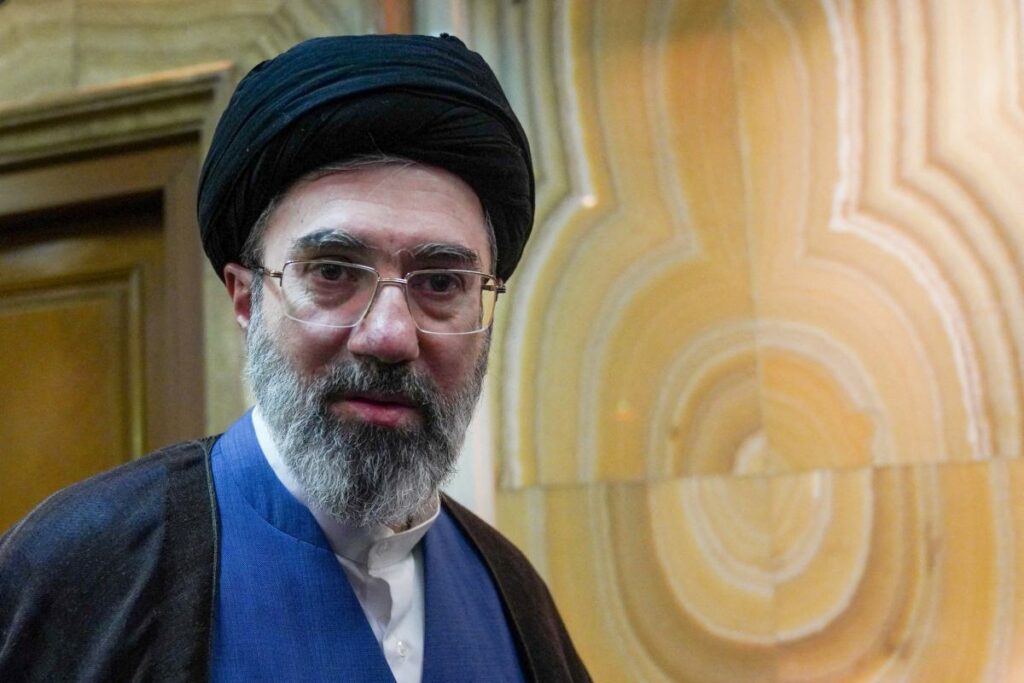
Following his father’s death, Iran’s new leader, Mojtaba Khamenei, is reportedly recovering from injuries, facing limitations in control, and heavily reliant on military counsel.
Injuries and Limited Communication for New Leader
Mojtaba Khamenei, injured in the attack that killed his father, has undergone multiple surgeries and awaits a prosthetic leg. He experiences difficulties speaking due to facial burns but remains intellectually capable.
Since assuming power, Khamenei has remained out of public view, communicating solely through handwritten messages delivered by couriers traveling via back roads.
Military’s Growing Influence
According to sources, key decisions regarding security, war, and diplomacy are being made by seasoned commanders of the Islamic Revolutionary Guard Corps (IRGC).
Abdolreza Dawari, a former advisor to Iranian President Mahmoud Ahmadinejad, described Khamenei’s leadership as akin to that of a board chairman, heavily influenced by advisors.
Weakening of Clerical Authority
Analysis suggests that Khamenei does not fully control the situation in Iran, with the influence of military commanders strengthening while the position of clerics weakens.
The IRGC’s support for Khamenei’s selection as leader has resulted in him rarely, if ever, opposing the opinions of generals.
Negotiations with US Halted
A planned trip by U.S. Vice President J.D. Vance to Pakistan for talks with Iran was canceled after generals decided to halt negotiations.
They deemed President Trump’s blockade of the Strait of Hormuz as evidence of a lack of interest in diplomacy and a continued intention to pressure Tehran.
Ongoing Conflict and Regional Impact
The war between Israel and the USA with Iran, which began on February 28th, has resulted in over 3,400 Iranian deaths. This conflict has also led to the Israel-Hezbollah war in Lebanon and an Iranian blockade of the Strait of Hormuz, causing global oil price increases.