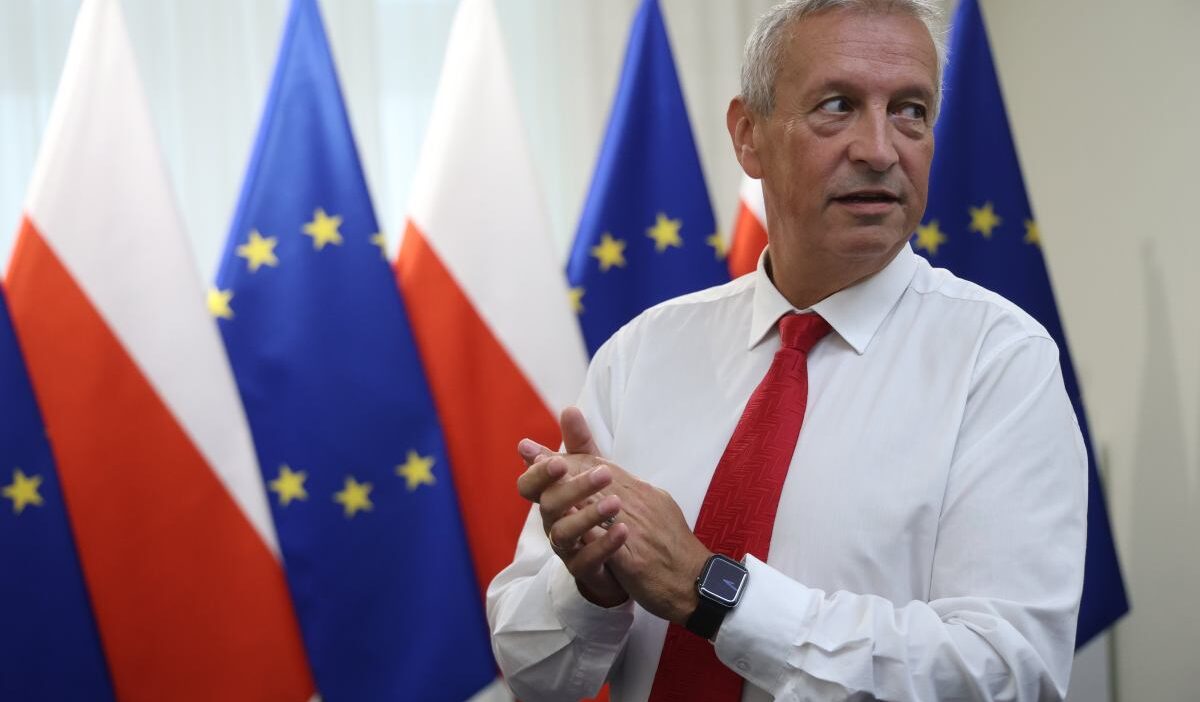
Former ORMO member Jacek Dobrzyński issued a statement in January 2024, insisting he did no harm in his past social role and will not withdraw from public life after IPN documents were released.
Statement from Dobrzyński
In a post on X, Jacek Dobrzyński said he “never harmed anyone” and that his former role was socially oriented. He recalled becoming a “social inspector of road traffic” 40 years earlier and later joining the local police force. Dobrzyński claimed he has never hidden anything and that no one was hurt by his past actions.
He added that the publicity over the issue brought a wave of hate and death threats, but that he would not retreat from his public life. “I will not be intimidated by your threats,” he wrote.
IPN Documents Reveal ORMO Membership
According to the Polish Institute of National Remembrance documents accessed by Niezalezna.pl, Dobrzyński was accepted into ORMO in the autumn of 1986. The documents include a self‑signed oath pledging loyalty to the homeland and supporting public order bodies.
The acceptance was backed by the commander of the local ORMO substation, who cited the candidate’s “unblemished reputation.” The final decision was made by the District ORMO Staff in early November 1986.
Membership Questionnaire Details
The files also contain a “ORMO Member Questionnaire” signed by Dobrzyński on 4 November 1986. In the section on other affiliations, he listed ZSMP – the Polish Socialist Youth Union. ZSMP was the youth wing of the Polish United Workers’ Party and served as a training ground for future party functionaries.
ORMO and ZSMP Explained
The Volunteer Reserve of the Citizens’ Militia (ORMO) was a paramilitary formation subordinate to the Communist regime. After martial law was introduced, ORMO became associated with policing demonstrations, intimidating opposition, and reinforcing state repression. It was formally dissolved in November 1989 as a symbol of the old system.
ZSMP’s role was ideological mobilisation of youth and preparation of cadres for the Communist party, a common element of life in the People’s Republic of Poland during the 1980s.
Government Spokesman Responds
Government spokesman Adam Szłapka addressed the issue during a press conference on 17 December. He said that the spokesperson’s remarks did not significantly affect Dobrzyński’s activities, which were “negligible” if any. Szłapka noted that some media have criticized Dobrzyński, but he did not find evidence that former officials were cited in the accusations.