


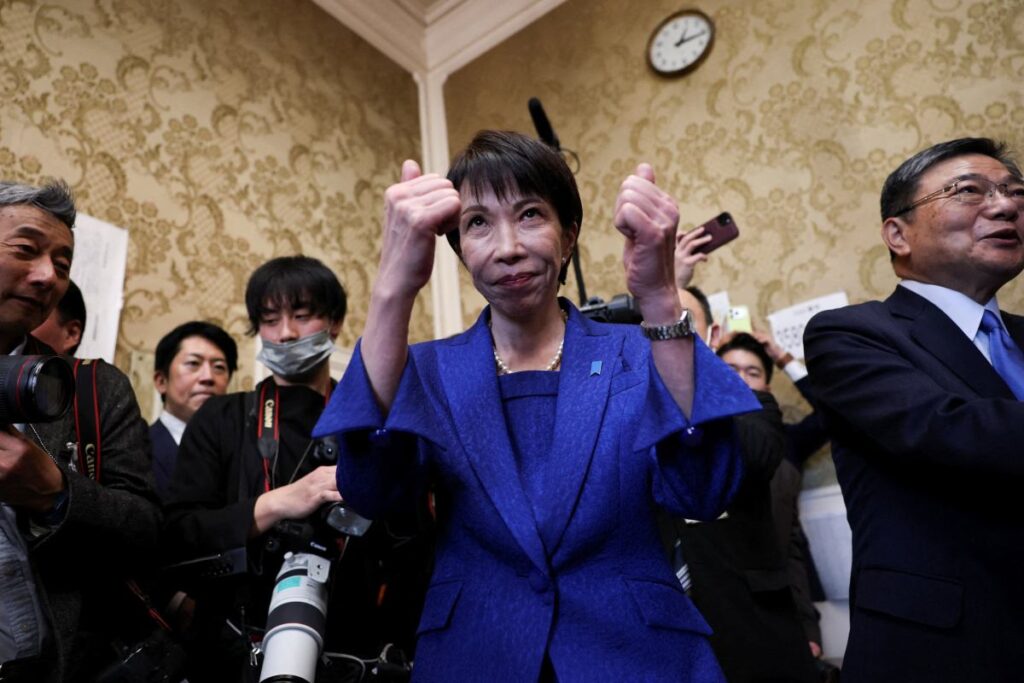
Japan’s Premier Sanae Takaichi dissolved parliament on Tuesday, calling February elections after three months in power, amid lawmakers’ ‘Banzai!’ cheers.
Seeking Stronger Mandate
Dissolving the lower house means elections for the House of Representatives will be held within just over two weeks, scheduled for February 8. These elections are intended to test the ruling coalition’s support. The Liberal Democratic Party held a slim majority in the dissolved lower house but is in the minority in the upper house.
Prime Minister Sanae Takaichi’s government enjoys rising support. Riding this wave, the political camp of the head of government aims to fight for the sole exercise of power in parliament. This is to help push the new government’s flagship laws through, concerning fiscal system reform and far-reaching changes in security policy.
Security Policy Shift
This document forms the foundation of fundamental changes in Japan’s national defense system. After World War II, Japan, as an aggressor, was stripped of the right to possess a military. Japan maintains Self-Defense Forces. Having experienced the atomic bomb drops for decades, Japan pursued a pacifist defense policy. Sanae Takaichi wants to change this, recognizing the development of the Chinese army as a threat to Japan’s security.
Traditional Cheers
Lawmakers of the prime minister’s party shouted “Banzai!” upon the announcement of parliament’s dissolution. Traditionally, this is a cheer for the Emperor, shouted three times after his enthronement and, as in this case, after dissolving parliament. “Banzai,” literally meaning “ten thousand years,” is equivalent to “long live.”
Historic Dissolution
The lower house was dissolved at a regular parliamentary session before the end of its term for the first time in 60 years. Sanae Takaichi argues she became prime minister mid-term and wants to strengthen her social mandate. The politician took power after the previous prime minister decided to resign. Takaichi won the internal election in the Liberal Democratic Party in early October and then became prime minister. She is the first woman to hold this office in Japan.