A crucial Iranian leader was confirmed dead, Israel suffered a deadly rocket attack, and the U.S. conducted further strikes on Iranian military facilities on the 18th day of Middle Eastern conflict.
Death of Ali Laridjani Confirmed
The 18th day of the Middle East war brought a sharp escalation of the situation, with the confirmed death of one of Iran’s most important leaders, Ali Laridjani.
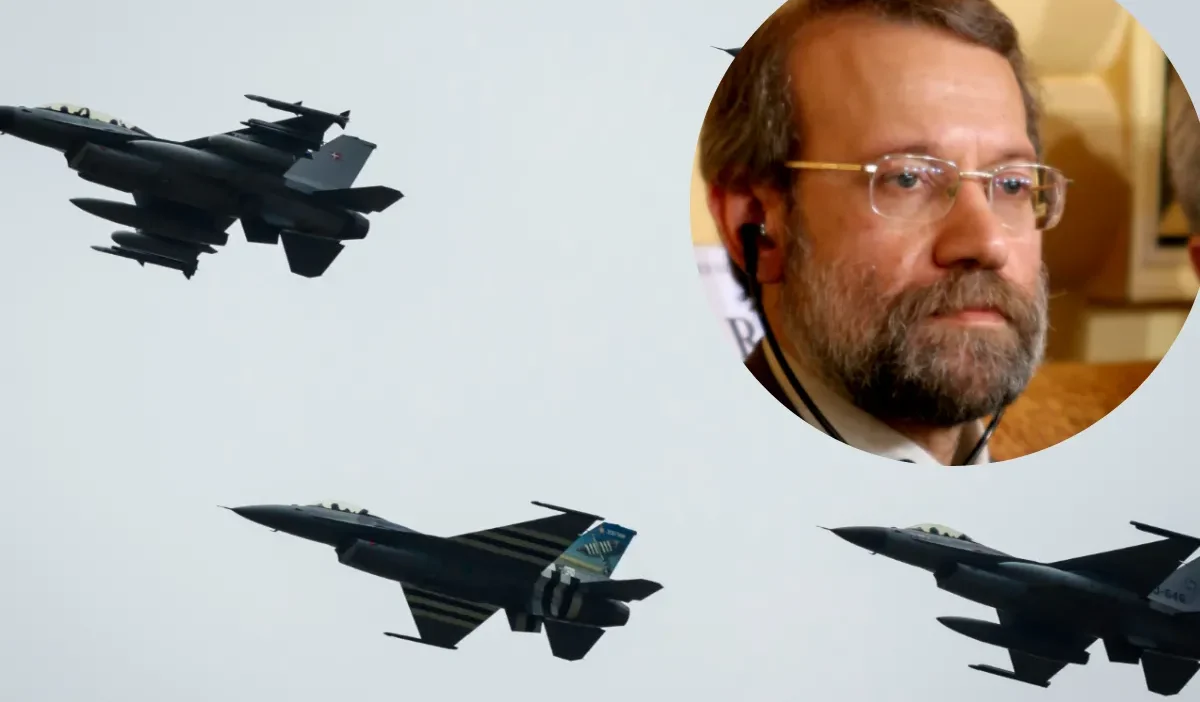
On Tuesday evening, Iran’s Supreme National Security Council officially confirmed the death of its chairman, Ali Laridjani. The statement also reported that his son, another member of the Council, and several bodyguards were killed with him.
Laridjani was part of the state’s inner circle and was considered one of the most important figures in the power structure. Following the death of Ayatollah Ali Khamenei – who died on February 28th, the first day of the war – Laridjani was seen as the de facto decision-maker in Tehran.
Israeli Military Claims Responsibility for Attack
The attack that killed Laridjani was carried out by the Israeli army. Information about the operation appeared earlier in Israeli media, but official confirmation from Iran was lacking for many hours.
The Supreme National Security Council, headed by Laridjani, is responsible for shaping defense and security policy, including strategic decisions regarding the nuclear program and coordinating the state’s activities in the areas of intelligence, economy, and politics.
Iranian Retaliation: Attacks on Israel and Regional States
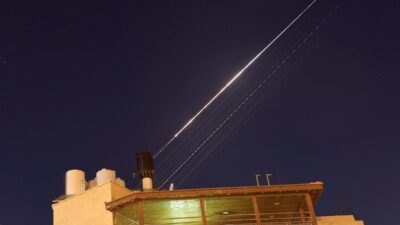
Iran attacked Israel, resulting in two fatalities and the use of cluster rockets. In the night of Tuesday to Wednesday, Iran launched a rocket attack on central Israel.
The most serious consequences were recorded in the city of Ramat Gan, where two people – an elderly couple – were killed. Rescue services reported that a fragment of a projectile hit a residential building, causing the deaths and injuring six others. A total of rockets fell in ten different locations.
The Israeli army stated that cluster rockets were used in the attack, whose warheads scatter smaller charges over a large area, significantly increasing the risk of civilian casualties and infrastructure damage.
The Iranian Revolutionary Guard announced that this was a direct retaliation for the killing of Laridjani, stating the operation was a repressive response to earlier Israeli actions.
Since the beginning of the conflict, Iran has fired approximately 300 ballistic missiles towards Israel, about half of which were equipped with cluster warheads. Despite the extensive air defense system, some missiles penetrated the defenses, causing at least 14 deaths to date.
Regional Attacks and International Concerns
Simultaneously with the attack on Israel, Iran continued military operations against countries in the Persian Gulf, including rocket and drone attacks in the United Arab Emirates, Saudi Arabia, Qatar, Bahrain, and Kuwait.
An Iranian missile fell near Al Minhad base in the UAE, where Australian soldiers are stationed. Australian Prime Minister Anthony Albanese reported that no personnel were injured, but the impact caused a fire and damaged residential buildings and a medical facility.
Saudi Arabia reported intercepting 13 drones and one ballistic missile, with debris falling near Prince Sultan base without causing damage. Authorities emphasized that audible explosions were the result of air defense systems.
Qatar’s defense systems intercepted a missile aimed at the country, and an explosion was recorded in Doha. In Bahrain, residents were ordered to take shelter, while in Kuwait, anti-aircraft systems were activated. The U.S. embassy in Baghdad was also a target of one of the attacks.
A meeting of foreign ministers of Arab and Islamic countries is scheduled for Wednesday evening in Riyadh to discuss regional security and stabilization.
U.S. Strikes and Economic Impact
On Tuesday, the U.S. Central Command (CENTCOM) reported conducting further strikes on Iranian military targets, using penetrating bombs weighing approximately 2.3 tons against underground missile installations near the Strait of Hormuz.
The targets were anti-ship missile positions that posed a threat to international shipping. The Strait of Hormuz, through which approximately 20% of the world’s oil is transported under normal conditions, has been blocked by Iran since the beginning of the war.
According to the White House, U.S. forces have struck over 7,000 targets in Iran since the start of hostilities on February 28th, destroying over 100 naval units.
U.S. President Donald Trump announced that navigation through the Ormuz Strait will soon be restored, despite the fact that allies from NATO and East Asia have not declared participation in the operation to secure the route.
Economic Repercussions and Supply Chain Disruptions
The conflict is having increasingly clear economic consequences. The blockade of the Strait of Hormuz has led to a sharp rise in global oil prices. In response, the U.S. is considering easing sanctions against Venezuela’s oil sector to increase global supply.
Simultaneously, the U.S. armed forces have suffered equipment losses, losing around a dozen MQ-9 Reaper drones used for intelligence and precision strikes since the start of the war, each costing approximately $16 million.
Some drones were shot down by Iranian defense systems, while others were destroyed during offensive operations. One incident involved an accidental downing by a state in the Persian Gulf region.
Asian countries are simultaneously trying to secure supplies of raw materials. South Korea has obtained an additional 18 million barrels of oil from the UAE, bringing the total contracted amount to 24 million barrels, aiming to avoid shortages.