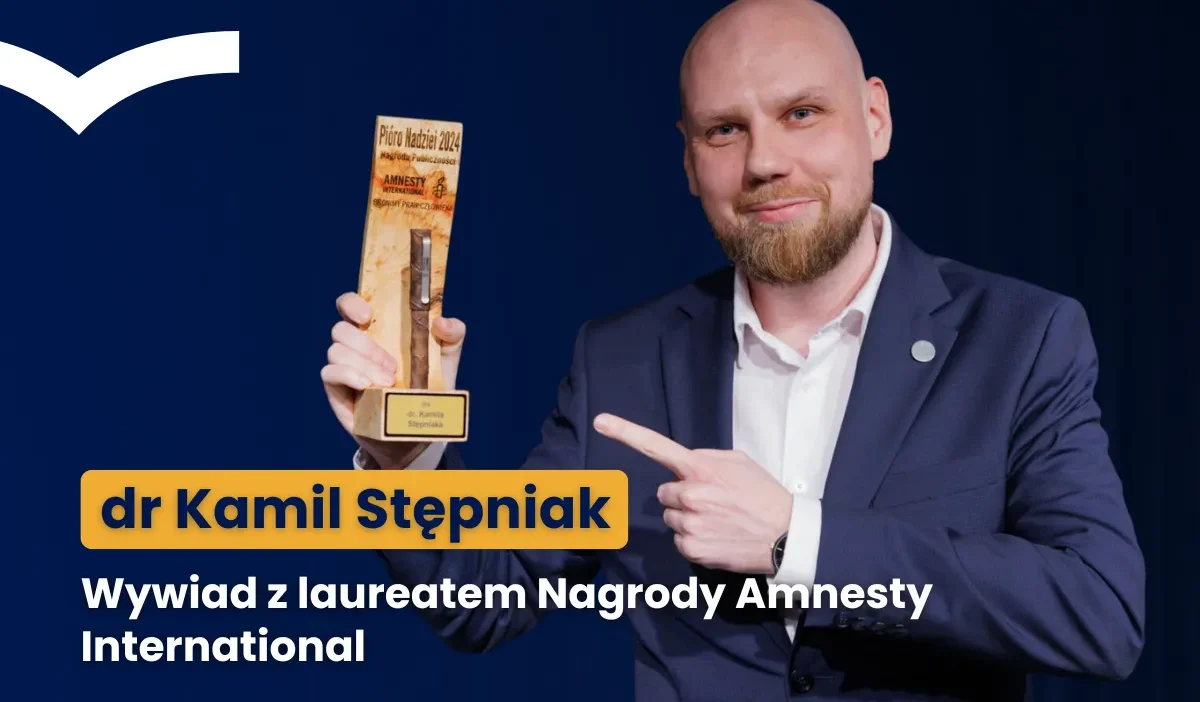
Dr. Kamil Stępniak, a legal scholar known as @konstytucjonalista, discusses building a personal brand and educating the public about legal issues.
Combining Academia and Social Media
Dr. Kamil Stępniak, a lecturer at the Higher School of Vocational Education, successfully combines academic work with a strong presence on social media platforms like Instagram. He was recognized with Amnesty International’s “Pióro Nadziei” (Pen of Hope) Public Award for his efforts.
Through his podcast, “Pro Lex Optima – Prawo, które warto usłyszeć” (Law Worth Hearing), he regularly explains complex legal regulations and their impact on daily life.
The Challenge of Simplifying Legal Concepts
Stępniak addresses the question of whether it’s worthwhile for a lawyer to be active in the media, a topic explored in his podcast. He highlights the challenge of translating the intricacies of the constitution into the dynamic format of Instagram without sacrificing accuracy.
He acknowledges the temptation to oversimplify legal concepts for wider reach, but prioritizes precision over popularity, even if it means limiting the audience size.
The Constitution as a Living Document
Stępniak emphasizes that the constitution is not a simple instruction manual, but a foundational legal act that has evolved over nearly three decades through practice and interpretation. He aims to explain its relevance to everyday life on Instagram.
Public Engagement and Legal Awareness
He notes that constitutional law is a dynamic field, generating many questions, and he strives to provide answers. With over 80,000 followers and millions of views, he feels grateful for the public’s continued interest in understanding the law.
Bridging the Gap Between Theory and Practice
Stępniak reflects on the perceived contradiction between the quiet environment of academia and the noise of the internet, noting a growing acceptance of academics engaging with social media.
He believes that sharing knowledge is a moral obligation, and that connecting academic research with current public concerns is essential, provided it’s done with integrity.
The Importance of Legal Education and Human Rights
Receiving the “Pióro Nadziei” award from Amnesty International signaled a growing public interest in human rights and the role of lawyers as educators.
Stępniak believes people want to understand the meaning and enforceability of human rights, not just see them as slogans, and that awareness is crucial for building a civil society.
Balancing Expertise and Public Debate
As a columnist for Gazeta.pl and “Dziennik Gazety Prawnej,” Stępniak navigates the challenge of maintaining independence while participating in a polarized public debate.
He emphasizes the importance of basing his work on verified information and objective conclusions, and maintaining professional integrity even when adopting a sharper tone in his writing.
The Future of Law and New Media
Stępniak doesn’t believe every lawyer needs to be on social media, but recognizes its potential to restore public resonance to the law. He stresses the value of participating in the broader narrative surrounding legal issues.
Advice for Law Students
He advises law students to prioritize competence over branding, specialize early in their studies, embrace niche areas of expertise, and share their knowledge with the public.
He encourages students to be systematic, persistent, and committed to lifelong learning, and to remember that not everyone needs to be an influencer.