


Leaked recordings of conversations between Hungary’s Foreign Minister and his Russian counterpart have sparked outrage, raising concerns about Budapest’s loyalty within the EU.
International Outcry Over Hungary-Russia Communications
Leaked recordings of conversations between Hungary’s Foreign Minister Péter Szijjártó and Russian Foreign Minister Sergey Lavrov have triggered a strong reaction across Europe, with politicians in Warsaw and Dublin expressing serious concerns about the unity of the European Union.
The recordings, obtained through investigative journalism, indicate that Szijjártó maintained regular contact with Moscow, providing information on EU actions and offering to influence EU sanctions policy.
Details of the Leaked Conversations
During one conversation, Szijjártó reportedly assured Lavrov of his availability, while in another, he pledged support for modifying EU sanctions against Russia. The materials suggest these contacts were not isolated incidents but part of a broader communication pattern between Budapest and Moscow.
Investigation and Collaboration
The investigation was conducted by the Russian independent media outlet The Insider, in collaboration with journalistic organizations from Central and Eastern Europe, including VSquare, Delfi, FrontStory, and the Ján Kuciak Investigative Center.
Tusk and Martin Condemn Hungary’s Actions
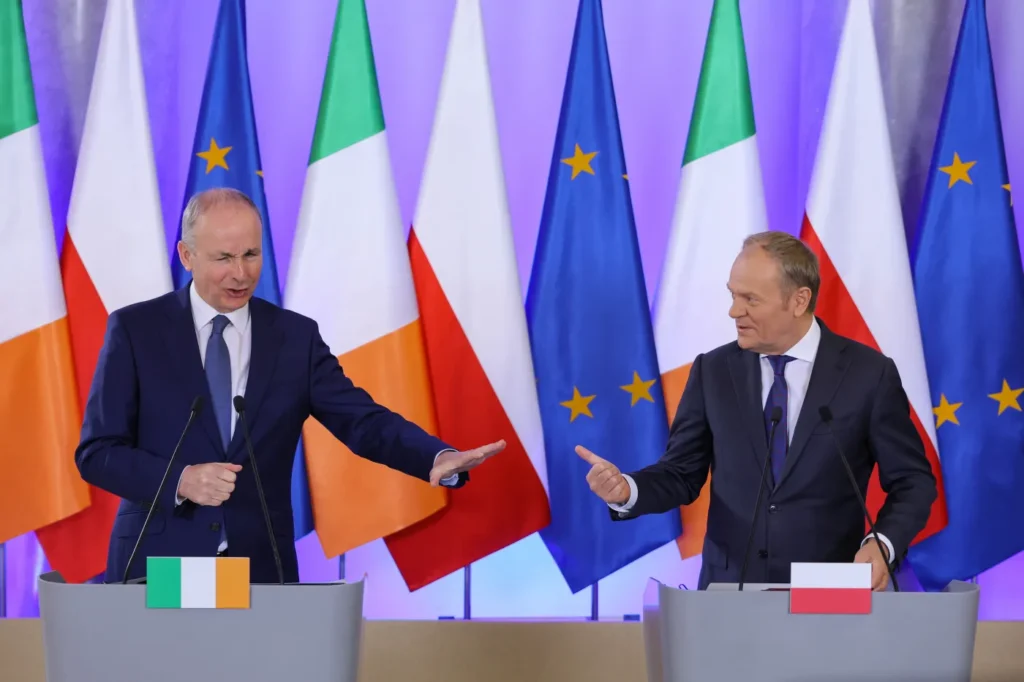
Polish Prime Minister Donald Tusk strongly condemned the revelations, emphasizing the scale of the problem and its potential consequences for European security. He stated the recordings demonstrate a relationship that goes beyond standard diplomacy and is unacceptable to European partners.
Irish Prime Minister Micheál Martin also expressed a critical stance, viewing the recordings as confirmation of long-held suspicions regarding Hungary’s policies, describing the tone of the conversations as disturbingly polite and indicative of a close relationship.
EU Concerns and Kallas’s Response
Kaja Kallas emphasized that member state foreign ministers should act in the interest of the European Union, not third countries, reflecting growing frustration among some member states with Budapest’s policies.
Hungary’s Political Context and Upcoming Elections
The release of the recordings comes at a critical time for Viktor Orbán and his Fidesz party, which faces one of its most significant electoral challenges after 16 years in power. The April 12th vote could bring significant changes to the Hungarian political landscape.
Recent polls indicate Fidesz is losing ground to the opposition led by Péter Magyar, a former associate of the ruling camp. His new formation is attracting voters disillusioned with Orbán’s policies.
Long-Standing Controversies and Szijjártó’s Response
Hungary’s relations with Moscow have long been controversial within the EU, remaining one of the few member states maintaining relatively close ties with Vladimir Putin even after the full-scale invasion of Ukraine in 2022. Orbán’s government has repeatedly opposed stricter sanctions against Russia and has delayed decisions in this regard.
Szijjártó acknowledged the contacts with Lavrov but criticized the method of obtaining the materials, alleging a serious security breach and claiming the recordings were intercepted by foreign intelligence services. He characterized the timing of the release, just before the elections, as a deliberate attempt to influence the outcome.