


Poland’s Finance Ministry has ruled on whether forfeited deposit fees on beverage containers can be claimed as tax-deductible business expenses.
Deposit Refund and Income Tax Costs
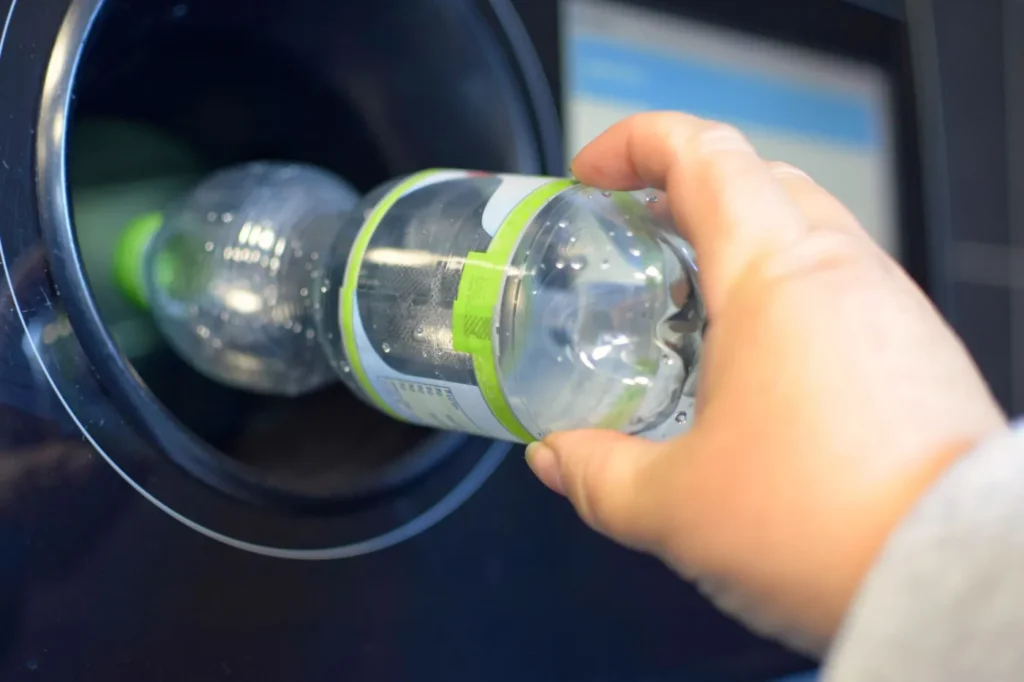
Poland’s deposit system comes into effect on October 1, 2025. From January 1, 2026, producers participating in the system can only introduce beverages in packaging marked with a standardized deposit symbol. Products previously manufactured and placed on the market without this marking can be sold until stocks are depleted. Deposit rates are 50 groszy for PET bottles up to 3 liters and aluminum cans up to 1 liter, and 1 złoty for reusable glass bottles up to 1.5 liters.
For income tax purposes, the deposit is considered refundable and is generally tax-neutral. A taxpayer who pays it when purchasing water for meetings or for the office kitchen does not include it in their income costs, and the seller does not report income. This is because the value does not permanently leave the buyer’s assets but returns upon returning the packaging to the store or machine.
Finance Ministry Confirmation
In a response dated April 28, 2026, the Ministry of Finance addressed a common situation – a bottle that cannot be returned because it was damaged, lost, or taken by a meeting attendee. The Ministry indicated that if the expense related to the deposit, which the taxpayer cannot recover, meets the general criteria of Article 15(1) of the CIT Act, it can be included in income costs.
Conditions for Tax Deductibility
This is a departure from the rule of deposit neutrality, but a conditional one. The Ministry of Finance stipulates that the assessment is made only after establishing all the factual circumstances of a specific case. Only after such an analysis can the date of incurring the cost also be determined.
Three cumulative conditions can be derived from the Ministry of Finance’s response, combined with the general structure of tax costs and interpretive practice:
Connection to activity: The initial purchase must be rational and economically justified, e.g., water for employees and clients. Without this element, even undisputed loss of packaging does not entitle to a cost.
Example
A company purchased water in bottles for a meeting with contractors. Some bottles were damaged or thrown away during room cleaning. If the company prepares a report and demonstrates a connection between the purchase and its activity, the lost deposit may be a tax-deductible cost.
Documenting the Loss
The most practical element of the Ministry of Finance’s response concerns documentation. The Ministry does not impose a specific form, but the evidentiary logic is clear – the taxpayer must demonstrate that the deposit has ceased to be refundable. A protocol of destruction or loss of packaging, preferably prepared by at least two people and containing the date of the event, the number and type of packaging, the deposit value, and the reason for disposal, will be helpful in practice.
Such a protocol can be “other evidence” on the basis of which the taxpayer records the cost in the books. In the case of indirect costs, the day on which the cost was recorded in the accounting books is important, in accordance with Art. 15(4e) of the CIT Act. The cost is recorded in the books by debiting the receivable from the accounting account (the deposit is recorded there from the moment the beverage is purchased) and transferring it to other operating costs.
Important Considerations
Simply stating that “the packaging is missing” may not be sufficient. The taxpayer should have proof of when and why the deposit became definitively unrecoverable.
What the Finance Ministry Did Not Say
The Ministry’s position is not a general interpretation or tax explanation, but a response to media inquiries. Therefore, it does not protect the taxpayer under Art. 14k of the Tax Procedure Act. It provides guidance on the direction of interpretation, but in the event of a dispute with the authority, specific evidence remains necessary. Cases that are atypical also remain open – for example, systematic, massive non-return of packaging when there is a network of collection points near the company. Here, the authority may consider that it is not a loss, but a voluntary waiver of the claim, which does not create a cost.
From the perspective of entrepreneurs, this is an uncomfortable solution. The deposit system was supposed to be operationally simple, but with this approach, the taxpayer who wants to deduct the lost deposit in costs must demonstrate not only the purchase of the beverage but also the loss of the right to recover it. In many companies, this may mean that small, dispersed deposit amounts will not be included in costs at all, because the cost of documentation will be greater than the tax benefit. Some taxpayers may record them collectively in costs, accepting the risk of a possible correction during the audit. In practice, therefore, the question of the materiality of amounts must be asked: for small office purchases, a dispute over the deposit may be more troublesome than the value of the tax cost itself.
Practical Recommendations
A simple practical conclusion for accounting departments is to introduce a short internal instruction on the flow of packaging, a standardized form of loss protocols, and a separate accounting account for deposits. Without these elements, recording the lost deposit in costs is possible, but the taxpayer bears the burden of proof in the event of an audit.