


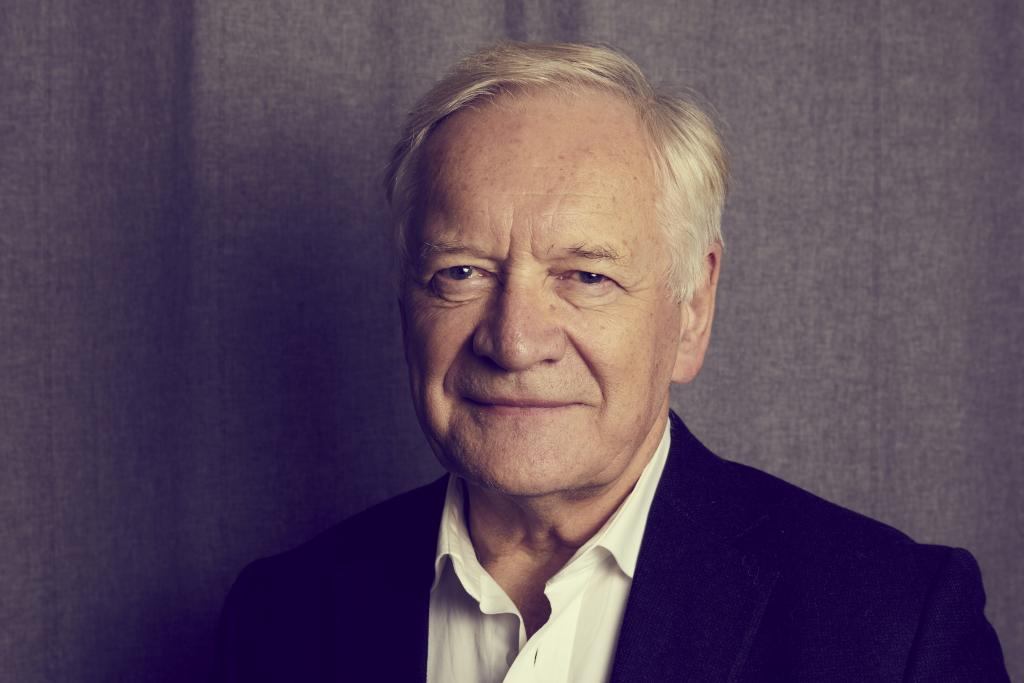
French President Emmanuel Macron visited Gdańsk where actor Andrzej Seweryn was awarded the Bronisław Geremek Franco-Polish Friendship Award on Monday.
Franco-Polish Friendship Award Presented
The Bronisław Geremek Franco-Polish Friendship Award honors individuals or institutions significantly contributing to strengthening Franco-Polish relations, particularly in the field of culture. The award was presented for the first time on Monday.
Macron’s Visit and Treaty Reinforcement
Emmanuel Macron’s visit to Gdańsk is linked to the enhanced cooperation and friendship treaty signed between Poland and France in Nancy last May. The Gdańsk summit, the first since the treaty’s signing, aims to emphasize the special relationship between the two countries.
Strengthening Poland-France Cooperation
During his speech at the Gdańsk City Hall, Emmanuel Macron emphasized that cooperation between Poland and France spans numerous areas, from security to culture. He stated that the relationship is at a historic level and will continue to strengthen, benefiting both countries and Europe.
Warm Welcome in Gdańsk
Prime Minister Donald Tusk remarked on the enthusiastic reception Macron received in Gdańsk, noting the spontaneous gathering of hundreds of people. He affirmed a strong commitment to elevating Polish-French relations.
Intergovernmental Consultations Held
The event program included intergovernmental consultations with the participation of all current ministers from both countries, covering areas such as defense, foreign affairs, culture, and energy.
Andrzej Seweryn: A Distinguished Actor
Andrzej Seweryn was born in 1946 in Heilbronn, Germany. He graduated from the Warsaw Film, Theatre and Television School in 1968 and subsequently worked as an actor at the Ateneum Theatre in Warsaw until 1980, also frequently appearing in Theatre Television productions.
He gained prominence in films directed by Andrzej Wajda, including “The Promised Land” (1974), “Without Anesthesia” (1978), and “Man of Iron” (1981). His performances in Jerzy Hoffman’s “With Fire and Sword” (1999), Teresa Kotlarczyk’s “The Prime Minister” (2000), and Agnieszka Holland’s “Team” (2007) are also well-remembered.
Exile and Career in France
Seweryn moved to France in 1980, remaining longer than planned due to the imposition of martial law in Poland. He built a successful career there, performing in film and, notably, joining the Comédie-Française in 1993 as only the third foreign national in its history.
Seweryn on French Acceptance
“I lived in France for 33 years, from 1980 to 2013. Throughout those years, I never encountered any hostility because I was Polish,” Seweryn stated in an interview. He noted that the French appreciate the contributions of foreigners and value their culture, creating opportunities for artists like Wajda, Żuławski, Kieślowski, Olbrychski, Pszoniak, and Radziwiłłowicz.
Return to Poland and Recent Roles
Seweryn returned to Poland permanently in 2010 and has since consistently appeared in film, television, and serial productions. He foreshadowed his future role as a theater director in the 2009 series “39 and a Half,” a position he assumed at the Polish Theatre two years later.
Recent notable roles include Zdzisław Beksiński in “The Last Family” (2016), and leading roles in the series “Rojst” (2018) and “Nielegalni” (2018). In 2022, he portrayed both a retired tailor and drag queen Loretta in the series “Królowa.”
Bronisław Geremek: A Life of Service
Prof. Bronisław Geremek was born on March 6, 1932, in Warsaw, into a Jewish family. He aspired to be a writer as a child and was influenced by Janusz Korczak. During the occupation, he fled the Warsaw Ghetto with his family in 1943. He earned a degree in history from the University of Warsaw and became a renowned medievalist specializing in medieval Paris.
Geremek’s Political Career
From 1955 to 1985, Geremek was associated with the Polish Academy of Sciences’ Institute of History, also lecturing at the Sorbonne. He joined the Polish United Workers’ Party (PZPR) in 1950, leaving in 1968 in protest against the Warsaw Pact invasion of Czechoslovakia. He was active in the democratic opposition from the 1970s, co-founding the Society of Scientific Courses.
He served as an expert for “Solidarity” from 1980, leading to his internment during martial law. From 1987 to 1989, he headed Lech Wałęsa’s advisory team, participating in the Round Table Talks. After the 1989 elections, he served as a member of parliament, holding leadership positions in the Democratic Union and later Freedom Union. He served as Foreign Minister from 1997 to 2000, leading Poland’s accession to NATO and paving the way for EU membership. He was elected to the European Parliament in 2004.
Tragic Death
Geremek died on July 13, 2008, while traveling to Brussels. His Mercedes suddenly swerved into oncoming traffic near Nowy Tomyśl, colliding with a Fiat Ducato van.