Peter Magyar’s TISZA movement secured a decisive win in Hungary’s elections, promising systemic change and a return to Europe, demanding a swift transfer of power.
Magyar Claims Decisive Victory and Systemic Shift
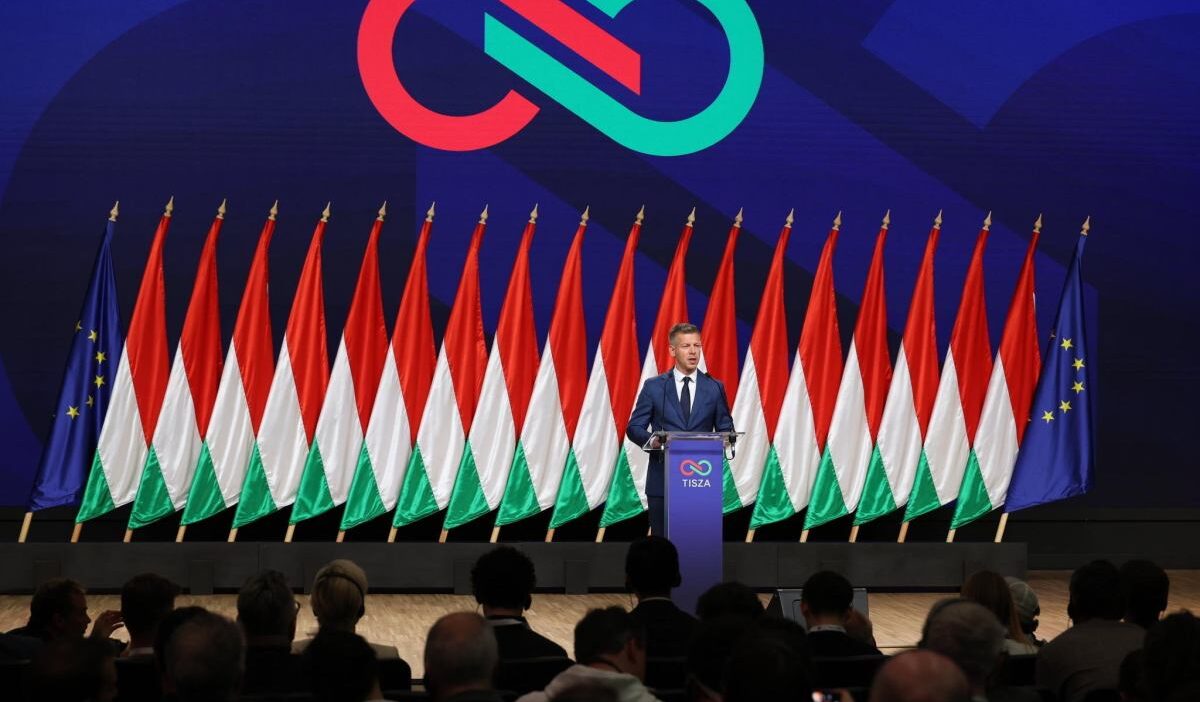
Peter Magyar addressed journalists following the elections, asserting that April 12th marks the beginning of a new chapter for Hungary. He stated his grouping achieved a clear victory, securing a mandate not only for a change in government but also for a deep restructuring of the state.
“Yesterday, April 12th, Hungary and Hungarians wrote a new chapter in history,” Magyar declared. “We achieved victory by a huge margin. We have obtained a two-thirds legitimacy.” This parliamentary majority grants a constitutional majority.
Accusations Against the Previous Government
Magyar presented the election results as a clear rejection of the existing power structure, sharply criticizing the previous government for building a propaganda machine, abusing state power, and keeping citizens in fear. He accused the former administration of constant falsehoods.
He claimed the state was run by a “party-state,” with public institutions used for political purposes.
Call for Systemic Change and Accountability
Magyar emphasized that his victory represents a response to years of abuse, arguing it’s not merely a change of government but a systemic transformation. “Hungarians did not vote for a simple change of government. No, this is about a change of system,” he stated, adding, “We simply have to change the entire system.”
He stressed the need for accountability after years of crisis, describing Hungary as “robbed, betrayed, indebted, and broken,” and asserting his cabinet will represent all citizens, even those who didn’t vote for TISZA.
Demand for Swift Transfer of Power
Magyar called for a rapid start to the process of establishing a new parliament and government, directly urging President Tamás Sulyok to promptly convene the first session. “We have no time to waste. Our homeland no longer has that much time,” he said, requesting an invitation to the first parliamentary session.
Priorities of the New Government
Magyar announced his government will begin work immediately upon formally taking power, prioritizing the recovery of European funds, anti-corruption measures, and the rebuilding of state institutions. He specifically mentioned reclaiming approximately 20 billion euros in funds crucial for economic growth.
Hungary’s Place in Europe and the EU
Foreign policy was a central theme, with Magyar emphasizing that the election outcome determines the country’s geopolitical direction. “Hungary has its place in Europe. It had, has, and will have a place in Europe,” he stated.
He added that voters, 23 years after a referendum on EU membership, reaffirmed the country’s position “in Europe and in the European Union.”
Commitment to EU and NATO, Pragmatic Foreign Policy
The new prime minister declared Budapest will remain a member of the EU and NATO, pursuing a foreign policy based on pragmatism and respect for other nations. He assured that Hungary will not interfere in the internal affairs of its neighbors.
Magyar stated he will represent Hungarian interests in Strasbourg, Brussels, Moscow, Berlin, Washington, and Beijing, emphasizing Hungary’s membership in both the EU and NATO.
Initial Diplomatic Contacts and International Signals
Magyar reported having already held talks with foreign leaders, including the President of the European Commission. He also noted signals from Moscow and Beijing, expressing hope for “pragmatic cooperation.” He thanked them for respecting the choice of his compatriots.
He firmly stated, “Millions of Hungarians proved yesterday that it is Hungarians who write their history. Not in Moscow, not in Brussels, not in Washington. Only on Hungarian streets, on Hungarian squares.”
Rejection of War Rhetoric and Commitment to Peace
Magyar strongly criticized Viktor Orbán for allegedly scaring citizens with the threat of war during the campaign. “Viktor Orbán threatened his own nation. He tried to keep our children, our parents, our seniors in fear,” he said, accusing Orbán of falsely claiming new government would send Hungarians to the Ukrainian front.
Magyar firmly rejected these suggestions, declaring, “No one in Hungary seeks war. We want peace. And the TISZA government will be a party of peace.” He reiterated that the European project guarantees Hungary’s security and peace.
Institutional Changes and Constitutional Reform
Magyar announced a series of institutional actions after taking office, including joining the European Public Prosecutor’s Office, recovering public assets, and constitutional changes. He pledged to introduce anti-corruption measures and reclaim state property.
He proposed amending the constitution to limit prime ministers to two terms and restore the rule of law and pluralistic democracy.
Concerns About Transparency and Document Destruction
Magyar expressed serious concerns about the current state of state administration, alleging that documents related to sanctions are being destroyed in the Ministry of Foreign Affairs, citing this as an example of chaos and a lack of transparent power transfer.
Building a Citizen-Based Political Movement
Magyar dedicated a significant portion of his address to the development of his political base, emphasizing that TISZA emerged from citizen engagement, not the party apparatus. He thanked the 50,000 volunteers who worked for political change.
Direct Engagement with Voters as Key to Success
Magyar attributed the victory to direct contact with voters, regular visits to small towns, and avoiding political distance. “The secret probably lies in the fact that politics is about people. And politicians have forgotten that,” he said, emphasizing the need for direct engagement and hard work.
He recounted visiting 700 municipalities over two years, often traveling in an old Ford Transit, spending more time “on Hungarian streets, squares” than at home.
A New Style of Governance
Magyar concluded by outlining a vision of governance based on consultation and greater citizen participation in decision-making. He stated he doesn’t want to be a dominant leader but a coordinator of government work. “I will not be here as the ‘Sun King.’ Rather, I will be the captain of the team,” he said.
He added that his cabinet will operate as the TISZA community has for the past two years – “together with the people,” not ruling out referendums and online consultations on controversial issues.