


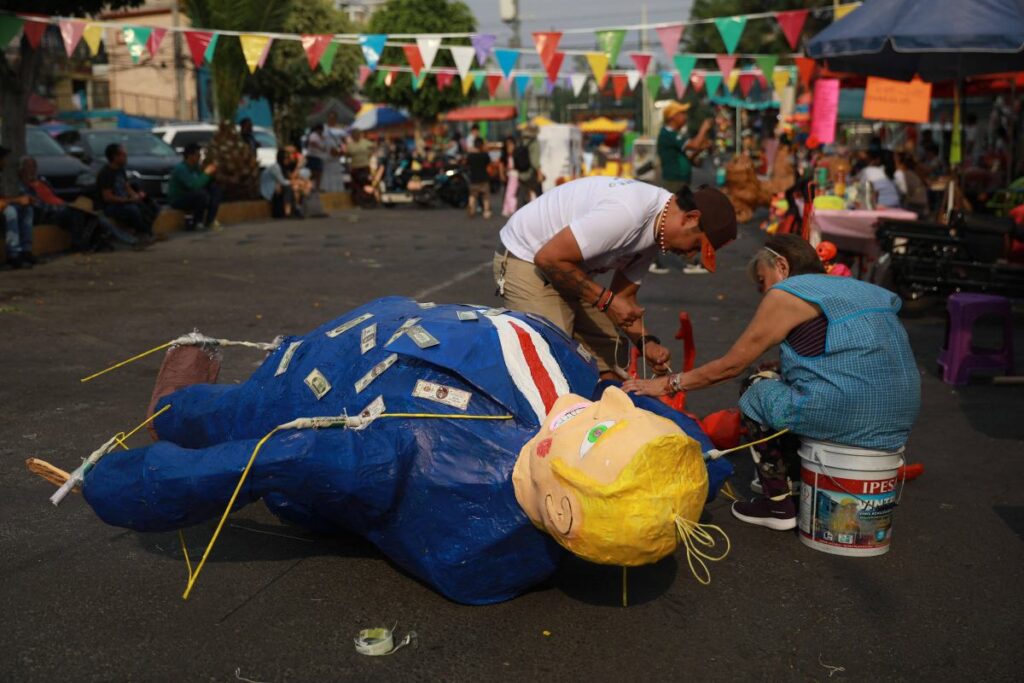
In Mexico, Easter traditions included burning effigies of Donald Trump and ICE agents, reflecting social and political commentary alongside religious customs.
Traditional Judas Effigies Take on Modern Figures
Traditionally depicting the devil, Judas effigies burned publicly in many Mexican towns on Holy Saturday are increasingly representing current events and public figures, reflecting prevailing social moods.
Some cities host competitions for the most beautiful effigy. This year in Toluca, Christopher Luis presented a figure of Nemesio Oseguera Cervantes, “El Mencho,” leader of the CJNG cartel, whose recent death sparked unrest in several states.
Trump and ICE Targeted in Protests
Effigies referencing the U.S. situation, often criticizing the brutality of ICE immigration services, were burned in many locations. The Mexican Foreign Ministry reported 14 Mexican deaths during ICE detentions and in ICE custody since the start of Donald Trump’s second presidency.
An effigy of the American president in San Miguel de Allende bore the inscription: “No to ICE, no to war, no to intervention.”
Political Satire Extends to Mexican Leaders
On Mexico City’s Merced Balbuena market, known for Judas production, an effigy of former Mexican President Andrés Manuel López Obrador in a soccer uniform was burned. This may be a critique of the organization of this year’s World Cup in Mexico, including high preparation costs, gentrification, and water access issues near Estadio Azteca.
International and Symbolic Figures Burned
In Puebla, figures of Russian President Vladimir Putin, new Chilean President Jose Antonio Kast, and Spanish Prime Minister Pedro Sanchez appeared. Effigies aren’t always specific people; past years have seen figures symbolizing coronavirus, corruption, and media bias.
A Tradition with Deep Roots
The tradition of burning Judas effigies is also widespread in other Latin American countries and Europe, and was once popular in Poland, particularly in the south, and still survives in places like Skoczów, Pruchnik, and Krośnica.
Easter Observances Include Processions and Penance
Mexico also features Easter processions, most famously in Iztapalapa near Mexico City. In central and southern Mexico, penitents flagellate themselves with nail-studded whips or carry cacti and thorny branches on their backs.
In 2017, a man playing Judas during a hanging scene in Michoacan lost his balance and died from asphyxiation.